
Since the beginning of March 2026, the reporting on the Baltic whale Timmy has dominated many news formats. A single sighting has become an emotionally charged, ongoing story featuring strandings, rescue images, and constant follow-up. At the same time, political conflicts surrounding Chancellor Friedrich Merz, the CDU, the SPD, healthcare costs, new taxes, and the weak German economy are intensifying. Public broadcasters are heavily investing in a visually powerful animal drama, while the political burdens on millions of citizens appear less visible.
Timmy becomes the main character in an emotional news story
The naming significantly alters the impact of the report. Timmy is no longer just a lost whale. He becomes a familiar figure with a destiny, a dramatic arc, and a continuation of the story. This personification creates a connection, provides powerful imagery, and simplifies a complex situation.
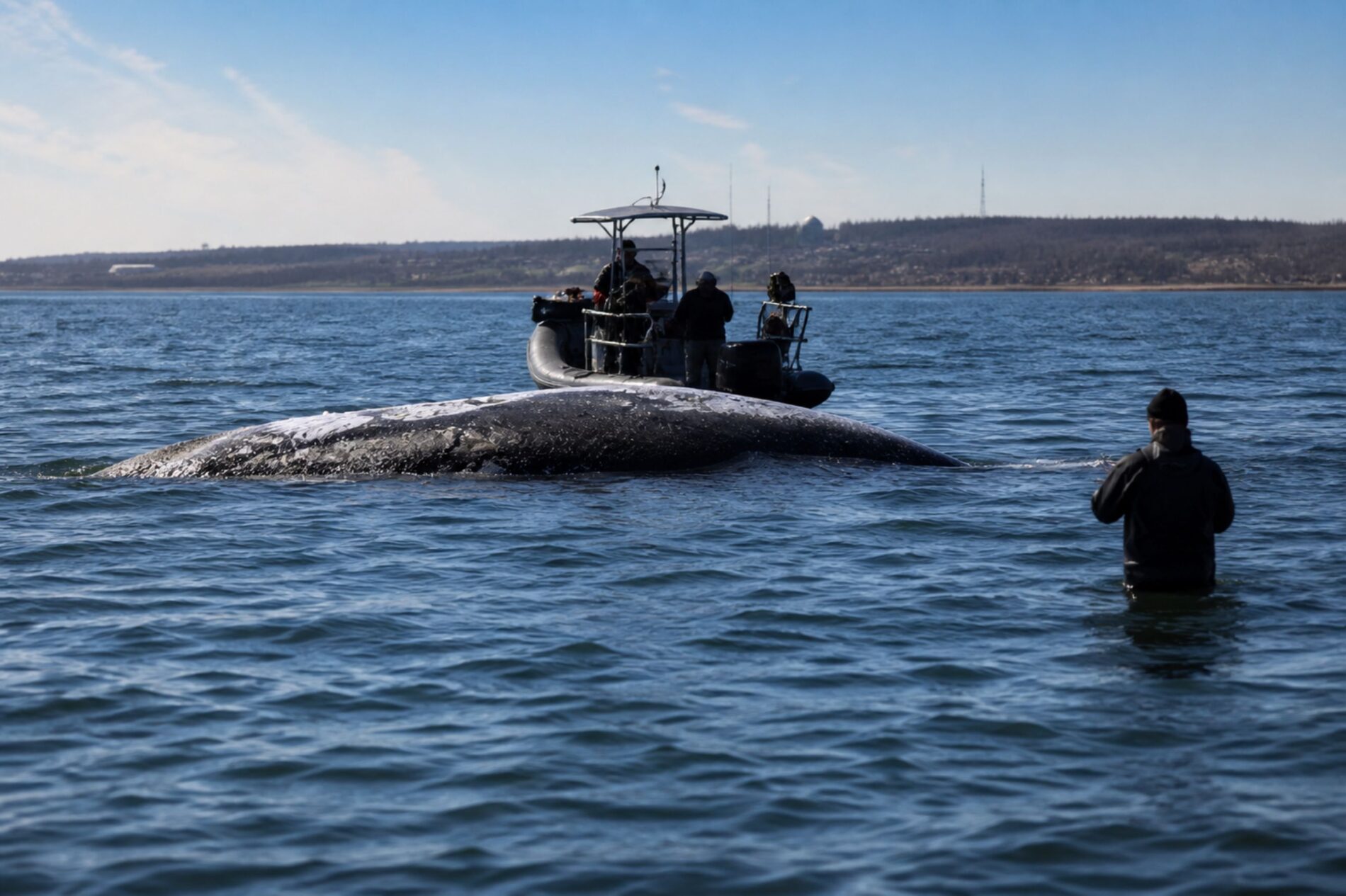
Public broadcasting thus employs a narrative form that works particularly well on television. Images of the sea, rescue scenes, and expert panels create a sense of connection. At the same time, attention shifts away from complex but consequential government issues.
Public Broadcasting’s Prioritization Meets Growing Political Dissatisfaction
Public broadcasting has a mandate to provide context. This includes scrutinizing political power. Precisely for this reason, the prioritization of topics seems explosive when emotional animal images dominate more frequently than hard-hitting questions about the government’s performance.
The federal government is losing trust. Many voters do not see Merz as the chancellor who will bring about the promised change in policy. Furthermore, compromises shaped by the SPD are blurring the CDU’s profile and reinforcing the impression of political aimlessness.
Citizen’s Income Costs, Taxes, and the Economic Crisis Remain Key Conflicts
The financing of statutory health insurance remains particularly sensitive. The federal government does not fully cover the healthcare costs of citizen’s income recipients. Therefore, contributors subsidize a portion of state social policy, while the actual burden on the budget remains hidden.
In addition, there are planned or discussed taxes on sugar, alcohol, tobacco, and plastics. Officially, the aim is to regulate consumption, improve health, and manage the budget. However, for citizens, this will result in higher prices and hidden additional burdens, particularly affecting households with limited financial resources.
When Timmy dominates, political reporting loses its edge
The criticism isn’t directed at animal welfare. It’s directed at priorities in the news industry. Emotional animal images shouldn’t be allowed to permanently overshadow political crises when expenses are rising and the economy is struggling.
Timmy is suitable for television, live streams, and social media. But Germany faces more serious issues. Expenses are rising, taxes are increasing, the economy is weakening, and trust in Merz is declining. Reporting on these issues shouldn’t be treated as less important than a stray whale. (KOB)