
In Berlin, criticism of Chancellor Friedrich Merz is now growing even within his own party. Peter Altmaier recently warned that the German economic model is in acute danger, Jens Spahn said on television that they are “largely managing the decline,” and the former President of the Federal Constitutional Court, Hans-Jürgen Papier, even accused the federal government of “refusing to govern.” At the same time, the CDU/CSU alliance is plummeting in the polls, while the AfD, with 26 percent in the current ZDF political barometer, is ahead of the CDU/CSU with 25 percent. Merz himself is viewed favorably by only 30 percent in that poll, while in the RTL/ntv trend barometer, only 20 percent approve of him, while 78 percent are dissatisfied. With the state elections in Saxony-Anhalt on September 6 and in Berlin and Mecklenburg-Western Pomerania on September 20, 2026, the situation is therefore extremely precarious for the CDU.
Decline and Failed Governance
Altmaier and Spahn are sending the same signal, but from different perspectives. As Economics Minister under Merkel, Altmaier was part of the system for years and never stood out as an internal rebel. His now-emerging alarmist stance appears as a belated distancing from a chancellor whose government is clearly failing to halt the erosion of economic confidence. Spahn’s statement about “decline” is even more pointed, because as parliamentary group leader, he comes directly from the heart of the CDU/CSU’s power structure. This is no longer a side note, but rather an indirect reckoning with his own government’s performance.
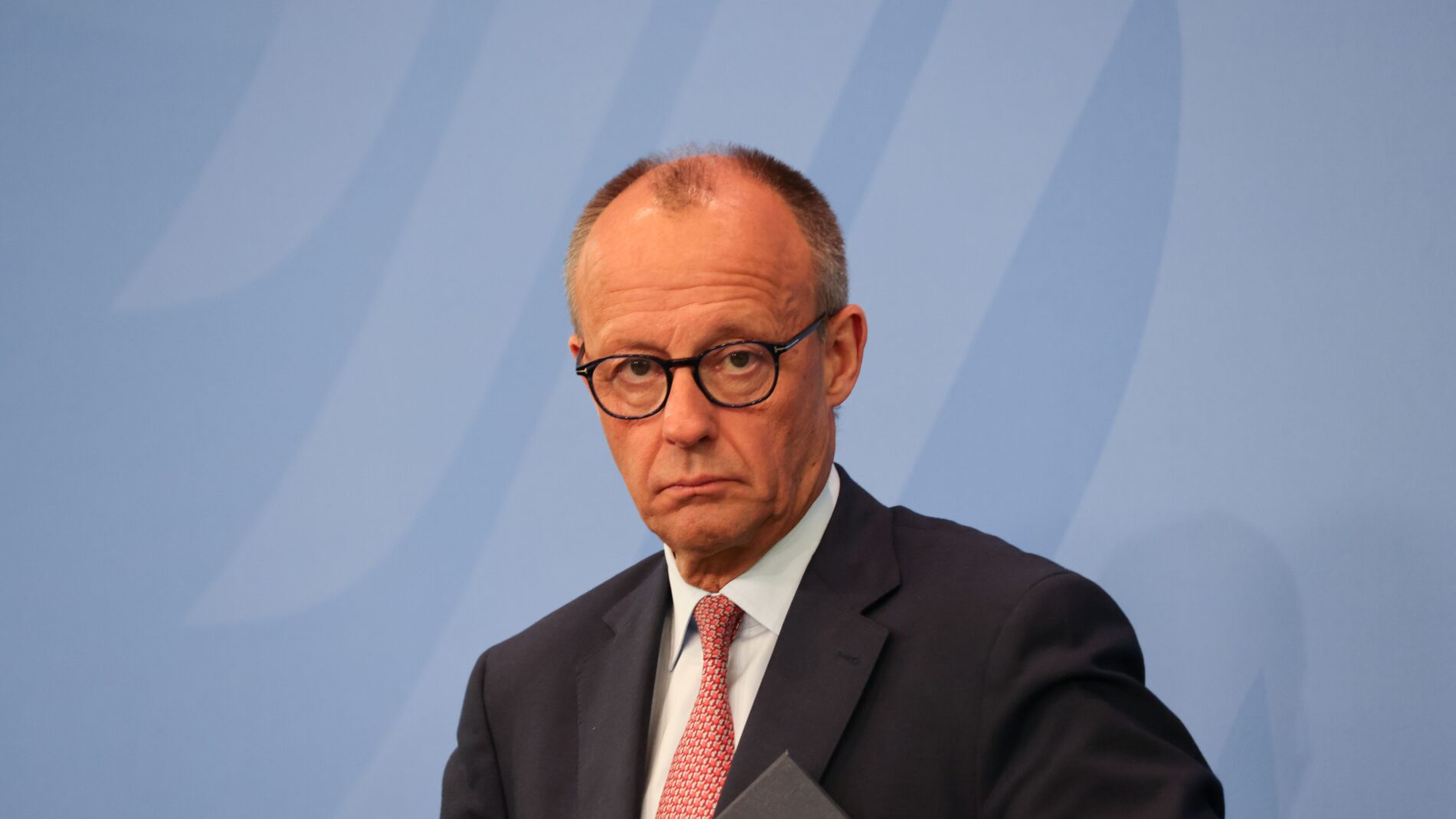
The article further exposes the underlying problem. On April 11, 2026, the former president of the Federal Constitutional Court accused the federal government of “refusing to govern” and criticized its hesitant approach to social reforms as well as a massive implementation deficit. This means the criticism is no longer coming solely from the media, the opposition, or dissatisfied voters, but also from a former top legal expert who assesses the state based on its constitutional function. For Merz, this is politically devastating because it reinforces the perception that his government is not shaping policy but merely administering it. The chancellor is therefore becoming noticeably isolated.
CDU Facing an Autumn of Decline
The stark figures further exacerbate the situation. The ZDF political barometer shows the AfD ahead of the CDU/CSU for the first time, and at the same time, the CDU/CSU-SPD coalition no longer holds a parliamentary majority. In the RTL/ntv trend barometer, Merz fell to his lowest approval rating to date, at 20 percent. RTL explicitly stated that this even puts him below Olaf Scholz’s lowest rating recorded there. Anyone polling so poorly not only loses external authority but also support within their own party.
Is the CDU therefore already preparing to replace its own chancellor in order to salvage what little remains? There is currently no overt evidence of this, no documented power struggle, and no public call for his removal. Nevertheless, the signals speak volumes. When Altmaier sounds the economic alarm, Spahn speaks of decline, Papier criticizes government failure, and three politically sensitive elections are approaching, then the fear of a fiasco is clearly growing within the CDU/CSU. For Merz, this is not yet a formal revolt, but it is a dangerous precursor. His real weakness no longer lies solely with the opposition, but with a CDU that is beginning to distance itself from him internally. (KOB)