
In Sweetwater, Texas, recycling company Global Fiberglass Solutions has stockpiled thousands of discarded wind turbine blades for years instead of recycling them as promised. Texas environmental authorities accuse the company of operating unauthorized waste disposal sites. More than 3,000 rotor blades and other wind turbine components have accumulated at two locations. On June 10, 2026, a court ordered the complete removal of the waste by December 2027. However, the final destination of the materials remains uncertain. The court explicitly permits disposal at an authorized waste facility, including a licensed landfill where permitted. The company may therefore remove the waste without actually recycling it.
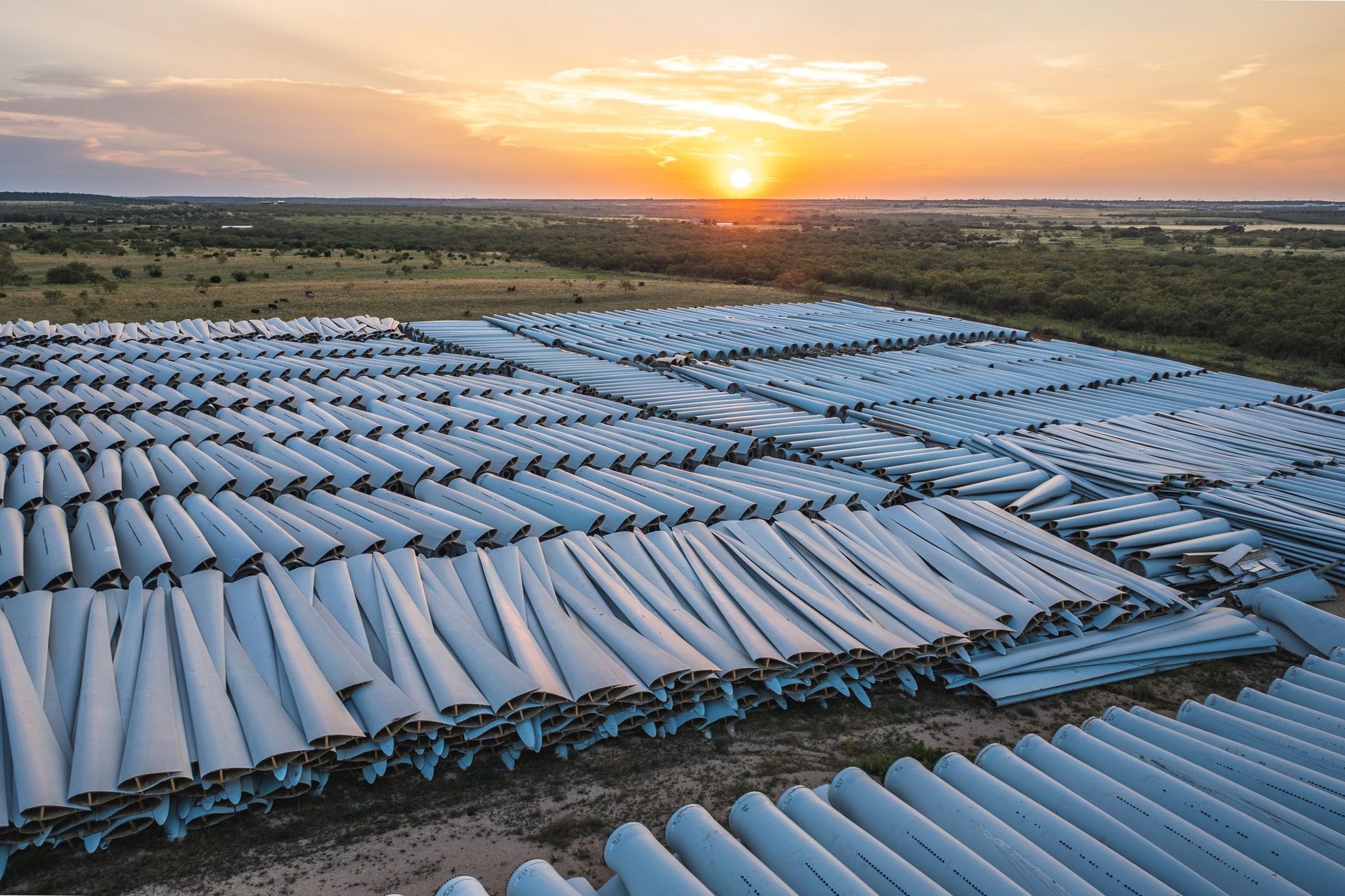
Image: Shutterstock
Recycling Company Stockpiled Rotor Blades Instead of Processing Them
Global Fiberglass Solutions originally offered wind energy companies a way to recycle decommissioned rotor blades. The company planned to manufacture fillers and new industrial products from the recovered materials. It therefore began accepting discarded components from wind turbines years ago. However, according to Bloomberg, the company struggled to find buyers for its recycled products. Instead of establishing a functioning recycling operation, it accumulated increasingly large quantities of waste. In a legal dispute with GE, the company even contested whether it had a contractual obligation to recycle the materials.
Texas environmental inspectors documented enormous piles of unprocessed rotor blades as early as 2021. An administrative order in 2022 required the company to address the unauthorized storage. Nevertheless, investigators continued finding large quantities of discarded materials in 2025, while additional deliveries had arrived. The authorities estimated the total accumulated waste volume at approximately 372,000 cubic meters across both sites. Furthermore, the company allegedly failed to meet the required recycling quota. To qualify for an exemption from standard waste disposal permitting, it would have needed to recycle at least 75 percent of the relevant materials annually.
Court Orders Complete Removal of Thousands of Wind Turbine Blades
Texas filed a lawsuit against Global Fiberglass Solutions in February 2026. In June, the parties agreed to a temporary court injunction without resolving their underlying legal dispute. The order prohibits further waste deliveries to the two facilities. In addition, the company must provide at least $3.5 million in financial assurance. Cleanup operations must begin no later than December 7, 2026.
The court also established binding removal deadlines. The company must remove 25 percent of the materials within 270 days and half within one year. All remaining waste must leave the properties within 550 days, meaning December 2027. Furthermore, the court requires monthly reports documenting the transport, destination, and identification numbers of removed components. These records must demonstrate where the rotor blades ultimately end up. However, independently verified information about substantial cleanup progress remains unavailable.
Court Explicitly Allows Landfill Disposal Instead of Recycling
The most significant detail appears in the court order itself. Although Global Fiberglass Solutions must clear both properties, it is not required to recycle every rotor blade. The company may shred the wind turbine blades and send the resulting materials for beneficial reuse or recycling. Alternatively, the order explicitly permits disposal as solid waste at an authorized facility, which may include a licensed landfill approved to accept the material. If no suitable facility exists in Texas, the company may seek authorization to transport the waste to another state. The court order does not identify a specific recycling company or final disposal location.
Consequently, thousands of rotor blades originally intended for recycling could ultimately end up buried at a conventional landfill. Such an outcome would satisfy the removal requirements if the disposal facility holds the necessary authorization. However, it would not fulfill the original promise of recovering valuable materials. Using shredded fiberglass as a substitute raw material in cement production offers another possible route, although it does not create a closed recycling loop for new rotor blades. Meanwhile, commercially viable processing facilities remain limited in many regions. The court-ordered cleanup therefore guarantees removal, but not material recovery.
Disposal Costs Reach Millions – Final Destination Remains Uncertain
The financial consequences are substantial. According to Bloomberg, Sweetwater received cleanup cost estimates ranging from $13 million to $54 million. The court-ordered financial assurance of $3.5 million does not automatically cover these projected expenses. Moreover, transporting and processing enormous fiberglass components involves specialized machinery and considerable logistical costs. Recycling also requires customers willing to purchase the resulting materials. Without sufficient demand, technically feasible recycling processes may remain economically unattractive.
An October 2026 study from Texas highlighted the substantial future decommissioning costs associated with wind and solar installations. However, Sweetwater already faces an immediate disposal problem. The discarded wind turbine blades must be removed, yet no publicly confirmed final recycling destination has been established. Instead, the material could simply move from unauthorized storage sites to an approved landfill. The court’s decision therefore resolves the legal requirement to clear the properties without ensuring that the rotor blades will actually be recycled. Only the mandatory transport and disposal records will reveal how much material is recovered and how much ultimately ends up in landfills.
Author: Blackout News
Sources: Texas Attorney General – Court Injunction (10.06.26) – Texas Attorney General – Original Petition (03.02.26) – Bloomberg via Insurance Journal (31.03.26) – Texas Scorecard (28.10.26) – Texas Public Policy Foundation (27.10.26)
Lesen Sie auch:
- Rotor blade recycling: Extensive research, but little in the way of a profitable circular economy
- Rotor blades from old wind turbines – the suppressed waste problem of the energy transition
- Wind turbine scrap is becoming a persistent problem – rotor blades are piling up, recycling doesn’t exist
- Detention pending trial for waste disposal company owner due to illegal disposal of wind turbine scrap