
The German government plans to significantly reduce tax incentives for energy-efficient building renovation from January 2027. On November 12, 2026, the Bundestag passed an amendment to the Income Tax Act in Berlin. Tax relief will fall from 20 to 15 percent of eligible renovation costs. At the same time, the maximum tax benefit will decrease from €40,000 to €30,000. Homeowners will therefore have to finance a larger share of their investments themselves. The coalition is also tightening eligibility requirements for several renovation measures. On November 26, the property owners’ association Haus & Grund sharply criticized the decision. However, approval by the Bundesrat is still pending.
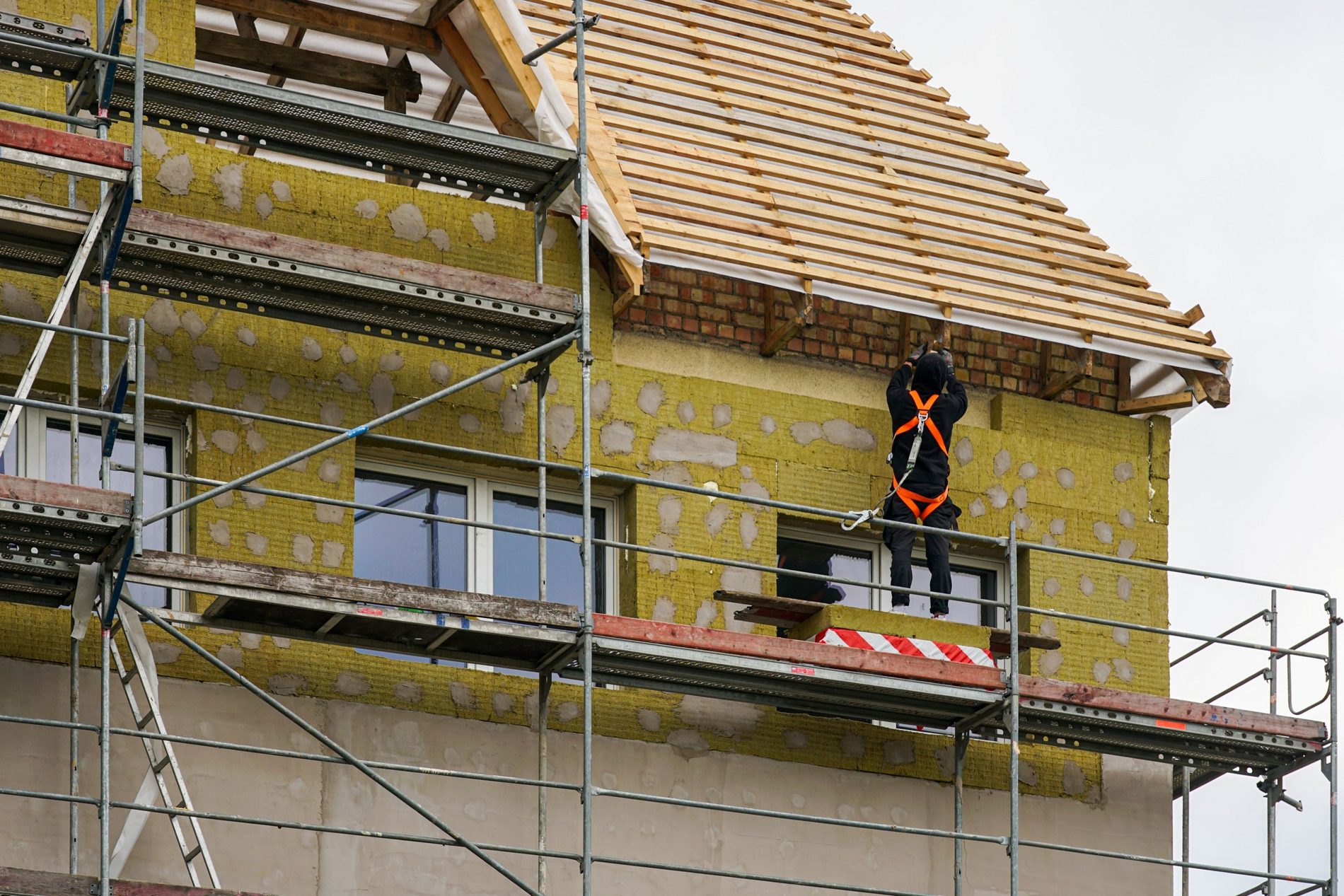
Image: Shutterstock
Building renovation becomes significantly more expensive for homeowners
Under current regulations, homeowners can deduct eligible energy-efficient renovation costs directly from their income tax liability over three years. Tax relief amounts to seven percent in each of the first two years and six percent in the third year. Under the new rules, the annual rate will fall to five percent. The coalition is therefore cutting the existing tax incentive by a quarter.
A simple calculation illustrates the financial consequences. If a homeowner invests €100,000 in eligible measures, the current tax benefit amounts to €20,000. Under the new regulations, this figure will fall to just €15,000. For renovation costs of €200,000, the difference rises to €10,000. In both cases, homeowners must have sufficient income tax liability to claim the full benefit.
German government harmonizes funding schemes at homeowners’ expense
CDU financial policy spokesman Matthias Hiller justifies the reduction by aligning tax incentives with Germany’s Federal Funding Program for Efficient Buildings (BEG). Basic subsidies for numerous energy efficiency measures have stood at just 15 percent since 2022. However, the government is now eliminating differences between the funding schemes at homeowners’ expense.
Unlike direct subsidies, tax relief requires homeowners to finance the entire investment upfront. They receive financial compensation only through their tax returns over the following years. Furthermore, buildings must be more than ten years old to qualify for tax relief. Homeowners cannot combine this incentive with government grants or subsidized loans for the same renovation measures.
Further restrictions on heating systems and building technology
However, the legislative amendment goes beyond simply reducing tax relief. The government also intends to eliminate tax incentives for optimizing oil and gas heating systems that are more than 20 years old. Even if such measures significantly reduce energy consumption, homeowners will no longer qualify for tax relief.
In addition, lawmakers are tightening certain technical requirements for heat pumps. Renovation measures affecting building components that already meet the mandatory minimum energy efficiency standards will also lose eligibility. Consequently, the coalition is further restricting the range of investments that qualify for financial support.
Property owners’ association sharply criticizes the coalition
Haus & Grund President Kai Warnecke has particularly criticized the parliamentary procedure. According to Warnecke, the coalition pushed through the reduction at short notice and without prior public announcement. Indeed, the original government bill did not include this amendment. The parliamentary Finance Committee introduced the changes at a later stage. Warnecke regards the decision as an additional financial burden on Germany’s approximately 16 million owner-occupier households.
Building renovation is once again caught between political climate targets and economic feasibility. While the government is pushing for lower energy consumption in existing buildings, its funding cuts increase private financing requirements. Higher out-of-pocket renovation costs are therefore likely to prompt more homeowners to postpone planned investments. This threatens not only Germany’s intended renovation rate but also demand for construction and specialist trade services.
Author: Blackoiu News
Sources: WELT (26.11.26) – German Bundestag (12.11.26) – Bundestag document 21/9139 (11.11.26) – Deutschlandfunk (26.11.26) – IKZ (26.11.26)
Read also:
- More and more homeowners fear losing their property
- Real estate market turns – sellers left holding onto homes longer
- Heat pumps – subsidies in 2026 only if stricter noise limits are met
- Heat pumps – when maintenance costs eat up the cost advantage