
Since 2021, the new “Missunde III” ferry on the Schlei in Schleswig-Holstein has become a cautionary tale regarding flawed energy policy, rising costs, and a lack of operational viability. The electric ferry was intended to replace the old diesel-powered “Missunde II” and was originally scheduled to enter service much earlier; initial reports cited April 2023, followed by January 2024. In reality, however, it did not begin regular operations until April 29, 2026. By May 24, 2026, it was already out of service again due to a propulsion system failure, meaning it had operated for only about 25 days. Following this renewed breakdown, the operator gave up and withdrew from the project. Initial cost estimates in 2021 were around 2.5 million euros; according to the LKN (State Agency for Coastal Protection, National Parks and Ocean Conservation), total costs have since risen to over 6.5 million euros. The state had previously sold the old diesel ferry for approximately 17,000 euros. Because the new electric vessel proved unreliable—plagued by susceptibility to wind, docking difficulties, structural modifications, and technical defects—the state had to bring back its diesel predecessor. This initially incurred costs of around 50,000 euros, with an additional 50,000 euros later required to secure a right of first refusal. Consequently, commuters, businesses, local residents, and tourists continue to bear the consequences in the form of detours, service disruptions, changes in operators, and a lack of planning certainty. (bild: 07.06.26)
A political project with a precarious financial outlook began in 2021
The story started with a fundamental decision. The old “Missunde II” operated on the Schlei using diesel and was in need of refurbishment. According to estimates at the time, upgrading the vessel would have cost around 1.8 million euros. Consequently, the state opted to build a new electric vessel instead. The project was intended to send a signal in favor of climate-friendly mobility.
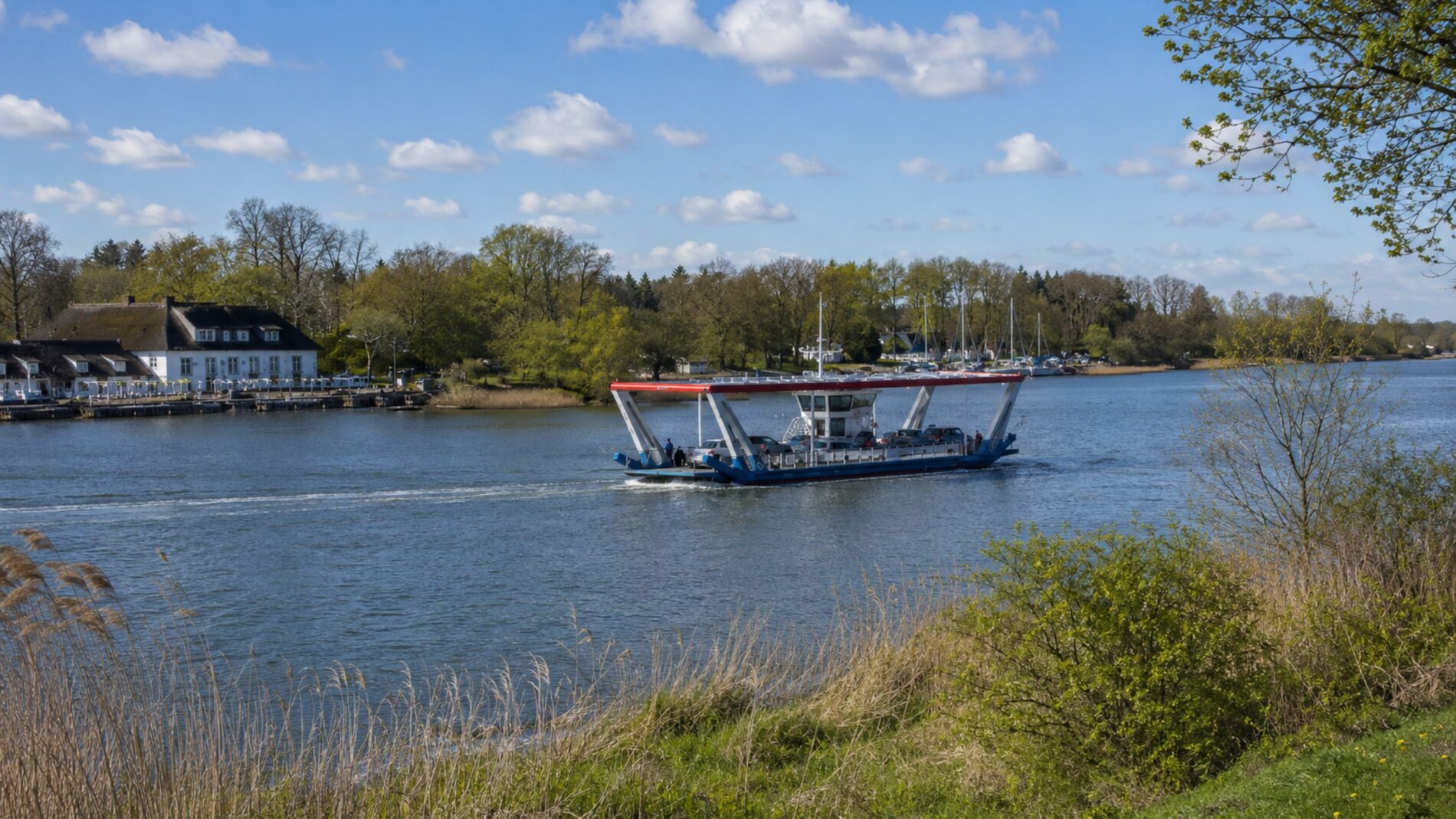
In hindsight, the initial cost estimate already looks like a warning sign. In 2021, the projected cost was around 2.5 million euros. The new vessel alone ultimately cost about 3.3 million euros. Additional expenses arose from modifications to the ship, the landing stages, and the infrastructure. Consequently, what began as a replacement project turned into a ballooning cost burden.
Operations for the electric ferry were scheduled to begin in 2023, but the route proved problematic
The original timeline could not be met; the planned launch date of April 2023 was delayed due to supply issues. Subsequently, water levels and technical defects prevented regular service.
The testing phase began in January 2024, revealing a critical issue: the new vessel could not dock safely enough in moderate winds (Force 3). This is no minor detail, especially on the Schlei inlet, where wind, currents, and a tight operating schedule are part of daily life. The flaw thus undermined the project’s most essential attribute: reliable operational capability.
Old diesel ferry sold cheaply, then bought back at high cost
The handling of the old ferry was particularly problematic. The state sold off the diesel ferry “Missunde II” for around 17,000 euros, thereby removing a reliable backup vessel from the region. Meanwhile, the new vessel remained idle, unable to enter regular service. This decision significantly compounded the financial loss.
When the electric ferry “Missunde III” proved unreliable, the state suddenly needed its diesel predecessor back. Retrieving the vessel initially cost around 50,000 euros, followed by another 50,000 euros to exercise the right of first refusal. This meant that the initial revenue of approximately 17,000 euros was offset by a subsequent cost of around 100,000 euros. Furthermore, the old ship required ongoing technical maintenance.
Costs, modifications, and doubts mounted in 2024 and 2025.
In practice, the new solution did not suit the crossing as well as the initial plans had suggested. It was larger, heavier, and more susceptible to wind than its predecessor, necessitating retrofits. The landing stages also required adjustments. According to state authorities, these modifications alone cost well over 1.3 million euros.
The “Missunde III” thus illustrates a fundamental problem with misguided energy policy. Policymakers sought an emission-free connection, yet the region required a robust crossing. The two objectives should have been reconciled; instead, the result was an expensive, stopgap solution. Meanwhile, the aging diesel-powered predecessor remained the practical fallback option.
The ferry finally arrived in 2026, but with limitations
The electric ferry finally entered service on April 29, 2026. Its launch was significantly delayed and subject to restrictions. Initially, it was permitted to carry only pedestrians, cyclists, and vehicles weighing up to 7.5 tonnes; heavier vehicles—up to 25 tonnes—were to be accommodated at a later stage.
This limitation highlights the core of the problem. A replacement must, at the very least, match the performance of the old system; otherwise, there is no real progress. Yet, the new vessel arrived late, at a high cost, and with limited utility. At the same time, the Lindaunis Bridge—a crucial alternative route—remained closed. Consequently, any service interruption immediately exacerbated traffic issues in the Schlei region.
Operations halted again after just 25 days
Service on the “Missunde III” was interrupted again as early as May 24, 2026. A damaged drive belt brought operations to a standstill; subsequent reports identified misaligned pulleys as the cause. Repairs were expected to take until mid-June, once again forcing commuters to take detours.
The Missunde situation has thus evolved beyond a mere technical glitch. The project has become emblematic of an energy policy that prioritized symbolism over operational reliability. An electric drive system is no substitute for reliable infrastructure; a ferry serving a commuter route must be able to dock in windy conditions and remain available daily. This is the standard against which the project must be judged. Yet, the timeline so far tells a different story: higher costs, delayed launch, a return to older technology, and a new vessel that repeatedly fails to perform its primary function. This makes the next phase of the debate particularly frustrating: officials are already considering a “Missunde IV.” However, according to Transport Minister Claus Ruhe Madsen, building a smaller replacement would take years, consume millions more in funding, and once again involve launching a prototype. The “Missunde III” thus risks evolving from a single failed project into a perpetual financial drain.