
Starting in 2030, the state will levy a charge on calculated greenhouse gas emissions from agricultural production. This will be based on activity data and emission factors, with values converted into CO₂ equivalents. Farms raising cattle, pigs, and sheep will be primarily affected. This decision is significant for Germany because Denmark is establishing a concrete model for state-imposed pricing of agricultural emissions. Adopting such a model in Germany would impact farms that already have to factor in EU regulations, higher wages, energy costs, and reporting obligations. (farmersjournal: 30.05.26)
Agricultural emissions are calculated in terms of CO₂ equivalents
The Danish levy will launch in 2030 at 300 Danish kroner per tonne of CO₂ equivalent. By 2035, the rate will rise to 750 kroner. However, a basic deduction significantly reduces the actual payment obligation. Consequently, the effective rates will be 120 kroner from 2030 and 300 kroner from 2035.
The calculation follows a technical framework. Denmark combines activity data with emission factors. Activity data include factors such as animal numbers, animal category, weight, breed, and housing system. These inputs generate CO₂-equivalent figures, which are then used to calculate the levy.
Dairy cows show the highest figures
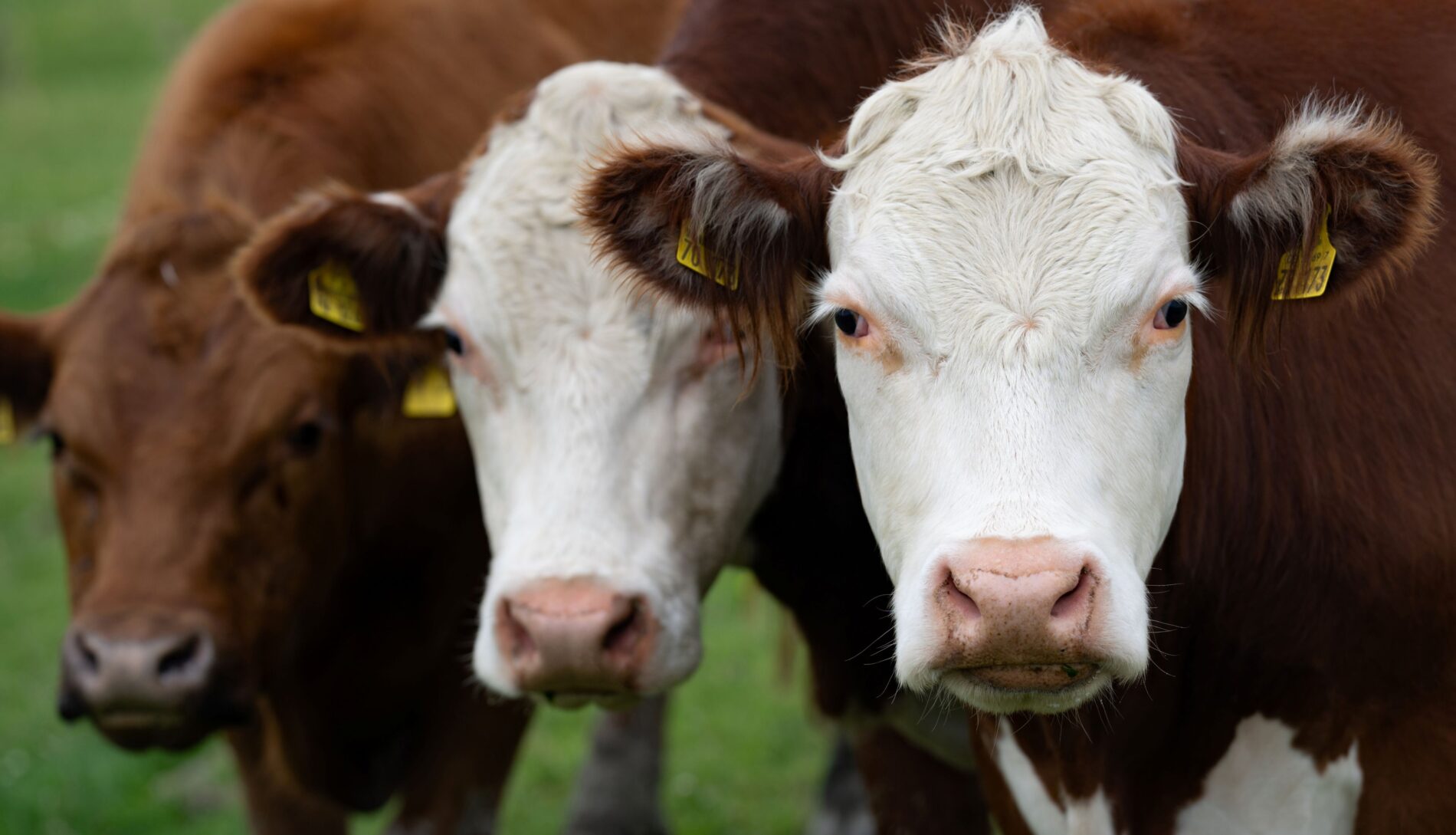
The calculated values are particularly high for cattle. The Danish report cites 3.79 tonnes of CO₂-equivalents per year from digestive processes for a Jersey dairy cow. For a heavy dairy cow, the report lists 4.61 tonnes of CO₂-equivalents per year. At a rate of 120 kroner per tonne, this results in a cost of approximately 455 kroner for a Jersey cow and around 553 kroner for a heavy dairy cow in 2030.
Additional values derived from housing and manure management systems are also factored in. For heavy dairy cows, the report lists additional values ranging from 0.39 to 4.62 tonnes of CO₂-equivalents per animal, depending on the system used. Consequently, the assessment base for a heavy dairy cow can rise to between approximately 5.0 and 9.2 tonnes. The effective levy in 2030 would thus range roughly between 600 and 1,108 kroner per year.
Pigs and sheep show lower figures
Emission factors are significantly lower for pigs. A fattening pig weighing between 31 and 115 kilograms is assigned a value of 0.01 tonnes of CO₂-equivalents for digestive processes. A sow is rated at 0.08 tonnes of CO₂-equivalents per year. At 120 kroner per tonne, this equates to approximately 1.20 kroner per fattening pig and around 9.60 kroner per sow in 2030.
For pigs, too, housing and manure management systems can increase the assessment base. For fattening pigs kept on deep litter, the report cites an additional 0.09 tonnes of CO₂ equivalents as an example. Combined with the figure for digestive emissions, this results in approximately 0.10 tonnes per animal. The effective levy in 2030 would then amount to around 12 kroner per fattening pig.
Germany Would Need to Assess Costs and Competitiveness
The report does not provide a detailed breakdown for sheep comparable to the data for cattle and pigs; however, it does cite an aggregate estimate for 2030. According to this, approximately 0.04 million tonnes of CO₂ equivalents are attributed to a sheep population of around 0.1 million. This results in a rough calculated average of about 0.4 tonnes per sheep.
This figure remains an approximation because the published data are rounded. At a rate of 120 kroner per tonne, the calculated cost in 2030 would be around 48 kroner per sheep. However, the actual payment would depend on factors such as animal category, husbandry methods, and the specific administrative approach taken. Consequently, the precise classification within the Danish calculation system remains the decisive factor.
Agricultural Emissions Could Become a Topic of Debate in Germany
In 2023, Germany had approximately 255,000 agricultural holdings. The number of farms has dropped significantly since the year 2000, and many of the remaining operations cultivate larger areas. Therefore, a comparable levy would affect a sector currently undergoing structural change.
A German debate on agricultural emissions would need to take the full cost situation into account. Farms are already contending with higher energy prices, stricter documentation requirements, and escalating environmental and animal welfare regulations. Furthermore, the rising minimum wage is driving up costs in labor-intensive areas. An additional emissions levy would thus represent yet another policy-driven cost burden.
Relocation Would Not Be a Viable Climate Strategy
With this levy, Denmark is setting a new benchmark for agricultural emissions. While the approach can spur investment in lower-emission practices, it can also increase the cost of domestic production. The crucial factor, therefore, is whether farms are provided with realistic technical and economic pathways for adaptation.
For Germany, the key issue lies in the impact on competitiveness. An additional national burden could weaken domestic producers, while imports from countries with less stringent regulations become more attractive in terms of price. Emissions in the national balance sheet would then fall, while production shifts abroad. However, climate policy only achieves substance if it actually reduces emissions and maintains security of supply.