
French President Emmanuel Macron has presented US President Donald Trump with several proposals to curb the rise in oil prices that is paralyzing the global economy. According to diplomatic sources, the meeting in New York on Monday focused on a UN resolution regarding the Strait of Hormuz and the security of Saudi Arabian energy facilities. Regarding Russia and Ukraine, Macron stated that he had also discussed an “energy truce” with Trump.
“We had a very good discussion. It was very constructive,” Macron told reporters after the meeting with Trump. Both presidents are in New York for the UN General Assembly debate. Macron emphasized that there is a “will” to reopen the Strait of Hormuz.
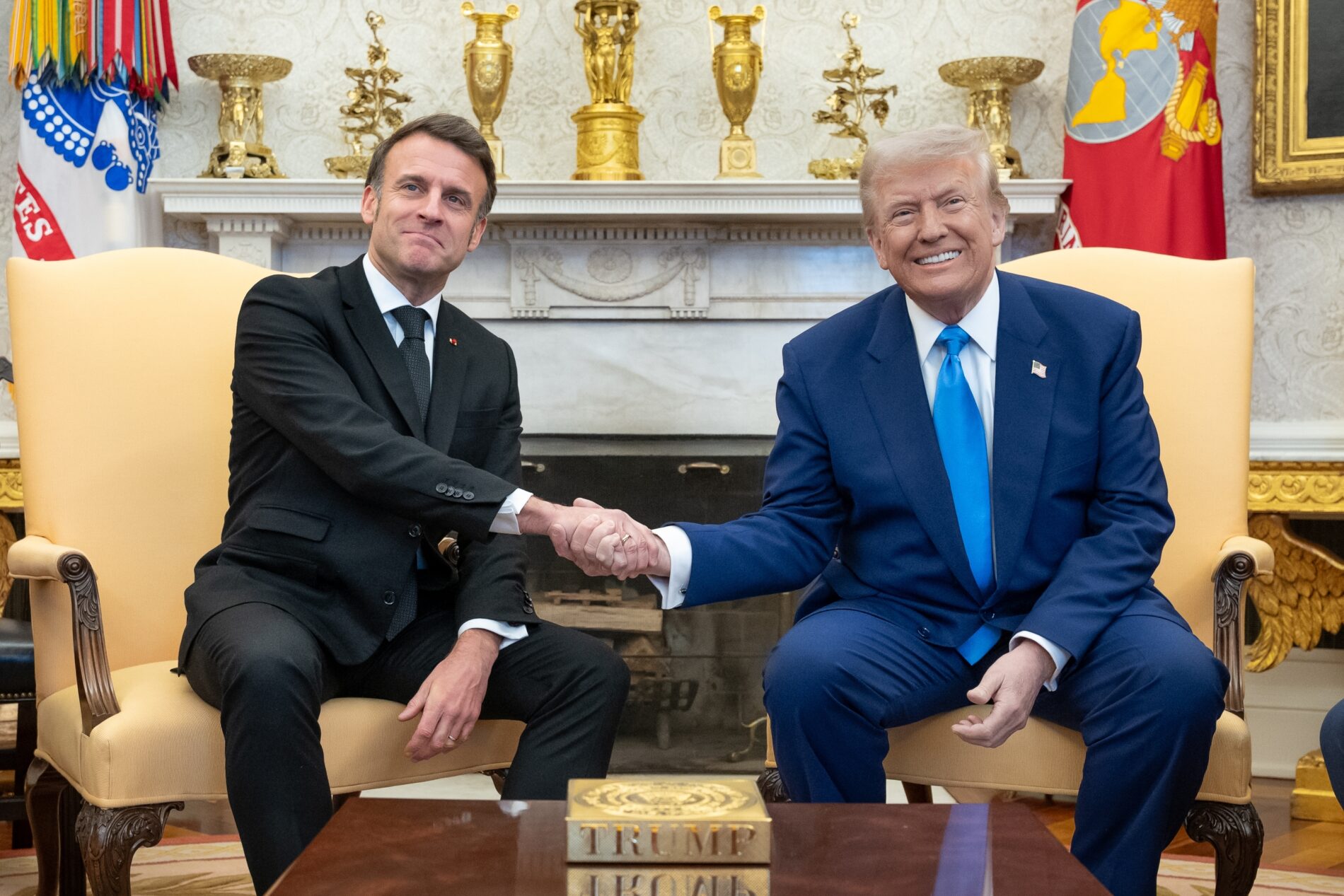
Image: Shutterstock
“Several solutions have been discussed that would make it possible, without a comprehensive agreement, to find ways to allow more container ships and tankers to pass through,” Macron said, without giving further details.
France wanted to work with the USA and its partners on a UN Security Council resolution that would guarantee freedom of navigation in the Strait of Hormuz, diplomatic circles said afterwards.
In this way, UN member states could participate in securing shipping in the strait, enabling Washington and Tehran to refocus their discussions on other key issues, including Iran’s nuclear program.
In April, France and Britain agreed to provide military security for shipping in the Strait of Hormuz, a route that normally carries around one-fifth of the world’s traded crude oil and liquefied natural gas (LNG). One task would involve clearing mines laid by Iran during the conflict with the US and Israel. However, a cessation of mutual attacks would be a prerequisite. So far, the initiative has met with little interest from Trump.
France is also reportedly prepared to help protect Saudi Arabia’s energy infrastructure, which is currently under attack by the Houthi militia active in Yemen. Diplomatic sources described this as a “purely defensive approach.” Such measures could protect sites like the Red Sea port city of Yanbu and the East-West Pipeline, which is vital for Saudi oil exports. “The aim is by no means to take sides in the conflict with the Houthis.”
Since February of this year, global oil and gas supplies have been significantly constrained as a result of the war involving Iran—initiated by the US and Israel—that began that month. For one thing, Tehran repeatedly attacks US bases and energy infrastructure in Gulf states allied with the US. Furthermore, the Strait of Hormuz is effectively blockaded.
With the Iran-backed Houthi militia having seized control of the Bab al-Mandab Strait in the Red Sea, another vital transport route is coming under increasing pressure. Most recently, the Houthis attacked facilities belonging to the Saudi oil company Aramco. Additionally, the East-West Pipeline in Saudi Arabia was temporarily shut down following drone attacks launched from Iraq.
Macron stated that he also discussed with Trump “the importance of helping our Ukrainian friends even faster and more effectively with interceptor aircraft.” Following a meeting with Ukrainian President Volodymyr Zelenskyy in New York, Macron raised the “prospect of an energy truce and a moratorium in the Black Sea” via the online platform X.
Zelenskyy was scheduled to meet with Trump on Tuesday on the sidelines of the UN debates in New York. Zelenskyy had spoken with Trump by phone on Sunday, noting a “diplomatic momentum” in efforts to end the war in Ukraine.
Since Trump’s return to the White House, the US has been attempting to bring an end to the Russian war of aggression against Ukraine, which has been ongoing for more than four and a half years. Previous rounds of talks involving negotiators from the US, Russia, and Ukraine have failed to yield a breakthrough.
Author: AFP – ck/ju
Sources: AFP Press Portal