
A commentary by our author Klaus Bastian:
Finance Minister Lars Klingbeil has unexpectedly drawn a line regarding the planned sugar tax. Sugar-free “zero” and “light” drinks will not, after all, be subject to the levy of 26 cents per liter. Just a day earlier, a position paper from his own ministry had envisaged precisely this tax. Following fierce criticism, Klingbeil stated on Wednesday that a sugar tax on sugar-free drinks made no sense and would not be implemented. However, he continues to consider the tax on drinks that actually contain sugar to be the right move. At the same time, substantial state revenue from the measure remains part of the financial planning. This rapid U-turn therefore resolves an obvious contradiction, but not the fundamental credibility problem.
Klingbeil shoots down his own ministry’s proposal
The development is politically noteworthy. The Ministry of Finance had proposed taxing not only sugar but also sweeteners. Consequently, “zero” drinks were to be subject to the same 26-cent-per-liter levy as beverages in the low-sugar category. Klingbeil has now declared: “I’m not doing that. That won’t happen.” He further described the document as an internal working draft that had neither been politically agreed upon nor approved by the coalition.
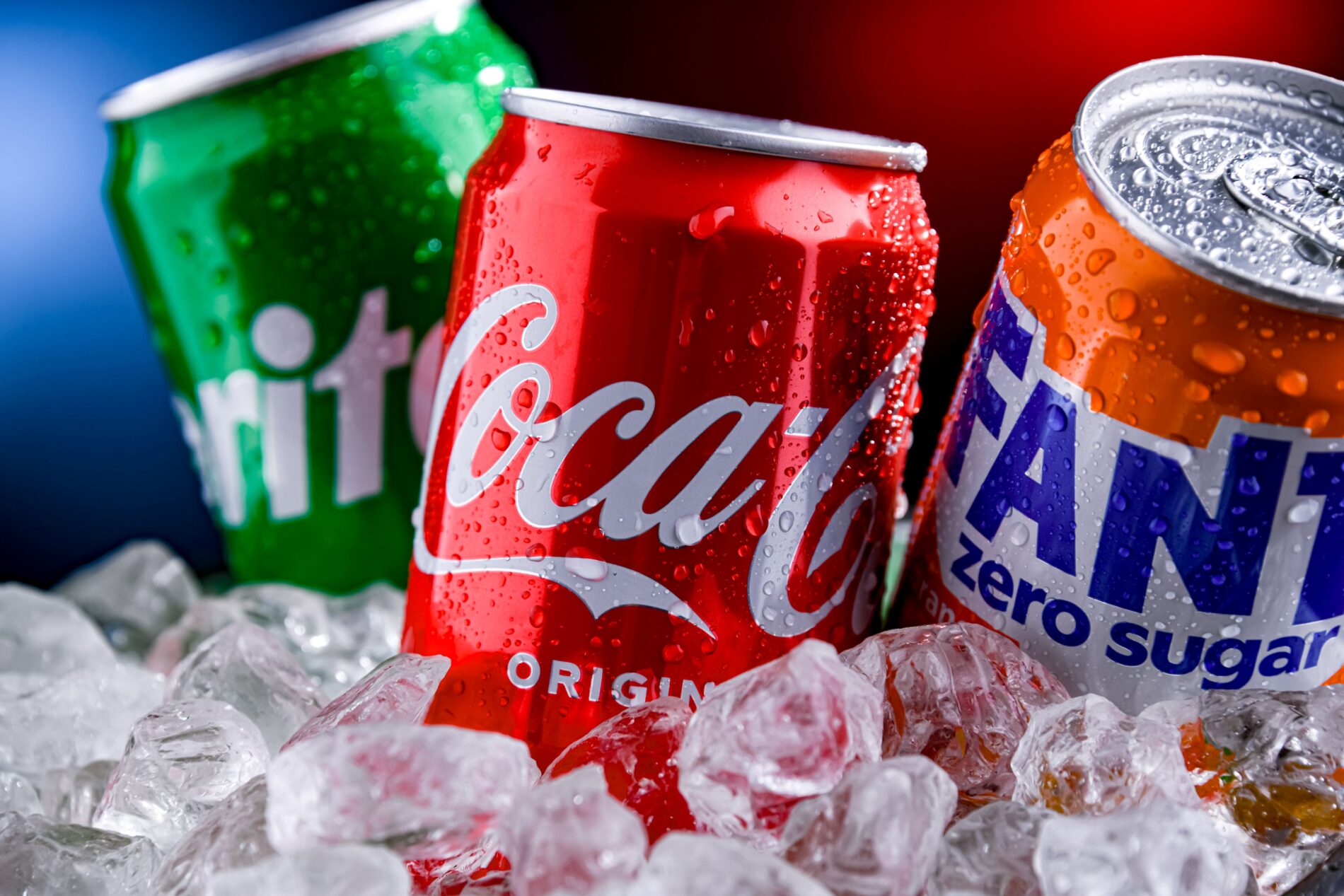
Image: Shutterstock
However, this about-face seems to require even more explanation given that, on the very same day, Klingbeil had been actively advocating for an expansion of the tax. Deutschlandfunk reported his statement to RTL/ntv affirming that the federal government stood behind the plans. At the same time, he dismissed accusations that the primary goal was to generate additional state revenue. Yet shortly thereafter, he dropped the most politically sensitive part of the proposal. This suggests, at the very least, a significant need for clarification within his own department and the coalition.
Fruit juice highlights the contradictory tax logic
The decision to backpedal on “zero” drinks does not resolve all contradictions, however. The internal policy paper had explicitly exempted 100% fruit juice drinks from the tax—even though a liter of apple juice can contain around 100 grams of naturally occurring sugar. Meanwhile, the initial plan was to tax sugar-free drinks. Klingbeil has now rectified this particularly difficult-to-justify scenario. Nevertheless, the exemption for pure fruit juice continues to demonstrate that the sugar content is not the sole factor determining the tax burden.
Many questions remain regarding other beverages as well. The paper listed items such as nectars, smoothies, oat drinks, mixed milk beverages, and ready-to-drink coffees. It is not yet clear whether Klingbeil’s rejection of “zero” products today will alter the approach to these other categories. What remains certain, however, is the planned taxation of sugary drinks. The federal government currently projects revenues of around 650 million euros for 2027; under the originally much broader proposal, calculations by other ministries had even estimated annual revenues of around two billion euros.
The U-turn changes nothing regarding the fiscal core
This is precisely why Klingbeil’s rationale remains open to challenge. He points to the health consequences of high sugar consumption and, in particular, the need to protect children. This is a legitimate goal. Yet the government deliberately opted for a tax that generates substantial revenue. Current financial planning already factors in these receipts. Consequently, the sugar tax is not merely a public health measure but also a fiscal instrument.
If health were truly the overriding objective, policymakers would have other options. They could pursue mandatory reformulation targets or push for legally binding maximum limits on added sugar. Such measures would directly reduce sugar content without generating new tax revenue. That is precisely where the crucial difference lies. Regulation would mitigate the perceived problem, whereas a tax simultaneously swells the federal budget.
Klingbeil’s U-turn regarding Coke Zero is therefore a logical political move, though it comes only after a wave of public criticism. By doing so, the minister resolves the most glaring contradiction in his department’s stance. However, the revenue model itself remains intact. Anyone who cites health as the primary argument while simultaneously counting on hundreds of millions of euros in revenue must face a fundamental question: Is the main goal to reduce sugar consumption—or to generate new revenue from sugar?
Author: Klaus Bastian – Blackout News
Sources: Bild: (26.08.26) – Deutschlandfunk (26.08.26) – RedaktionsNetzwerk Deutschland (25.08.26) – Handelsblatt (25.08.26) – Welt (25.08.26) – Bundesministerium der Finanzen (06.07.26)