
Geesthacht, August 2026 – Precipitation patterns around the North Sea could shift significantly due to a massive expansion of offshore wind farms. A new study by the Helmholtz-Zentrum Hereon projects a reduction in rainfall of more than 15 percent for parts of Jutland. Regional decreases of 10 to 12 percent could occur along the coasts of Germany, the Netherlands, and Great Britain. At the same time, rainfall would increase over large wind farm areas. Wind speeds in those areas could also drop by two to three meters per second. However, the most pronounced effects would only occur under a theoretical maximum-expansion scenario that far exceeds current European targets.
Precipitation patterns change only with very extensive offshore expansion
The researchers used the regional climate model COSMO-CLM, basing their work on weather data from 2008 to 2017. The model encompassed existing and potential future wind farm sites in the North Sea and Baltic Sea. In addition, the team examined various turbine sizes and expansion stages.
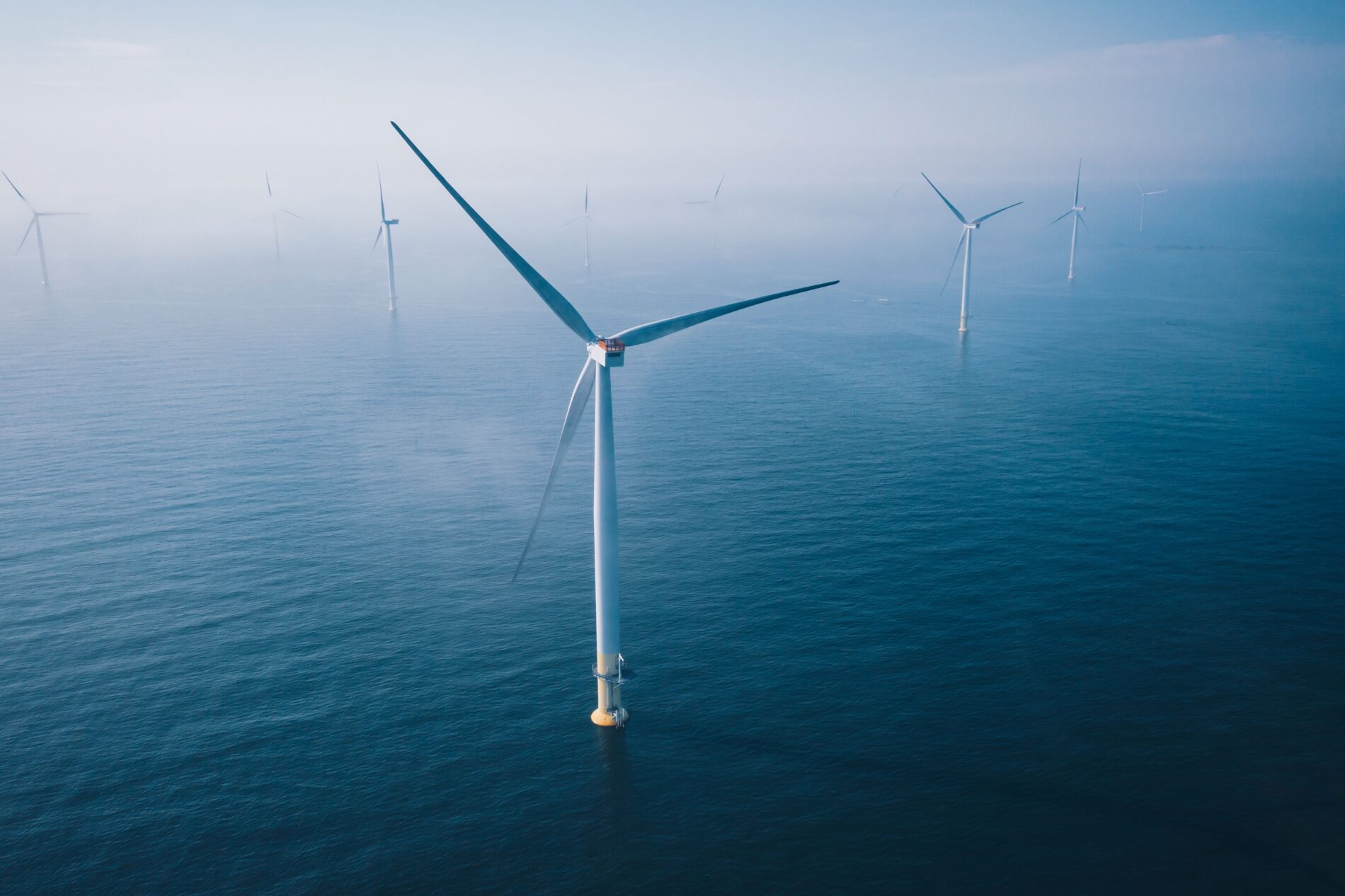
Image: Shutterstock
For the 2023 and 2030 scenarios, changes in precipitation remain comparatively minor. However, the effects become significantly more pronounced in the scenario for the period beyond 2050. To model this, researchers populated all designated development areas with wind farms. This assumption therefore goes far beyond the 300 gigawatts of offshore capacity under discussion for 2050. Consequently, the results do not represent a forecast of the expansion actually expected to take place.
Wind farms alter wind flow and moisture transport
Wind turbines extract kinetic energy from the air, while their rotors generate additional turbulence. This causes greater mixing of different air layers. As a result, moisture can rise more intensely over large wind farm arrays and condense there. Accordingly, the model shows increased rainfall over the sea and reduced precipitation in some adjacent coastal regions.
This effect is particularly pronounced with south-westerly winds. In parts of Jutland, calculated rainfall drops by more than 15 percent, while coastal regions in Germany, the Netherlands, and the UK see reductions of around 10 to 12 percent. At the same time, precipitation increases locally over the wind farm areas. Thus, the model shifts some of the rainfall from land to sea.
Further studies reveal the consequences of large-scale wind farms
Atmospheric changes are not the only consequences of large offshore wind farms being investigated. A 2026 study identified changes in current speeds in the North Sea of up to 20 percent. Researchers also calculated a localized, long-term rise in sea-surface temperatures of up to 0.2 degrees. Another study found changes in stratification and biological productivity in the North and Baltic Seas.
This expands the body of scientific data regarding the cumulative impacts of massive offshore wind expansion. However, the new study presents model results rather than actual measurements of future weather conditions; the authors therefore call for further research using additional models. Nevertheless, several studies demonstrate that densely developed marine areas can alter physical processes in both the atmosphere and the ocean. Such effects could therefore become increasingly significant in long-term expansion planning.
Author: Blackout News
Sources: Helmholtz-Zentrum (20.08.26) – CleanThinking (22.08.26) – Meteored (22.08.26) – Heise (24.08.26)