
A commentary by our author Klaus Bastian:
At the mechanical engineering summit, Federal Minister for Economic Affairs Katherina Reiche called for people to “work a little bit more and a little bit longer each day.” At the same time, she advocated for “lowering expectations,” arguing that “very rigid, inflexible employment protection laws” hinder change. These remarks were made—of all places—before an audience of mechanical engineering representatives, who for years have been calling for relief from costs and government-imposed regulations. While the sector is currently shedding jobs, a new report on small and medium-sized enterprises (SMEs) puts the annual burden of bureaucracy on the economy at 65.3 billion euros. Yet, Reiche is demanding longer working hours—even though additional hours, in the absence of new orders, could end up costing even more jobs.
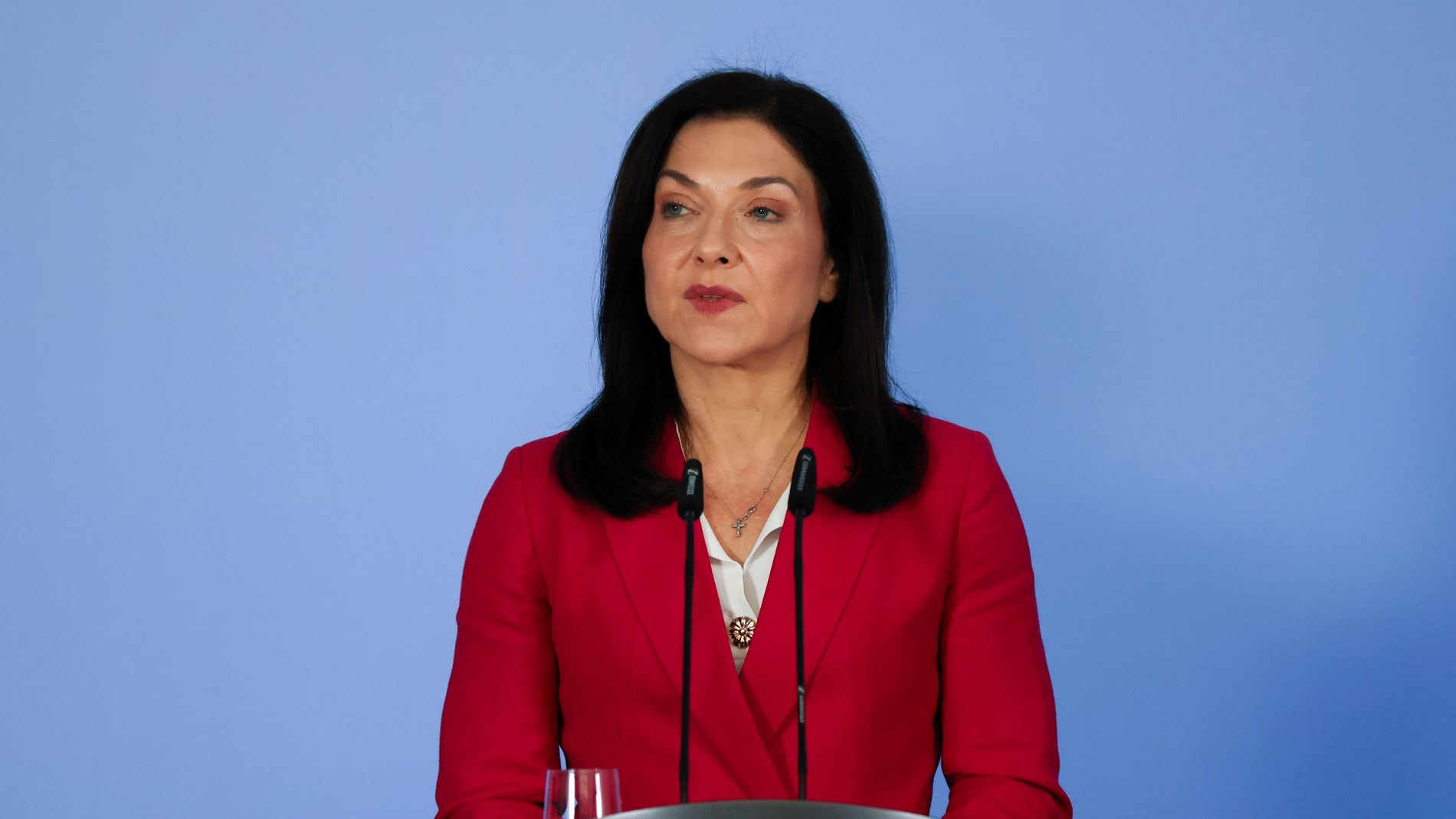
Image: Shutterstock
The State Ties Up Labor – Reiche Demands Even Greater Effort
In German companies, employees are required to produce countless documents, reports, and forms for government authorities. In total, these obligations tie up vast numbers of staff in administrative tasks that neither manufacture a single machine nor secure a single order. At the summit, VDMA President Bertram Kawlath estimated the costs of bureaucracy at three to six percent of total revenue. Yet, rather than first eliminating this state-imposed burden, Reiche is calling for greater effort and lower expectations. The absurd message is that Germans are not working enough—even though the state itself consumes an enormous amount of labor capacity for its own paperwork.
Representatives from the mechanical engineering sector had previously repeatedly accused the federal government of failing to provide sufficient relief. In a poll conducted at the summit, 44 percent of participants identified the reduction of bureaucracy and reporting requirements as the most critical reform. The “Mittelstandsmonitor 2026” (a report on the small and medium-sized enterprise sector) estimates the annual cost of bureaucracy for the economy at 65.3 billion euros. Nevertheless, policymakers prefer to debate how many additional hours employees should work, rather than focusing on how to make their existing working hours more productive.
Increasing working hours does not generate new orders—but it can destroy jobs
The demand made by Reich overlooks a simple calculation. If all employees work longer hours while the volume of orders remains unchanged, companies must spread the same level of production across a greater number of available working hours. Assuming productivity remains constant, they would then require fewer employees. Consequently, in a weak industrial sector, longer working hours could lead to further layoffs and higher unemployment.
While the mechanical engineering association points to an economic model—developed by the German Economic Institute (IW)—projecting a 1.5 percent increase in economic output over five years, such a macroeconomic forecast offers no guarantee of additional orders for any individual manufacturer. According to the ifo Institute, the German industrial sector lost approximately 496,000 jobs subject to social security contributions between the beginning of 2019 and the end of 2025—including 64,500 in the mechanical engineering sector. Furthermore, the VDMA (Mechanical Engineering Industry Association) anticipates a fourth consecutive annual decline in production for 2026. Therefore, the government should focus on facilitating new investments rather than requiring people to work longer hours in the absence of any additional demand.
Loosening employment protection creates uncertainty for workers
The next step is already on the table: the federal government intends to relax employment protection (dismissal protection) for high earners. At the same time, it plans to extend the maximum duration of fixed-term contracts—which do not require a specific justification—to four years, allowing for up to six extensions. While the changes to dismissal protection would initially affect only a small fraction of the workforce, the extension of fixed-term contracts has a much broader reach. In effect, employees are being asked to offer more working hours while simultaneously accepting less job security.
Trade unions are therefore warning of growing uncertainty and a reduced willingness to consume. Those who fear for their jobs are more likely to save money than to spend it. As a result, companies suffer even more from weak demand, all while continuing to grapple with high energy costs and burdensome regulations. Katherina Reiche therefore cannot resolve the crisis by demanding even more sacrifices from the very same employees.
Katherina Reiche: Politicians Should Be the First to Lower Their Expectations
Under Articles 56 and 64 of the Basic Law, federal ministers swear to dedicate their efforts to the people, to “promote their well-being, and to avert harm from them.” While this oath does not guarantee an unchanging standard of living, it does commit those in power to the common good. Yet, it is Katherina Reiche who now calls for lower expectations from people whose employers are struggling to maintain competitiveness. The political objective, however, must be to increase prosperity—not to foster resignation to its decline.
If anyone should be the first to scale back their expectations, it is the federal government itself. Reducing bureaucracy, cutting unnecessary spending, and exercising restraint regarding its own privileges would be a good start. Instead, the political establishment continues to demand billions for its own priorities, while expecting employees to work longer hours. No amount of overtime by a worker can compensate for the value-creation lost due to poor political decisions and excessive administrative burdens. The government should demand less from itself before it begins preaching sacrifice to its citizens. Those tasked with fostering prosperity cannot simply pass the cost of its decline on to the workforce.
Author: Klaus Bastian – Blackout News
Sources: Produktion (12.11.26) – Tagesschau (11.11.26) – Produktion (10.11.26) – DIHK (03.11.26) – ifo-Institut (19.10.26)