
By 2026, a global waste disposal problem will emerge that far exceeds previous forecasts. In a new study, researchers from the University of Augsburg estimate that between 502 and 753 million tonnes of decommissioned solar panels will accumulate by 2050. This is driven by the massive expansion of photovoltaic capacity, variations in the actual lifespan of the panels, and the replacement of damaged systems. Because high-quality recycling is often more expensive than sending waste to a landfill, there is a significant risk of losing valuable raw materials—as well as the potential for environmental contamination if the panels are disposed of improperly.
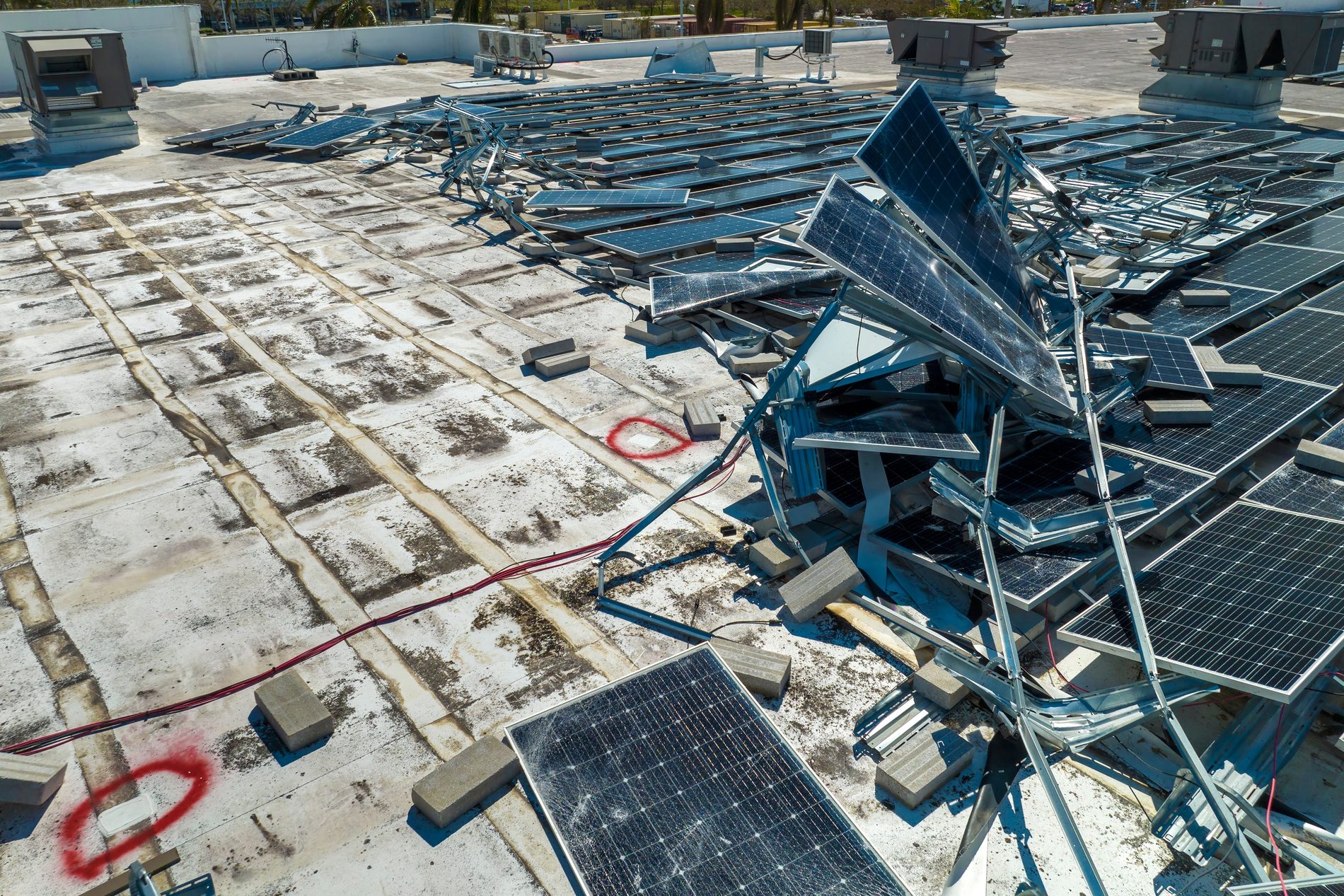
Image: Shutterstock
Solar panel waste could far exceed earlier projections
In 2016, the International Renewable Energy Agency (IRENA) and the IEA-PVPS programme estimated that there would be 60 to 78 million tonnes of decommissioned solar panels by 2050. A 2022 IRENA forecast, based on a different deployment scenario, arrived at a figure of 212 million tonnes. Researchers in Augsburg are now incorporating actual degradation data, varying climatic conditions, and the necessary replacement of failed modules into their models.
According to these models, between 35 and 63 million tonnes of solar panel waste could be generated in the year 2050 alone. These figures represent potential scenarios rather than definitive waste quantities. Key factors include the future pace of global solar deployment and the actual service life of the panels. For waste management companies, this creates significant uncertainty: recycling capacities must be planned and financed years before these volumes actually materialise.
Landfilling is significantly cheaper than high-quality recycling
The greatest economic contradiction lies in disposal costs. According to the U.S. Department of Energy, recycling a solar module in the United States costs between 15 and 45 dollars, whereas a landfill will often accept one for just one to five dollars. In the absence of mandatory take-back regulations, this price gap discourages the complex process of recovering raw materials—the environmental consequences of which are not fully reflected in these disposal fees.
A scientific review published on November 4 suggests that landfilling remains the primary disposal method in many markets. This issue is particularly prevalent in countries with weak collection systems and long transport distances. However, the frequently cited claim that exactly 90 percent of all end-of-life solar modules worldwide end up in landfills is not supported by any comprehensive global survey.
High recycling rates reveal little about the recovery of valuable raw materials
At first glance, solar modules appear highly recyclable. A typical module consists primarily of glass and aluminum; these heavy components are relatively easy to process and drive up the recycling rate when measured by weight. Yet, the thin solar cells are firmly bonded to layers of plastic. Recovering high-grade silicon and precious metals requires additional, technically demanding processes.
According to the Fraunhofer ISE, silver accounts for only about 0.01 percent of a module’s mass, yet it represents nearly half of its total material value. A study published on November 15 confirms this economic crux: the key to profitable recycling lies in the recovery of silver and high-purity silicon. Simply collecting large quantities of glass is not enough to achieve a truly closed-loop system for raw materials.
Lead and cadmium increase the risks associated with improper disposal
Depending on their design, end-of-life solar modules contain various problematic substances. Crystalline silicon modules may contain lead in their solder joints, while certain thin-film modules contain cadmium compounds. If such modules are broken or discarded improperly, these hazardous substances could—under certain conditions—leach into the surrounding environment. For this reason, the U.S. Environmental Protection Agency (EPA) distinguishes between hazardous and non-hazardous solar module waste.
A study published in the Journal of Environmental Quality—which examined decommissioned crystalline solar cells in a laboratory setting—found lead concentrations of up to 29.4 milligrams per liter in the leachate. While this does not prove that landfills are being contaminated on a widespread scale, the findings clearly illustrate why damaged modules must be handled professionally and why uncontrolled disposal is problematic.
Prematurely replaced modules also add to the waste stream
The typical lifespan of a solar module is approximately 25 to 30 years. Nevertheless, younger modules also end up in the waste stream. Severe weather, material defects, and the replacement of entire systems with higher-performance technology can shorten their actual service life. The Augsburg-based forecast explicitly accounts for such losses. However, due to a lack of reliable data, the global prevalence of early replacement driven purely by economic motives remains unclear.
A study from Australia highlights this issue: following a technical assessment of 100 end-of-life modules collected through professional channels, 29 were found to be suitable for safe reuse. In a separate, small-scale sample of four tons of solar modules destined for a landfill, as many as 89 percent were still functional. In the absence of a functioning secondary market, years of potential further use are lost.
Europe Must Collect and Process More Solar Panels
A new EU study, released on November 15, highlights the uncertainty surrounding existing waste projections. A revised model estimates that the volume of waste in 2025 will be 214 percent higher than previously calculated. Furthermore, the study indicates that approximately 60 percent of end-of-life solar panels originate from decentralized installations—such as those on residential rooftops—where collecting individual units creates additional logistical challenges.
While Germany has established mandatory take-back requirements under the Electrical and Electronic Equipment Act, and the German Environment Agency reports a 92.4 percent rate for the preparation for reuse and recycling of properly collected end-of-life panels, this weight-based metric does not guarantee that valuable materials are actually recovered and repurposed into new solar cells. The development of high-capacity facilities capable of high-quality raw material recovery must keep pace with the growing volume of waste. Otherwise, disposal costs and the loss of raw materials will continue to rise—an overlooked, long-term consequence of the global solar boom.
Author: Blackout News
Sources: Universität Augsburg (15.10.26) – ScienceDirect (15.11.26) – Natioonal Library of Medicine (Stand: 15.11.26) – EPA (Stand 15.11.26)