A commentary by our author Klaus Bastian:
Chancellor Friedrich Merz is celebrating his investment summit, which has seen German and foreign corporations announce investments totaling around 230 billion euros. However, the Federal Ministry for Economic Affairs is unable to quantify how much new capital the event actually mobilized. At the same time, international investors have scrapped multi-billion-euro factory projects in Germany. Furthermore, the KfW reports that only 40 percent of Germany’s 3.9 million small and medium-sized enterprises (SMEs) are planning to invest in 2025. High costs for energy, materials, and labor—compounded by bureaucracy and uncertainty—are holding these businesses back. While Merz courts international capital, fundamental problems with Germany as a business location remain unresolved. The consequences include deferred modernization efforts, canceled industrial projects, and a failure to create new jobs.
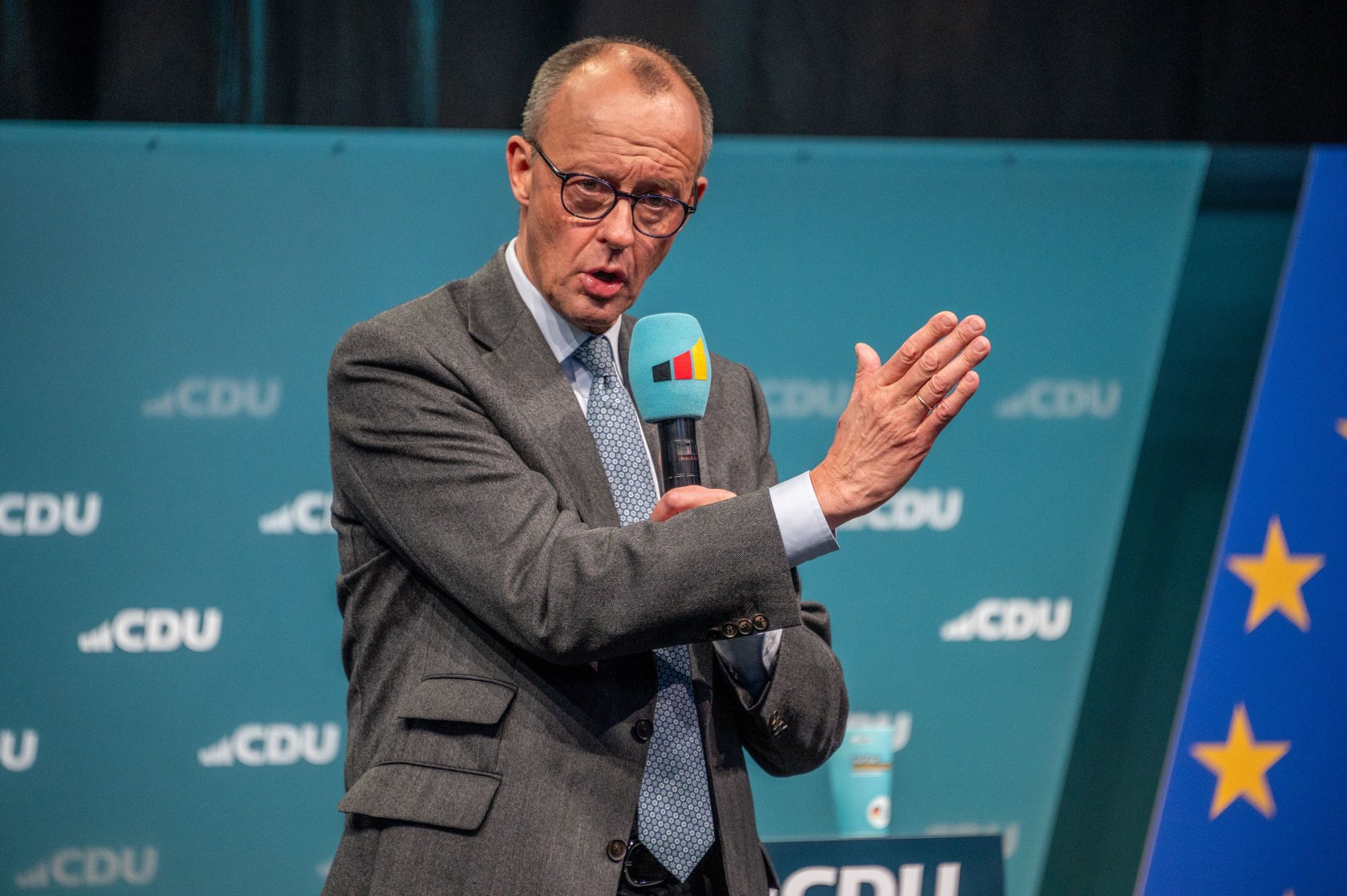
Image: Shutterstock
Merz presents investment pledges as a political success
Chancellor Friedrich Merz presented the investment pledges as a vote of confidence in Germany as a business location. Finance Minister Lars Klingbeil even declared: “Germany is back.” Yet, just one day later, the Ministry of Economic Affairs significantly qualified this supposed success. The cited figure of 228.6 billion euros includes projects that companies had already announced previously. When asked, the ministry could not specify what portion of that amount was actually attributable to the summit.
Consequently, the much-touted multi-billion-euro figure lacks a crucial foundation—after all, announced investments are neither capital already spent nor a guarantee that new factories will be built. Nevertheless, Merz highlights the total sum as a positive outcome of his efforts to attract investors. Yet, distinguishing between prior announcements and genuinely new projects would be essential. Thus, the political narrative of success extends well beyond the demonstrable economic impact.
Foreign investors have already withdrawn multi-billion-euro commitments
The past offers numerous examples of major announcements that failed to materialize. Intel, for instance, intended to invest approximately 30 billion euros in Magdeburg but subsequently abandoned the project—a plan for which the German federal government had previously pledged around 9.9 billion euros in subsidies. Similarly, Wolfspeed scrapped its planned semiconductor plant in Saarland, an investment valued at roughly 2.75 billion euros. The Chinese battery manufacturer SVOLT also withdrew its multi-billion-euro factory plans. Furthermore, a planned battery cell factory in Kaiserslautern, backed by an international consortium known as ACC, also fell through.
More recent examples include the withdrawals by McCain and Outokumpu. At the end of September, the Canadian food company McCain halted a planned multi-billion-euro investment in Mehrum, Lower Saxony—a move that, for the time being, has eliminated up to 650 projected jobs. Rising project costs, overcapacity, and weaker demand rendered the venture economically unattractive. Additionally, on October 19, the Finnish stainless steel producer Outokumpu canceled a 40-million-euro project in Sassnitz, as the intended utilization of industrial waste heat could not be made sufficiently economically viable.
Billions announced, billions canceled—while small and medium-sized enterprises wait
Five of these projects alone represent approximately 35.8 billion euros in originally planned investments. While this figure reflects projects that never came to fruition—rather than actual financial losses incurred—it underscores how little a high-profile, multi-billion-euro announcement reveals about its eventual implementation. Although the reasons for these cancellations vary, the ultimate deciding factor for any project is its economic viability. Consequently, the commitments presented by Merz offer no guarantee of actual investments or jobs. While Merz highlights plans for international investment, the KfW reveals a starkly different reality within Germany’s Mittelstand (small and medium-sized enterprises). In 2025, actual new investment fell by another 3.7 percent. At the same time, many of these firms maintain a solid equity base, averaging 30.7 percent. Consequently, the issue for many companies is not a fundamental lack of funds, but rather the absence of a sufficiently promising economic outlook to justify deploying that capital. Furthermore, one-third of the Mittelstand firms surveyed have either postponed or scaled back investments originally planned for 2026. Capital remains sidelined—even though Germany is in urgent need of modern production facilities.
Merz courts foreign capital – while established companies await reforms
The Association of German Chambers of Industry and Commerce (DIHK) estimates that private investment currently lags about eleven percent behind pre-pandemic levels. Meanwhile, numerous industrial firms cite high costs as the reason for investing outside of Germany. Soaring energy costs are also prompting businesses to consider scaling back production or relocating operations. Consequently, the challenges facing Germany as a business location extend well beyond the prospect of attracting new ventures; they also shape the decisions of companies that have been manufacturing, providing vocational training, and paying taxes in Germany for decades.
Although Merz promises to cut red tape, accelerate approval processes, and improve infrastructure, data from the KfW (Germany’s state-owned development bank) continue to point to a marked reluctance to invest. New subsidy programs alone cannot compensate for a lack of profitability, nor will an “investment summit” improve the operating cost structure of a medium-sized industrial enterprise. A significant gap therefore remains: while Merz touts potential multi-billion-euro investments as a success, many established companies see no economic justification for new investment. Ultimately, the true success of his economic policy will not be measured by international investment pledges, but by projects actually brought to fruition and the willingness to invest among companies already operating in Germany.
Author: Klaus Bastian – Blackout News
Sources: KfW (22.10.26) – Die Bundesregierung (21.10.26) – DIHK (20.10.26) – Die Bundesregierung (20.10.26) – Tagesschau (30.09.26)