
A commentary by our author Klaus Bastian:
Chancellor Friedrich Merz sees “initial signs of hope” for an economic upturn, pointing to rising real wages, improved sentiment, and numerous new start-ups. At the same time, however, unemployment is rising as the industrial sector cuts tens of thousands of jobs, closes plants, and shifts production abroad. Furthermore, insolvency rates remain high, and business associations are demanding sweeping reforms regarding energy prices, taxes, social security contributions, and bureaucracy. Indeed, the state premiers of three major automotive regions are now warning of lasting damage to this key German industry. Consequently, the gap between the Chancellor’s positive signals and the reality on the ground in many companies is widening.
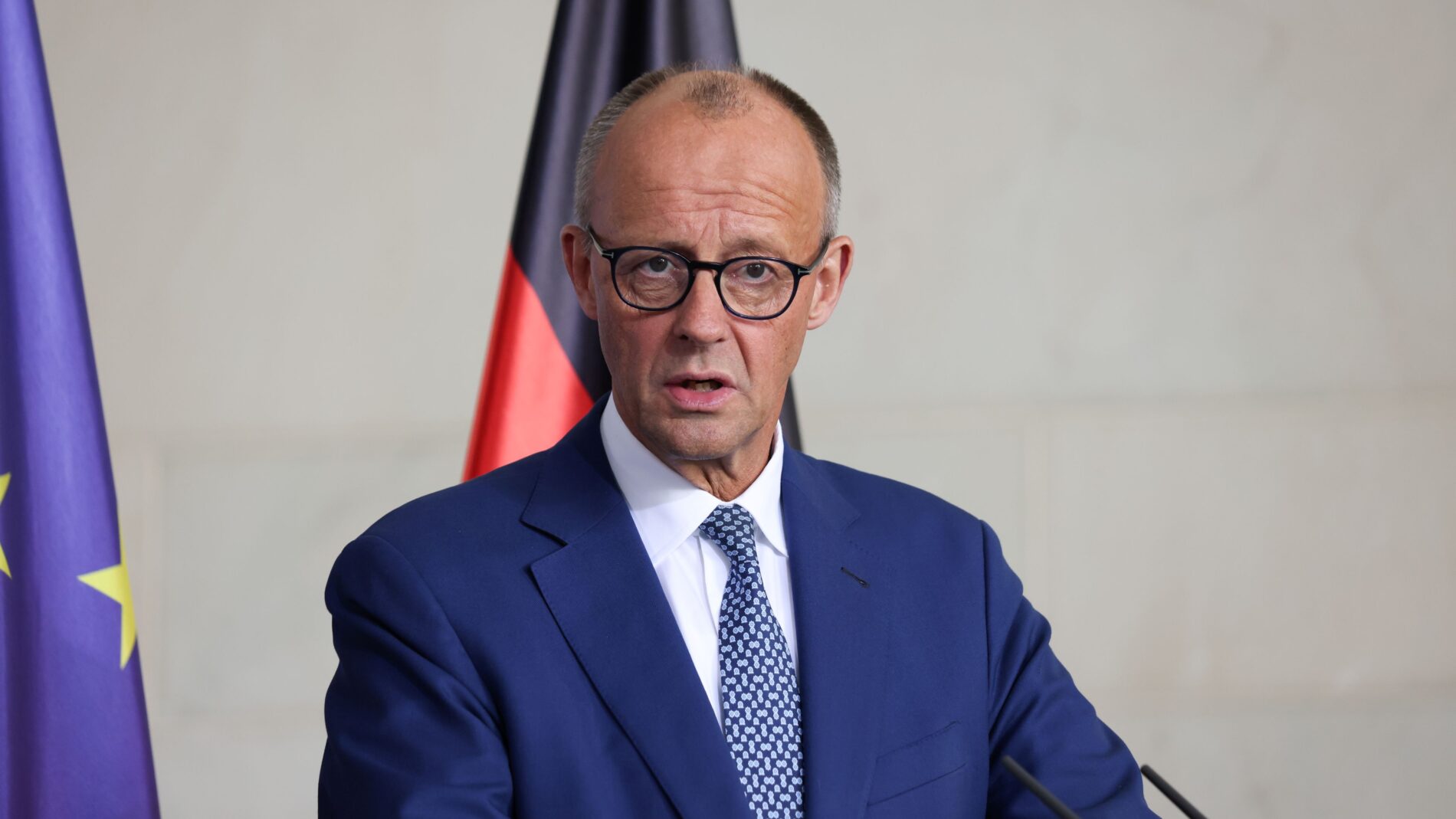
Image: Shutterstock
Growth on paper does not equate to new prosperity
The Handelsblatt Research Institute (HRI) has also significantly raised its growth forecast. The HRI now projects real growth of 1.1 percent for 2026 and as much as 1.4 percent for 2027. However, the institute simultaneously warns of mounting structural problems. Furthermore, it anticipates a workforce that is smaller by around 300,000 people in 2026 compared to 2024.
Even more noteworthy, however, is the composition of this growth. According to the HRI, a growing share is driven by government consumption and public investment. At the same time, the prosperity of many citizens is barely increasing. Moreover, the export sector is currently benefiting—to some extent—from supply issues faced by Asian and Middle Eastern competitors due to the war. This represents a cyclical advantage, but not yet a structural recovery.
The picture looks different on the factory floor
Consequently, the labor market does not quite fit the image of a broad-based economic upturn. In August, 3.061 million people were unemployed—36,000 more than a year earlier. At the same time, the manufacturing sector lost more than 140,000 jobs over the course of the year. The automotive industry, suppliers, and the steel, chemical, and other energy-intensive sectors have been hit particularly hard.
New start-ups are doing little to change this situation for the time being. While the 3,053 new business formations in the first half of the year represent a welcome record, founding a company is no substitute for the hundreds of jobs lost at an existing plant. Moreover, young companies often take years to build up a substantial workforce. Ultimately, therefore, the overall employment balance sheet is what counts, not just the number of new enterprises.
Three automotive states warn of lasting damage
Bavaria, Baden-Württemberg, and Lower Saxony are now jointly highlighting the gravity of the situation. Markus Söder, Cem Özdemir, and Olaf Lies—representing the CSU, the Greens, and the SPD, respectively—are calling on the federal government and the EU to take swift action. They warn of lasting and potentially “irreversible damage” to the German automotive industry.
The state premiers point to the loss of around 52,000 jobs within a single year. They are also demanding lower energy costs, better competitive conditions, and stronger protection against unfairly subsidized competition. Their message hardly aligns with an economy that has already achieved a recovery; rather, three key industrial states are attempting to prevent further relocation of production and job losses.
Even improved forecasts contain clear warning signs
The HRI forecast is therefore particularly revealing. While the chemical and pharmaceutical industries did grow by 2.4 percent in the second quarter compared to the previous quarter, the HRI also points to an unusual underlying context. Asian and Middle Eastern competitors suffered supply issues due to the conflict involving Iran. Additionally, customers were stockpiling goods as a precaution.
Merz can thus point to genuinely positive figures. However, this does not yet translate into a broad-based upturn characterized by rising employment and growing prosperity. While the federal government highlights glimmers of hope, companies, industry associations, and state premiers warn of further erosion of Germany’s industrial base. At the same time, even the more optimistic HRI projects significantly lower employment levels than in 2024. A sustainable recovery would therefore need to do more than just boost GDP; it would also have to permanently strengthen private investment, employment, and industrial value creation.
The HRI Findings
Berlin, September 15, 2026: Chancellor Friedrich Merz sees “initial glimmers of hope” for an economic recovery in Germany. He points to rising real wages, improved sentiment indicators, and a record number of new start-ups. Yet, unemployment is simultaneously rising as major industrial firms cut jobs, close plants, or relocate production. Furthermore, insolvency rates remain high, and business associations are calling for far more sweeping reforms. Three state premiers from major automotive regions are even warning of permanent damage to a key German industry.
Economic Upturn Amid Shrinking Employment
The improved economic figures are real, yet they tell only part of the story. The Handelsblatt Research Institute projects real growth of 1.1 percent for 2026. At the same time, the institute anticipates a workforce of around 300,000 fewer people than in 2024. Moreover, growth is being driven by an increasing share of government spending, while the prosperity of many citizens is barely rising.
This is why Merz’s reference to new start-ups falls short. New companies are important, but a new venture does not automatically replace lost industrial jobs. While young firms must first build up their workforce, existing jobs vanish immediately when factories close. Furthermore, declining employment weakens the revenue base for social security systems, thereby exacerbating existing funding problems.
Reform Promises Clash with the Reality of the Business Location
The problem is not that the federal government has failed to enact any measures at all. The “investment booster” allows for higher depreciation allowances through the end of 2027, and the corporate tax rate is set to fall gradually. However, this tax cut does not begin until 2028 and will then be phased in over several years. Yet companies are making decisions today regarding new plants, investments, and the relocation of production.
It is precisely at this point that the narrative of an economic upturn loses its persuasive power. High energy and labor costs, social security contributions, taxes, and bureaucracy continue to weigh on companies. As recently as early September, the DIHK (Association of German Chambers of Commerce and Industry) called for cheaper energy, less red tape, and faster administrative procedures. At the same time, it warned of the loss of tens of thousands of industrial jobs and further relocations of business operations.
Business Still Awaits a Major Reform Push
Even within the federal government’s own economic policy circles, a much more sober tone has emerged. In January, Economic Affairs Minister Katherina Reiche stated that the measures taken so far were insufficient. She also characterized the projected growth as being largely debt-financed. Consequently, without consistent structural reforms, the upturn could prove to be merely a “flash in the pan.”
Businesses, too, do not yet see a fundamental turnaround. An ifo survey gave the federal government’s economic policy an average grade of 4.2. Companies frequently called for less red tape and for reforms to taxes and levies. In late August, the DIHK (Association of German Chambers of Commerce and Industry) once again urged that announced reforms finally be swiftly translated into legislation; regarding tax policy, it saw “more shadow than light” so far.
Three automotive states send a plea for help to Berlin
The automotive industry illustrates just how wide the gap has become between political glimmers of hope and industrial reality. Markus Söder, Cem Özdemir, and Olaf Lies jointly appealed to the federal government and the EU. The state premiers of Bavaria, Baden-Württemberg, and Lower Saxony pointed to the loss of around 52,000 jobs within a single year. In their assessment, without better conditions for business, the sector faces the threat of “lasting and possibly irreversible damage.”
Thus, the economic recovery remains primarily a cyclical hope rather than an industrial turnaround. Merz can rightly point to higher real wages, an increase in business start-ups, and isolated improvements in economic data. Yet, at the same time, jobs are disappearing, companies are relocating production, and industry associations continue to demand the structural reforms that have been promised for months. A robust recovery is evidenced not merely by growth forecasts, but by private investment, rising employment, and new production capacity. It is precisely in these areas that convincing proof of an economic turnaround is currently lacking.
Verfasser: Klaus Bastian – Blackout News
Verwendete Quellen:
https://www.handelsblatt.com/politik/konjunktur/hri-konjunkturprognose-wachstum-ja-aber-deutschlands-bevoelkerung-wird-trotzdem-aermer/100251425.html
https://www.bayern.de/ja-zum-auto-gemeinsames-papier-der-autolaender-bayern-niedersachsen-und-baden-wuerttemberg-entschlossen-handeln-fairen-wettbewerb-sichern-strukturbrueche-vermeiden/
https://www.bundeskanzler.de/bk-de/aktuelles/merz-unternehmertag-bga-2452702
https://www.bundeswirtschaftsministerium.de/Redaktion/DE/Pressemitteilungen/Wirtschaftliche-Lage/2026/20260914-wirt-lage-deutschland-sep-2026.html