
A commentary by our author Klaus Bastian:
The economic crisis in Germany continues to spread. Following the industrial and manufacturing sectors, job cuts are now affecting the retail sector as well. According to the German Retail Federation (HDE), an average of 4,000 jobs are being lost in the industry every month. At the same time, there is a projected net loss of 4,900 retail outlets by 2026. High energy prices are fueling inflation and eroding consumer purchasing power. While the federal government promises relief, it is simultaneously pursuing higher excise taxes and additional levies. As of yet, there is no sign of an effective strategy to counter the ongoing loss of retail businesses.
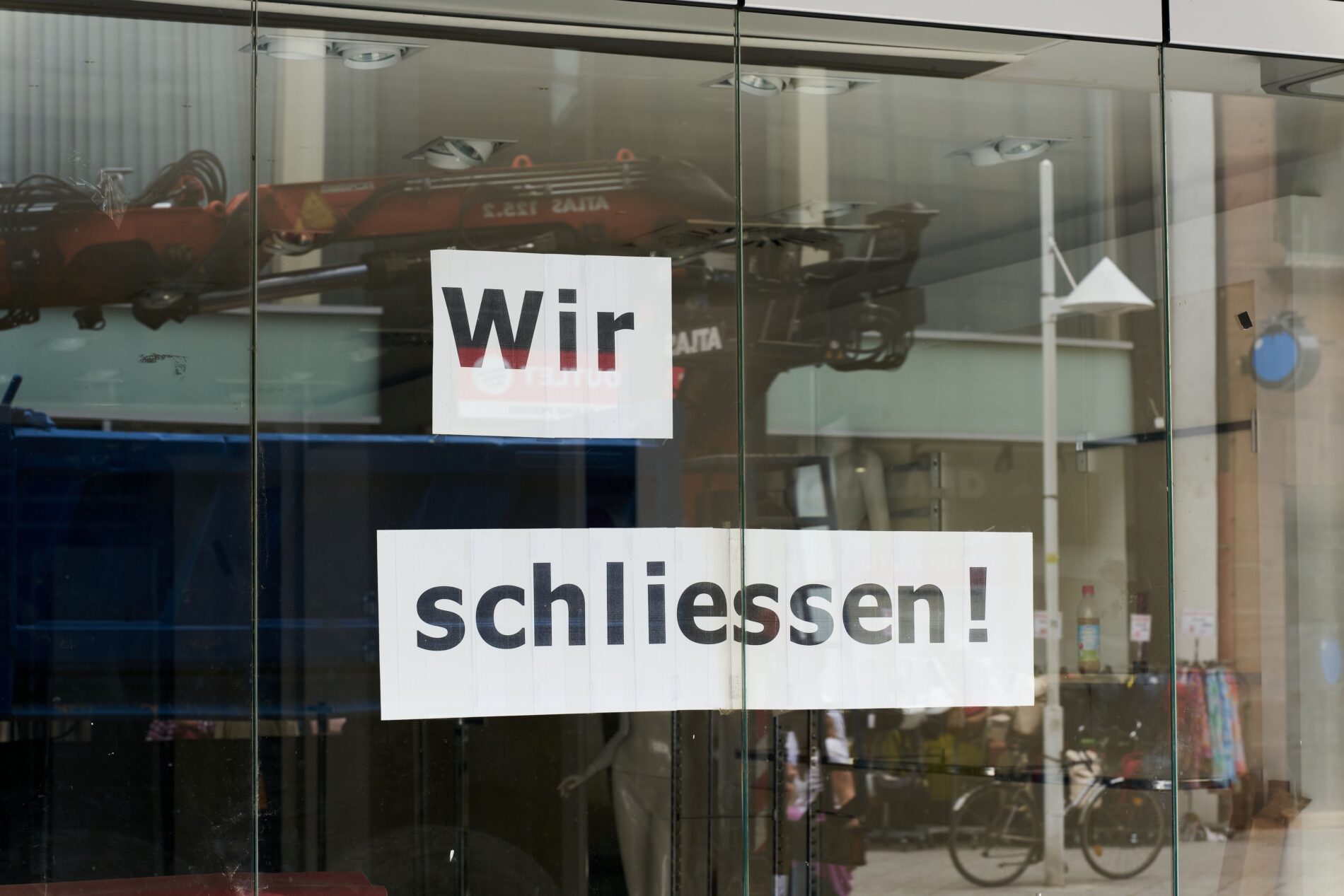
Image: Shutterstock
Retail Sector Suffers Amid Ongoing Economic Crisis
The economic downturn has long since affected large segments of the German economy. Automobile manufacturers, suppliers, and mechanical engineering firms have already cut numerous jobs. At the same time, demand in the manufacturing sector is weakening; in August alone, incoming orders plummeted by 10.6 percent compared to July. While large-scale orders significantly influenced this decline, even excluding these one-off effects, incoming orders still fell by 2.6 percent over a three-month period. Consequently, the industrial sector is lacking the vital momentum needed for investment and employment.
The repercussions are increasingly affecting private consumption. Every job loss reduces income and heightens uncertainty for many households, leading them to postpone major purchases. The retail sector is feeling this restraint directly. According to the German Retail Federation (HDE), approximately 48,000 jobs have been lost over the course of a year. Meanwhile, an increasing number of small, specialized shops are disappearing from city centers. In this way, the crisis is spreading from industrial production to domestic demand.
High Energy Prices Drive Inflation and Erode Purchasing Power
The renewed rise in energy costs is particularly burdensome. In September, energy prices were 14.9 percent higher than a year earlier. Fuel costs surged by 37.1 percent, while heating oil prices jumped by 74.9 percent. This pushed the overall inflation rate up to 3.3 percent. Although electricity and natural gas prices fell year-on-year, the sharp increase in petroleum-based products is placing a significant strain on many households. Furthermore, there are potential knock-on costs for transport and the delivery of goods.
As a result, consumers have less money available for other purchases. Those forced to spend more on heating, transportation, and groceries often cut back on other types of spending. At the same time, economic weakness is fueling growing concerns about job security. The GfK consumer climate index for October dropped to minus 30.6 points, with the propensity to save reaching levels not seen since the 2008 financial crisis. Consequently, the retail sector is losing the very demand required for an economic recovery.
Thousands of Stores Closing – Where Is the Government’s Response?
This wave of closures is no longer a short-term phenomenon. In 2025 alone, Germany saw a net loss of approximately 4,500 retail outlets. The German Retail Federation (HDE) anticipates a further decline of 4,900 locations in 2026. The landscape of brick-and-mortar retail has been shrinking for years; yet, there remains no compelling economic policy response to the root causes of this structural decline. While individual subsidy programs may help make city centers more attractive, they cannot compensate for a lack of purchasing power or persistently high operating costs.
With every store that closes, cities lose a portion of their economic infrastructure. Jobs vanish, retail spaces sit vacant, and neighboring businesses lose out on foot traffic. Smaller municipalities, in particular, are suffering as a result of this process. Yet, the national political debate frequently centers on urban development and the repurposing of vacant properties. The crucial question remains largely unanswered: how can businesses survive economically when customers have less to spend, while operating costs continue to rise?
Policymakers promise relief while simultaneously increasing the tax burden
Against this backdrop, economic policy priorities appear contradictory. Even as more and more businesses close their doors, the Bundestag voted on October 15 to increase tobacco taxes. Furthermore, the federal government has initiated a sugar tax, set to take effect in July 2027. A tax on plastic packaging is also under discussion. While the government’s stated objectives are rooted in public health and environmental policy, the additional costs could ultimately fall on the shoulders of consumers.
From the tobacco tax alone, the federal government expects to generate more than twelve billion euros in additional revenue between 2027 and 2030. The planned sugar tax is projected to bring in another 925 million euros in 2028. Meanwhile, many households are struggling with the high cost of living. This creates a significant contradiction between promised relief measures and new tax burdens. Ultimately, for the retail sector, the government’s justifications for individual measures are beside the point; what matters is how much money consumers actually have left after covering all their essential expenses.
Business Closures Demand an Economic Policy Response
The federal government has indeed adopted measures to provide relief—such as lowering energy costs in certain sectors and temporarily reducing energy taxes on fuel. Urban development grants and municipal programs are also intended to help stabilize city centers. However, such instruments do little to address the fundamental problems facing many businesses. High labor costs, weak demand, and rising operating expenses cannot be offset simply by making pedestrian zones more attractive.
This highlights the weakness of an economic policy that attempts to tackle structural issues through isolated, piecemeal measures. The retail and service sector requires customers with purchasing power and economically viable operating environments. Instead, thousands of businesses are disappearing every year, while employment levels continue to decline. The consequences range from falling municipal tax revenues to city centers that remain permanently deserted. The longer this process continues, the more difficult economic revitalization will become.
The federal government must therefore be judged against the reality of these developments. The loss of approximately 4,000 jobs per month and a projected decline of 4,900 businesses by 2026 serve as clear warning signs. Yet, it remains unclear how policymakers intend to put a lasting stop to this ongoing decline. As long as energy prices, labor costs, and weak purchasing power weigh on businesses, additional subsidy programs are unlikely to suffice. Even less convincing is a policy that promises relief while simultaneously preparing new consumption taxes. Without a recovery in private consumption, the retail sector lacks the economic foundation necessary for new investments and secure jobs.