
Greece intends to resume work on a 1.9-billion-euro subsea cable to Cyprus. The French company Nexans has applied for authorization to conduct surveys of the seabed for this purpose. However, the EU-backed power project has long been delayed due to a territorial dispute with Turkey. Ankara claims sovereign rights over parts of the area designated for the surveys; consequently, it remains unclear when construction can proceed. The planned link is intended to connect Cyprus’s currently isolated power grid to the broader European electricity network, with the potential for a future extension reaching as far as Israel.
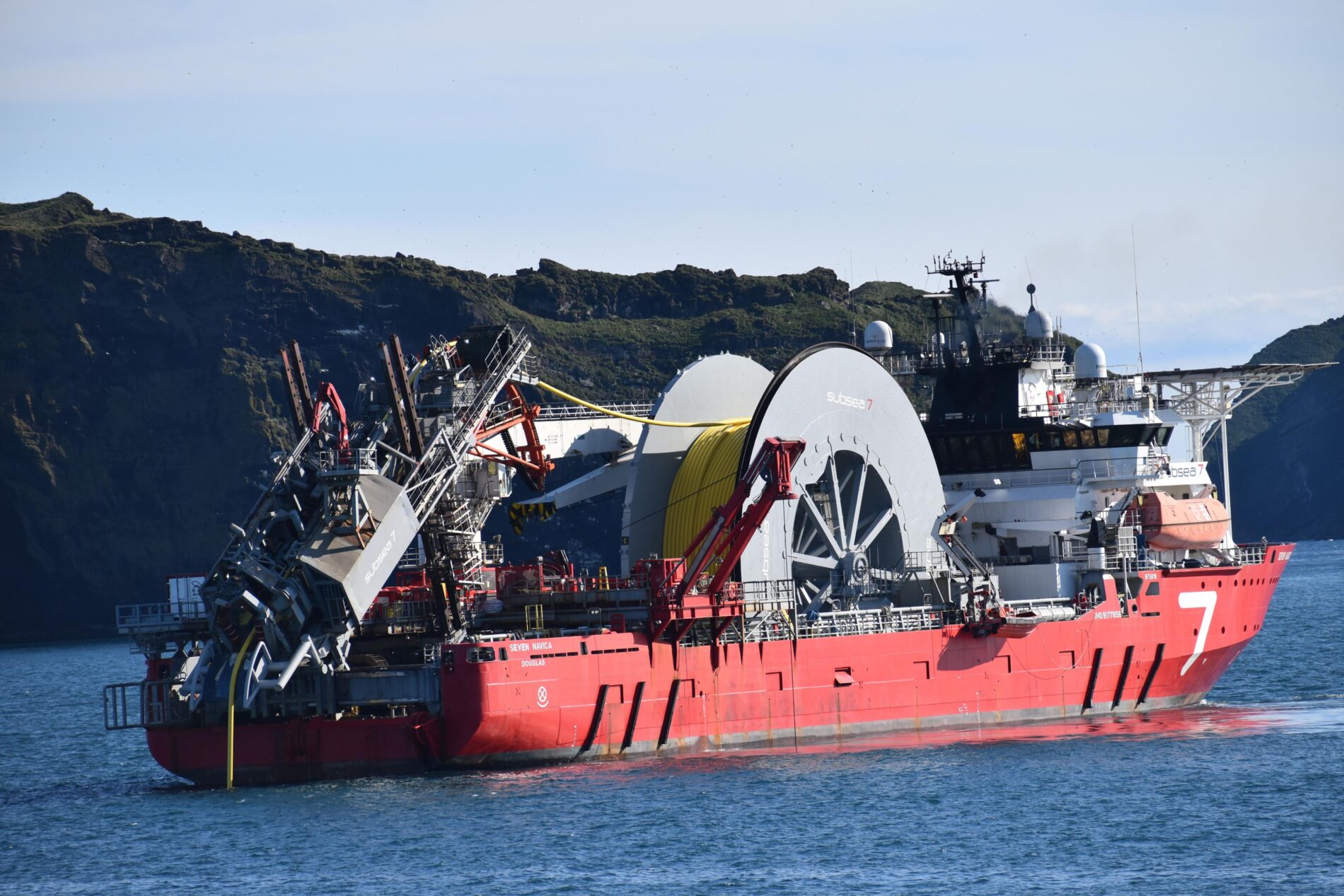
Image: Shutterstock
Turkey Claims Control Over Planned Power Interconnector
The project, known as the “Great Sea Interconnector,” is intended to link Crete with Cyprus. The planned power line will span approximately 898 kilometers. However, the route passes through waters whose legal status is a subject of dispute between Greece and Turkey. Ankara bases its position on a maritime boundary agreement signed with Libya in 2019—claims that Athens does not recognize. Consequently, even the preliminary surveys threaten to trigger a renewed diplomatic confrontation.
Turkey demands prior coordination for any work conducted in the maritime areas it claims, while Greece explicitly rejects the notion that Turkish authorization is required. In early October, the Turkish government declared that it would not permit any unauthorized activities in these waters. As a result, the infrastructure project is increasingly evolving into a conflict over maritime jurisdiction; even technical surveys have the potential to spark significant political tension.
Subsea cable to connect Cyprus to Europe’s power grid for the first time
The EU is supporting the project with 657 million euros from its “Connecting Europe Facility” infrastructure program. The project organizers estimate the total cost at approximately 1.9 billion euros. The subsea cable is designed to have a transmission capacity of 1,000 megawatts and to carry electricity in both directions. It is also intended to reach depths of up to 3,000 meters, making this planned link one of the most technically challenging subsea cable projects in the world.
Currently, Cyprus has no electrical connection to the European mainland. Consequently, the island must meet its electricity demand largely through its own power plants and renewable energy sources. The new line is intended to facilitate the import and export of electricity, as well as to create additional supply options. However, a connection alone does not guarantee secure generation capacity. Furthermore, the actual economic benefits will depend on electricity prices, grid utilization, and the final project costs. Any further delays could also negatively impact the project’s financing and economic viability.
France and the USA support the controversial multi-billion project
The French contractor, Nexans, submitted the necessary permit applications to the Greek authorities as early as October 8. The research vessel VB Abeille Marengo is slated to subsequently survey the seabed; however, the relevant ministerial committee and the coast guard have yet to grant their approval for the operation. Nexans has also filed similar permit applications in Cyprus. According to recent reports, the required notices to mariners could be issued by the end of October. As of now, no definitive date has been set for the commencement of the survey.
The United States also supports the interconnector for reasons of energy policy. In early October, U.S. Secretary of State Marco Rubio pledged diplomatic support to Greece to help overcome potential obstacles. Furthermore, France has an economic stake in the project through the investor Meridiam and the cable manufacturer Nexans. On October 4, Nexans explicitly stated that it has neither held nor plans to hold any discussions with Turkish authorities. Nevertheless, the core hurdle remains: Greece intends to proceed with the subsea cable without Turkish consent, while Ankara asserts that it has a right to a say in the matter. Although the EU is providing substantial funding, it cannot itself resolve the dispute over maritime territories. Consequently, whether work actually resumes depends not only on technical permits but also on Turkey’s reaction.