
A commentary by our author Klaus Bastian
Leading federal politicians are discovering a surprisingly convenient way out of the political mess: they are framing the citizenry as the problem. Friedrich Merz dismisses critics as “whiners” and “complainers,” deems Germany too complacent, and questions the necessity of so many sick days. Karl Lauterbach suggests that potential emigrants are dispensable, while Ines Schwerdtner brands the wealthy as “social freeloaders.” These reactions are triggered by poor poll numbers, a lackluster reform agenda, allegedly high absenteeism rates, and the debate over emigration. This disparagement of the public targets employees, entrepreneurs, property owners, and political critics alike. Consequently, the impression is growing that some elected representatives value the people primarily when they remain silent, work, and pay their taxes on time.
Merz Dismisses the Naysayers
At the CDU state party conference in Düsseldorf on July 4, Merz called for optimism. However, critics apparently disrupted the carefully orchestrated atmosphere of renewal. Consequently, he categorized them as “cultural pessimists, prophets of doom, grumblers, naysayers,” and “outraged professional critics.” Then came the command: “Dismissed.” Democracy can be that simple when dissent unnecessarily prolongs a speech by the leadership.
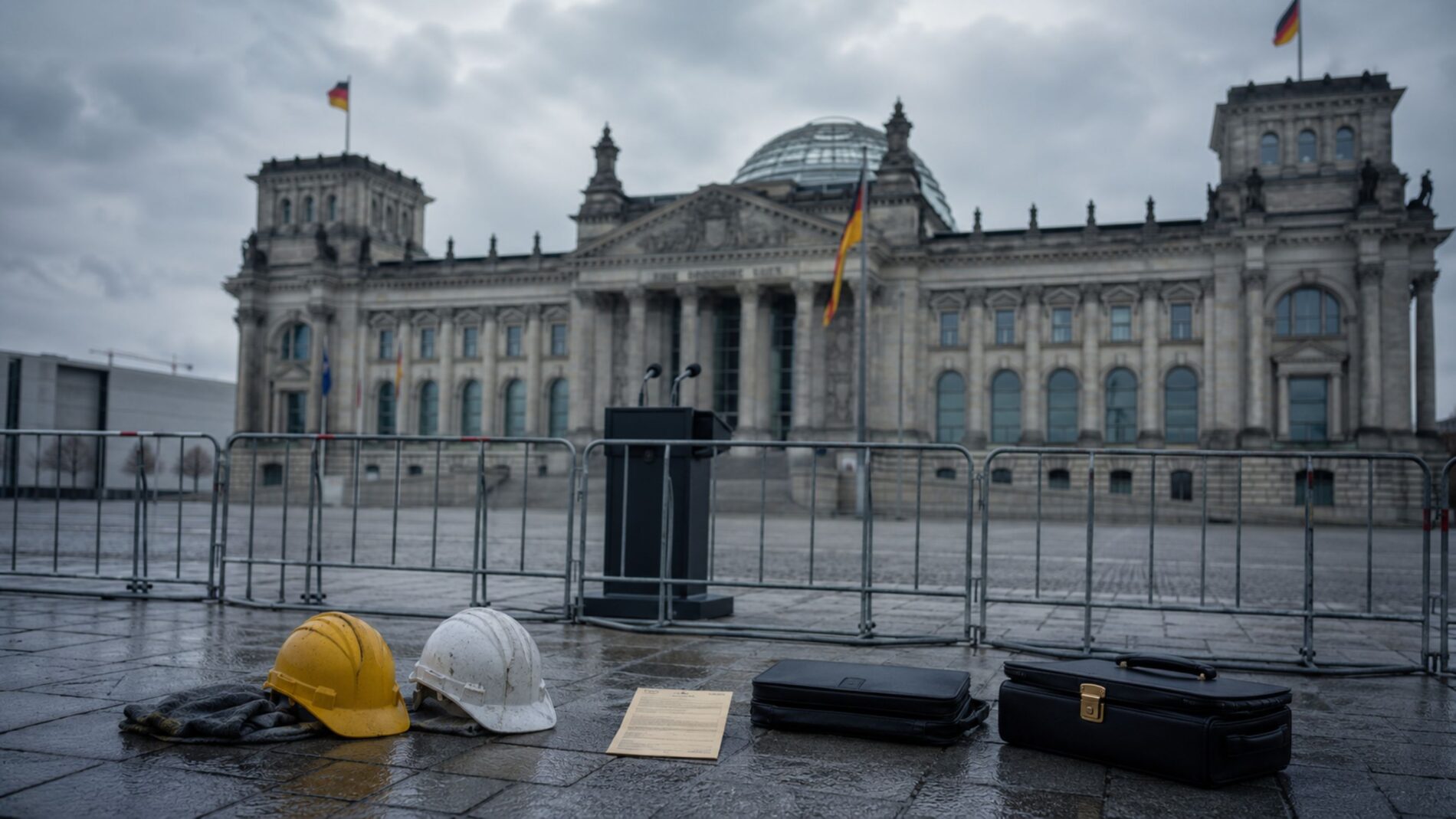
Image: AI-generated
As early as April, Merz had identified another cause of Germany’s problems. “We have become a bit too complacent,” the Chancellor declared. While high energy prices, bureaucracy, and locational disadvantages certainly play a role, it is apparently easier to admonish citizens politically than to reform regulations, levies, and laws. Besides, energy prices cannot publicly defend themselves against such accusations.
Berating citizens affects sick employees, too
Merz also demonstrated a keen sense for the country’s supposedly real problems when it came to sickness rates. Noting an average of 14.5 sick days, he asked: “Is that really right? Is that really necessary?” While he did not explicitly speak of people calling in sick en masse without cause, the insinuation hung heavily in the air. This lecture from Berlin appears particularly rich given the figures for the Bundestag itself: in 2024, Bundestag employees averaged 22.3 sick days—whereas statistics for the workforce as a whole show only 14.8 days. This refers to parliamentary staff, not the Members of Parliament themselves. Nevertheless, Merz views the German work ethic—specifically outside the government district—as an urgent political issue.
Merz also criticized the practice of obtaining sick notes via telephone. He argued that doctors struggle to assess over the phone whether someone is “truly unfit for work.” However, the AOK health insurance fund sees no evidence that this practice has driven up sickness rates. Electronic record-keeping also accounts for part of the statistical rise. Yet such details are an inconvenience when berating citizens already offers a more convenient diagnosis. According to this narrative, the country’s economic standing is faltering because employees are spending too much time in bed. Within the Bundestag itself, however, a higher sickness rate is apparently acceptable; there, 22.3 days of absence are not labeled as complacency, but simply as the routine of administrative work.
Lauterbach Can Do Without Taxpayers
Karl Lauterbach reacted with similar nonchalance to reports about entrepreneurs and high earners considering emigration. He dismissed concerns about high levies with a mocking “sniff.” He then wrote: “We can do without these people—if they even exist.” Later, he deleted the post and complained of a misunderstanding. The political playbook worked perfectly: first mock, then delete, then blame the recipients for misinterpreting the message.
Yet, in 2025, Germany recorded a net outflow of around 97,000 German citizens. Moreover, this trend has persisted for years. Skilled workers, entrepreneurs, and taxpayers are indeed leaving the country. While Lauterbach’s disparagement of citizens offers no solution to this, it does save him from the tiresome debate over taxes, social security contributions, bureaucracy, and the country’s business climate.
Property Ownership as a Character Flaw
Ines Schwerdtner added to this political repertoire from the other side of the spectrum. She labeled the roughly 800,000 people with assets or rental income as “genuine social parasites.” She was not referring to any specific crime or proven tax evasion; rather, she branded a legal source of income a moral blemish. Property ownership, as the saying goes, entails obligations. Under this new political interpretation, however, it apparently entails an obligation to be publicly reviled.
Politicians are supposed to represent citizens, solve problems, and explain decisions. Instead, some of them have taken to explaining the citizen. The citizen is too lazy, too often sick, too critical, too wealthy, or too ready to emigrate. Their own track record, however, remains remarkably blameless. This rhetoric therefore offers a distinct advantage: if you define the people as the problem, you do not have to scrutinize your own failures quite so closely. After all, the citizen is free to vote—they just shouldn’t get the idea that they might actually expect results afterward.
Author: Klaus Bastian – Blackout News
Sources: Merkur (23.07.26) – Tagesschau (04.07.26) – Welt (01.07.26) – AOK (02.07.26) – ZDF Presseportal (17.07.26)