
Copenhagen – Wildfires are once again dominating the climate debate in the summer of 2026, yet global fire statistics reveal a surprising trend. Worldwide, the total area burned is heading toward its lowest level since comparable satellite measurements began in 2001. Climate economist Bjørn Lomborg even considers it possible that the figure could drop to its lowest level since 1900. In the early 20th century, nearly four percent of the global land area burned annually; today, that figure is only about half as high. At the same time, recent investigations in Europe show that humans ignite many of these fires. While heat and drought exacerbate fires, they do not explain their origins.
Global wildfires reach historic low
Lomborg bases his analysis on data from the European satellite system Copernicus. Writing in the Wall Street Journal, he summarizes the trend pointedly: “The world is not burning more; it is burning less.” Globally, the area affected by fire is currently at its lowest level since satellite data collection began in 2001. Lomborg considers it likely that this is the lowest figure since 1900. This global trend contradicts the widespread impression that increasingly large parts of the Earth are being consumed by fire.
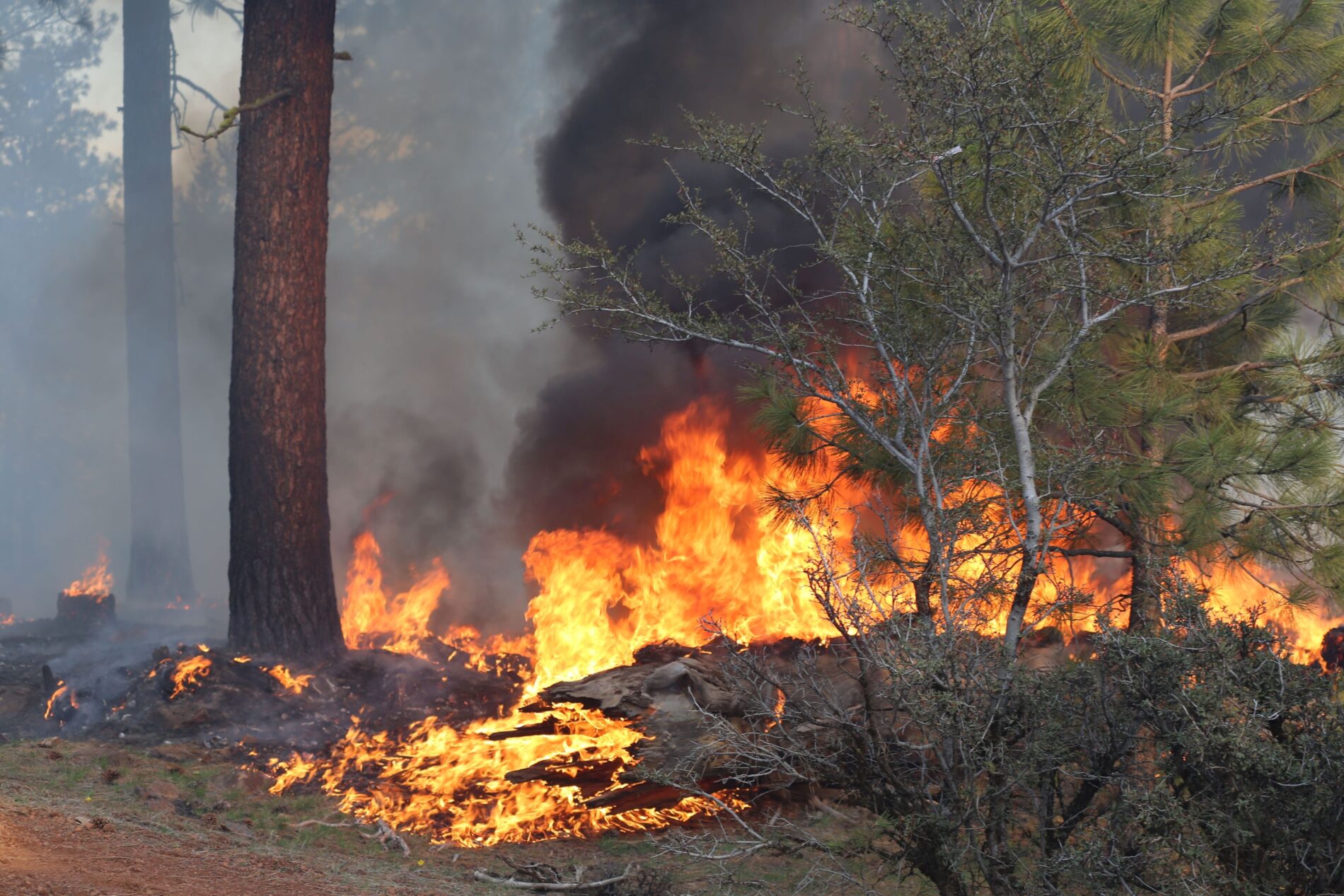
Image: Shutterstock
Scientific reconstructions also reveal significant long-term changes in the total area affected by fires. A study published in 2025 reconstructed trends from 1901 to 2020. It found that the global burned area initially declined until 1978, subsequently rose again, and has dropped sharply since 2008. Africa plays a major role in shaping this global trend, as it accounts for by far the largest areas regularly affected by fire.
Arson and negligence are key causes
In contrast, political debate focuses heavily on heat and climate change. High temperatures, dry vegetation, and wind can indeed significantly accelerate the spread of wildfires. However, they do not automatically constitute the ignition source. French authorities explicitly point this out; in France, nine out of ten wildfires are caused by human activity, with around half resulting from carelessness or dangerous behavior.
Yet deliberately set fires are by no means a marginal phenomenon. In France, arson was actually the most common known cause of wildfires in 2025, accounting for 29.4 percent of incidents. In July 2026, a volunteer firefighter was among those who confessed to intentionally starting a fire in the Fontainebleau forest. Two fires in the area destroyed a combined total of approximately 2,050 hectares, and around 900 people were forced to evacuate their homes.
Portugal: Arson Behind 17 Percent of Solved Fire Cases
Portugal, too, demonstrates the significant impact of human behavior on fire statistics. By August 15, authorities had investigated the causes of 5,327 fires. Open burning and the burning off of vegetation accounted for 37 percent of the resolved cases. Intentional arson was responsible for another 17 percent. Machinery caused seven percent, while fires that reignited accounted for nine percent.
Nevertheless, climate change remains a factor influencing the conditions under which fires can spiral out of control. The EU Joint Research Centre points to exceptional heat and drought in parts of Europe. At the same time, this must not lead to erroneous conclusions regarding global trends. Wildfires can be devastating on a regional level, even though the total area burning globally is decreasing—a fact clearly reflected in current satellite data. Anyone citing every major fire as proof of a global increase in burned area is conflating ignition causes, weather conditions, and long-term trends.
Author: Blackout News
Sources: Wall Street Journal (12.08.26) – Renascença (19.08.26) – Météo-France (23.07.26) – Earth System Science Data (30.07.26)