
Voerde – On August 21, 2026, RWE demolished the 90-meter-high boiler house of Unit B at the Voerde coal-fired power plant using explosives. Almost simultaneously, two adjacent denitrification plants—comprising a total of around 30,000 tons of steel—were brought down. Due to the blast wave and dust, a safety radius of 350 meters was established. Authorities evacuated buildings, closed roads, and temporarily halted shipping traffic on the Rhine. Unit B previously had a dispatchable net capacity of 695 megawatts. At the same time, Germany needs new incentives for firm capacity, as wind and solar power are not available to meet demand at all times.
Coal-fired power plant disappears – new firm capacity yet to be established
The power plant was taken off the grid back in 2017, and decommissioning has been underway since 2023. Consequently, restarting it on short notice was not a realistic option even before the recent demolition. However, the removal of the boiler house eliminates a key component of the former unit, effectively ruling out any possibility of reactivating that existing unit at a later date.
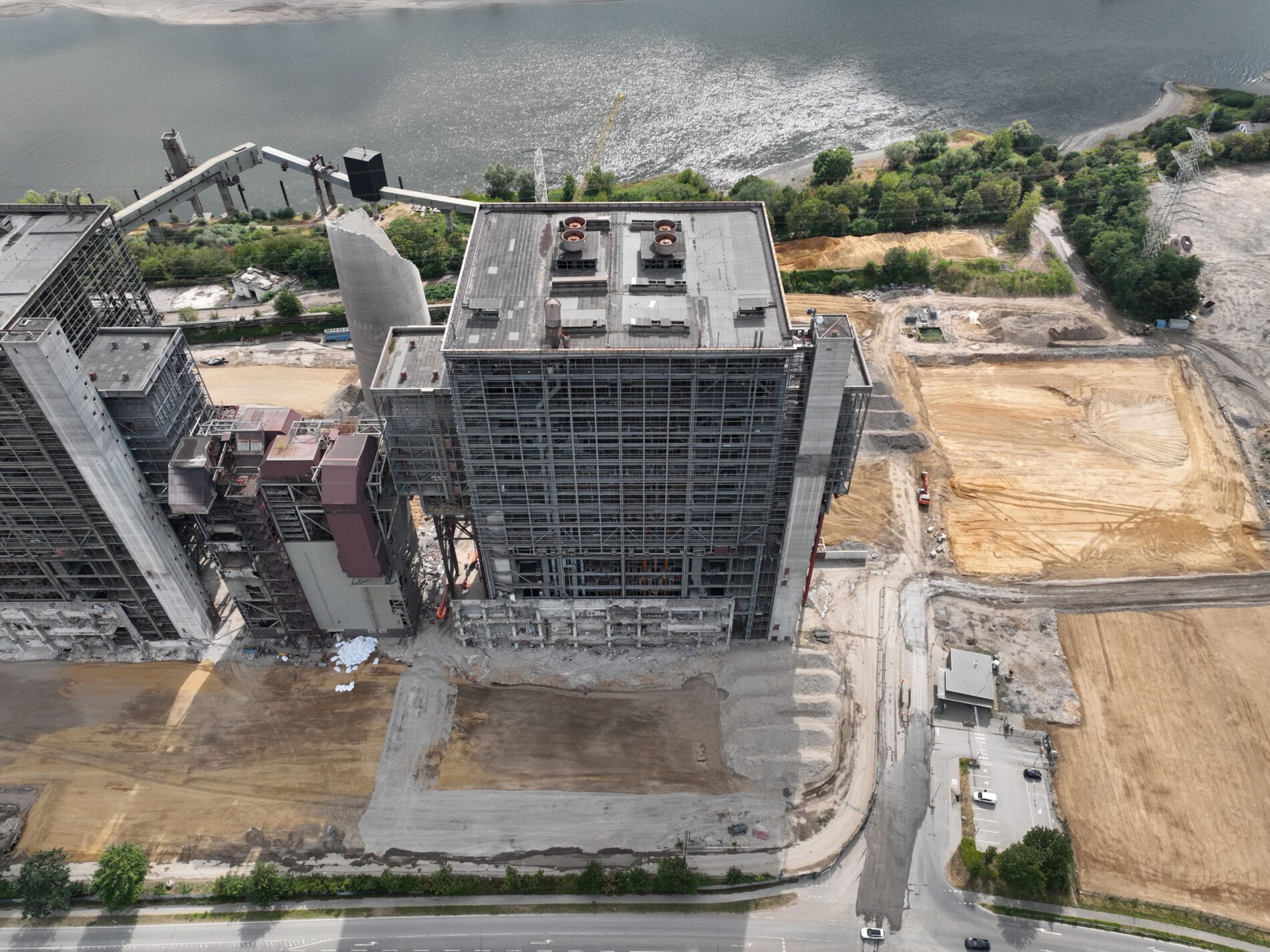
Image: ©RWE
The timing, in particular, makes this development noteworthy from an energy policy perspective. The German government plans to tender approximately ten gigawatts of new long-duration capacity in September and December 2026. These facilities are intended to provide a reliable supply of electricity even during extended periods of low wind and solar output (known in German as Dunkelflaute). The Ministry of Economic Affairs explicitly cites security of supply as the reason for this expansion. Germany therefore requires new dispatchable capacity even as existing power plant sites are being permanently decommissioned.
Unit B once provided 695 megawatts of dispatchable capacity
Unit B was one of the major generation units at the Voerde site. It had a net capacity of 695 megawatts, matching the output of Unit A. Together, the four power plant units previously boasted a total capacity of more than two gigawatts. There is no public evidence to confirm whether modernization would have been technically, legally, and economically viable.
Nevertheless, the Voerde case illustrates a fundamental conflict of objectives in German energy policy. Germany is phasing out conventional generation facilities while simultaneously needing to create replacements for their dispatchable capacity. The former coal-fired units generated high CO₂ emissions and ceased to be economically viable under the market conditions of the time. However, the power grid continues to require sufficient dispatchable capacity at all times—a fact that remains unchanged by the rapidly growing share of wind and solar power.
A large-scale power plant is slated to be built at the same site following the demolition
RWE is therefore planning another large-scale thermal power plant on the site of the former coal-fired facility. The project envisages a hydrogen-ready combined-cycle gas turbine (CCGT) plant with an electrical output of approximately 850 megawatts. The permitting process is already underway, and the relevant documentation has been available for public review since August 14, 2026. However, RWE has not yet made a final investment decision. Current plans suggest the new plant could begin generating electricity in 2030.
This highlights the critical flaw in the current sequence of events. The old power plant ceased electricity generation nine years ago, yet its potential replacement is not expected to come online until the end of the decade at the earliest. At the same time, the state is only now organizing a market for the firm capacity that the power system will urgently require in the future. The demolition in Voerde illustrates this trend: existing dispatchable power plant technology is permanently removed, only to be followed later by new capacity—which is not economically viable on its own—created through state-mandated investment incentives.
Author: Blackout News
Sources: WDR (21.08.26) – Die Zeit (21.08.26) – WDR (20.08.26) – RWE (07.08.26)