
A (scathing) commentary by our author Klaus Bastian (KOB)
Stuttgart 21 was once meant to symbolize a new beginning. Momentum. Modern infrastructure and a railway station that would lead Baden-Württemberg into the future. Now, the project faces yet another embarrassment: full operational status might not be achieved until December 2031. If this date is confirmed, Stuttgart 21 would be running roughly twelve years behind its original schedule. A project intended for the future has turned into a monument—not to progress, but to megalomania, planning failures, and an astonishing capacity to endure ballooning costs borne by the public purse.
Deutsche Bahn calls it speculation; reality calls it Stuttgart 31.
The current status has not yet been officially confirmed. Deutsche Bahn dismisses the reports as speculation—a familiar pattern. Whenever reality becomes uncomfortable, the company retreats behind formalities. The steering committee is expected to learn more at the end of June. Yet the message is already out: there is no end in sight for the Stuttgart 21 project. Not in 2025. Not in 2026. Perhaps not even by 2030. Now, 2031 is being floated as the date.
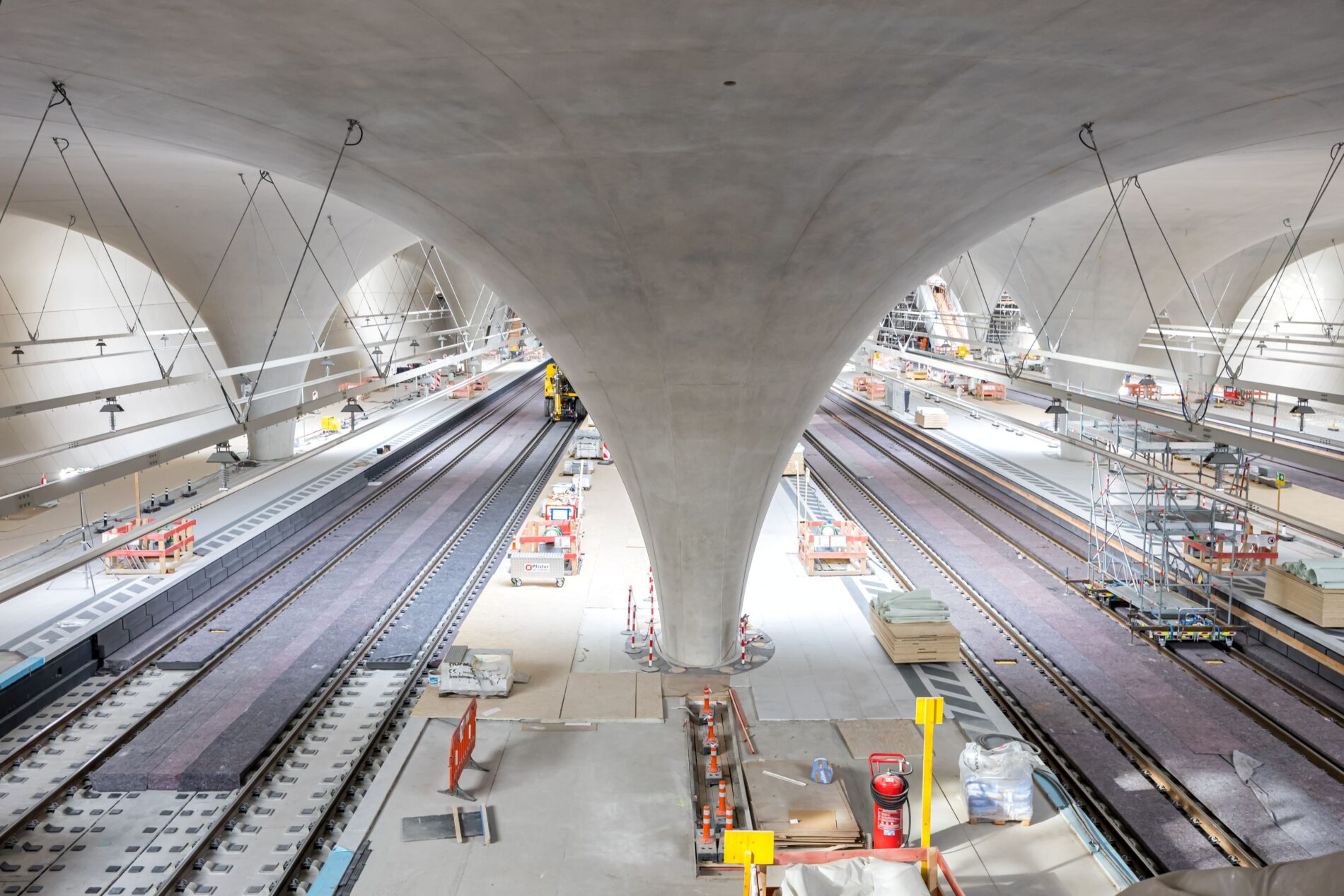
Image: Shutterstock
The station’s original opening date was set for 2019. That was the scenario politicians and the railway company sold to the public. Then, that certainty began to crumble. First, 2020 was cited. Then 2021. Then 2022 became a possibility. Later, hopes shifted to 2025 and 2026. Those dates fell by the wayside, too—and at increasingly short intervals.
From 2019 to 2031: A Chronicle of Delays
In 2024, the railway company finally confirmed the project’s postponement to December 2026. Even that sounded like nothing more than a stopover on the way to the next revision. In 2025, the idea of a partial opening emerged: long-distance trains and some regional services were to use the new underground station, while the rest would continue to operate via the old terminus. That model didn’t last long, either. By November 2025, the plan for a partial opening was also history.
So now, 2031. With this, Stuttgart 21 has broken almost every promise used to justify the project. A project intended to bring greater schedule stability has itself produced nothing but schedule instability for years. It is a bitter pill—but hardly surprising.
Wrong Cables as a Symbol of a Flawed System
The latest delay seems particularly absurd given reports of incorrectly laid cables. We are talking about more than 1,000 kilometers of cabling and conduits. Around 1,200 kilometers of cable are reportedly affected between Stuttgart-Bad Cannstatt and Waiblingen alone. On top of that, there are issues with the emergency power supply and construction defects involving platforms and platform tiling. It sounds as though the long delays mean initial refurbishment work is already becoming necessary.
It sounds like satire. Yet, this is infrastructure policy in Germany. A multi-billion-euro project is failing not just because of major geological risks or complex tunneling challenges. It also stumbles over cables, tiles, and emergency power systems. Anyone who dismisses this as a triviality fails to grasp the heart of the problem. Major projects rarely fail because of a single dramatic event; they fail due to thousands of individual decisions that no one properly oversaw.
Responsibility Dissolves Between the Railway and Politicians
Stuttgart 21 reveals a dangerous weakness: accountability for the project is unraveling. Everyone is involved, yet hardly anyone is truly responsible. The railway points to technical complexity; politicians point to the railway. Project partners wait on steering committees. The public gets new deadlines—followed by new excuses, then new deadlines.
The “Digital Node Stuttgart” was supposed to boost the station’s capacity. Now, it has become a risk in itself. ETCS, digital interlocking systems, and the complex overhaul of the rail hub sound like the future. In practice, however, it currently feels like an additional construction site within a project that has long since spiraled out of control.
Digitalization Becomes the Next Excuse
Of course, digitalization is challenging. Of course, safety must take precedence. But that is precisely why it should have been realistically factored into the planning from the very beginning. When transforming a highly complex rail system, one cannot operate for years with deadlines that eventually look like mere wish lists. Technology does not excuse poor planning; it exposes it.
The railway will now explain why everything became more complicated. That is likely true. But it is not enough. A project of this magnitude does not need a retrospective collection of valid reasons. It needs robust management, honest risk assessments, and deadlines that are more than just political placebos.
Stuttgart 21 Has Long Since Become a Crisis of Trust
The greatest damage concerns neither concrete, tracks, nor cables; it concerns trust. Citizens are expected to accept multi-billion-euro projects. They are expected to endure construction sites, tolerate cost overruns, and believe that a clear benefit will emerge in the end. Yet for years, Stuttgart 21 has delivered primarily one thing: new justifications for old mistakes.
The project was pushed through under immense political pressure. Critics were often dismissed as opponents of progress. Today, that arrogance leaves a particularly bitter aftertaste—because many of the warnings raised were not ideological, but based on hard facts. Costs, risks, capacity issues, construction processes, and schedules drew criticism early on. Those in charge often did not want to hear this criticism. Now, the construction itself speaks.
A costly, inescapable entanglement
Of course, Stuttgart 21 cannot simply be undone now. Construction of the underground station is well advanced. The tunnels are a reality. The city has changed. That is precisely why the final assessment is so bitter. Stuttgart 21 is no longer a standard project; it is a costly, inescapable entanglement. There is no way out. One can only keep paying, keep building, and keep hoping.
Every delay, every technical adjustment, and every parallel structure—maintaining the old terminus alongside the new underground station—costs money. Under the original financing agreement, Stuttgart 21 was projected to cost around 4.5 billion euros. The official budget framework now stands at approximately 11.45 billion euros. That is nearly seven billion euros more than originally promised. A project that finishes twelve years behind schedule and costs more than double the initial estimate does not merely have a scheduling problem; it has a systemic problem.
The public foots the bill in the end
Politically, this ought to have consequences—not in the form of the usual outrage following press reports, but through genuine transparency. Which assumptions were flawed? Who underestimated which risks? What project reports were available, and when? Who decided to maintain an optimistic stance despite warning signs? And why does the public often learn of key developments only through media investigations?
These are uncomfortable questions. That is precisely why they must take center stage. Stuttgart 21 must no longer be portrayed as an inevitable technical fate. It is a project for which political responsibility lies with specific actors. It was planned, sold to the public, defended against massive criticism, and pushed through. Consequently, the lines of responsibility must be made clear.
A station that seems outdated before it even opens
The tragedy of Stuttgart 21 lies in its symbolism. A station intended to promise the future could well appear to be a relic by the time it is fully operational. Not because of its architecture, but because of the history attached to it. A project that begins construction in 2010 and fully opens in 2031 is moving in infrastructure slow motion. Germany is debating the transition to sustainable transport, climate targets, railway modernization, and high-performance networks. At the same time, one of the country’s most prominent rail projects is failing to reach completion on schedule. The two simply do not align. A country intent on strengthening its rail system cannot afford such planning fiascos.
“Stuttgart 31” would be a more honest name for the project.
Stuttgart 21 is, therefore, more than just a railway station; it is a case study. It illustrates how political prestige projects become a burden when oversight, honesty, and technical humility are lacking. The new target date of 2031 has not yet been officially confirmed. Yet the mere fact that it seems plausible speaks volumes.
Stuttgart 21 was intended to connect Stuttgart to the future. So far, however, the project has primarily demonstrated how Germany squanders billions and loses years, only to end up without reliable infrastructure. Perhaps the “21” in the name did not stand for the century of modernity after all, but rather for the billions in additional costs this project might yet devour.
Author: Blackout News – (KOB)
Sources: Welt (09.06.2026) – Bahnprojekt Stuttgart Ulm (Stand: 09.06.2026) – Bahnprojekt Stuttgart Ulm (11.06.2024)