
Starting August 12, 2026, a new EU packaging regulation will come into effect, affecting restaurants, hotels, highway rest stops, snack bars, and beach kiosks right in the middle of the holiday season. The move is driven by the growing volume of packaging waste in Europe. The focus is on small, single-use portion packs for ketchup, mayonnaise, mustard, sugar, coffee creamer, and jam. On-site consumption is the key factor, as these portion sachets are largely to be eliminated in such settings. Consequently, businesses will need to adopt new operational procedures, while the actual environmental benefit will depend heavily on alternative solutions, enforcement, and hygiene requirements. (berliner-zeitung: 02.06.26)
Single-serving ketchup sachets are becoming a symbol of granular environmental policy
With its new packaging regulation, the EU is once again targeting an everyday product. Many consumers are already familiar with this pattern from the tethered caps on beverage bottles; in that case, too, a minor change was intended to reduce plastic loss into the environment. The intervention was immediately noticeable, even though the actual impact remained difficult for many citizens to measure.
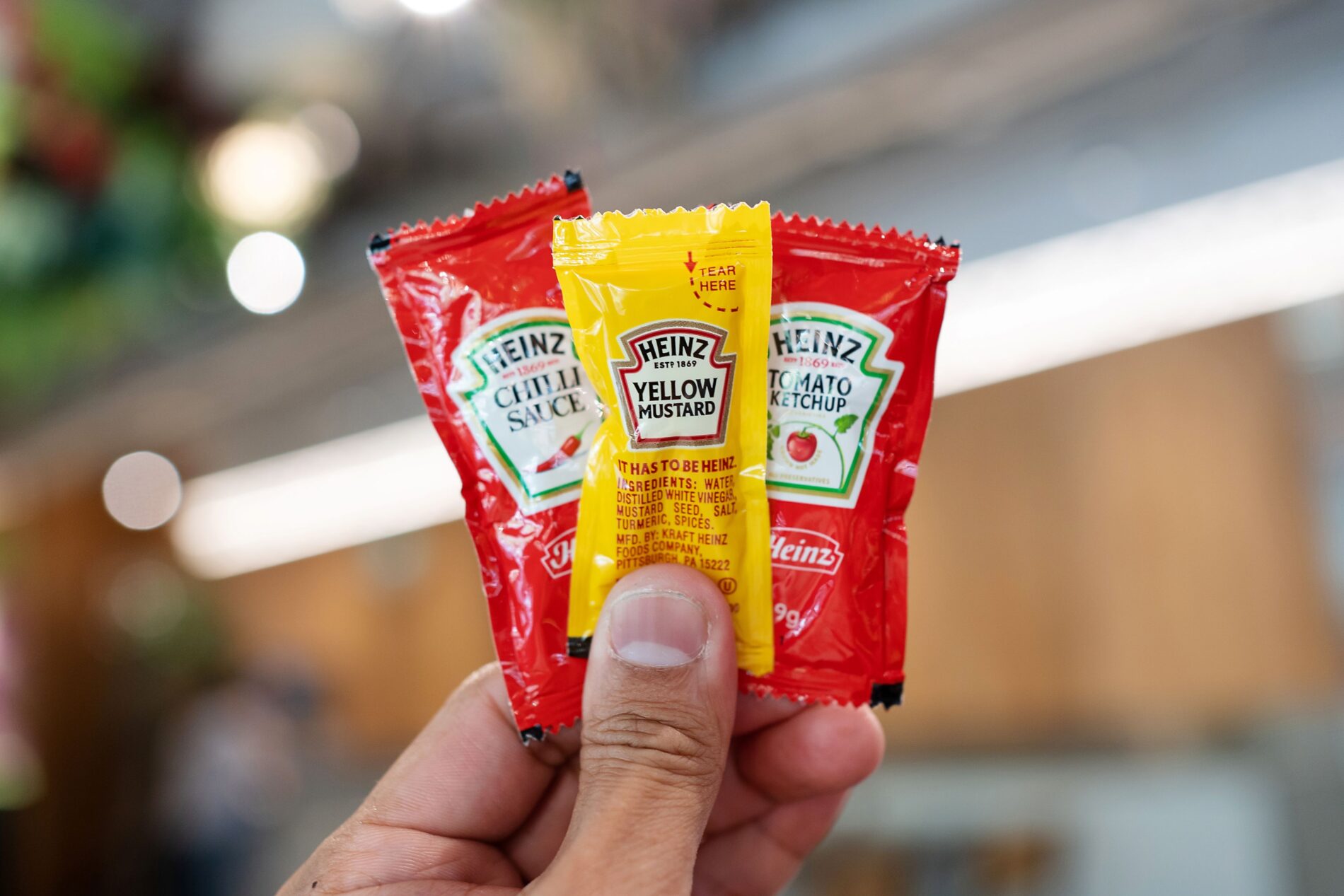
The situation with single-serve ketchup sachets is similar. They are a visible symbol of disposable packaging and allow for easy portion control, yet they account for only a small fraction of total packaging waste. Consequently, the measure feels like yet another superficial intervention addressing a much larger problem.
Businesses must deliver; consumers are expected to adapt
For guests, the main change concerns the dining experience itself. Ketchup, mustard, and mayonnaise will increasingly be dispensed from pumps, bottles, or small bowls. This can reduce waste—provided businesses operate these systems hygienically and consistently. However, it can also lead to the use of new disposable bowls, increased cleaning requirements, and additional costs.
Hygiene plays a pivotal role here. While single-serve packets generate significant waste, they remain sealed until use. Dispensers and bottles, by contrast, sit out on tables, buffets, or serving counters for extended periods. Issues such as refilling, handling, dirty nozzles, and inadequate cleaning can therefore pose greater risks than those associated with individual sachets.
The launch coincides with the peak holiday season
The timing amplifies the impact on day-to-day operations. Many businesses are operating at high capacity in August, while many seasonal staff members have only recently started working behind the counter, at the buffet, or at the register. As a result, a seemingly minor regulation can quickly tie up significant staff resources in practice.
Vacationers, in particular, expect simple, straightforward processes. Someone ordering fries isn’t thinking about EU packaging laws—yet the regulation directly affects this everyday scenario. While Brussels aims to reduce waste streams, businesses are left to explain the new requirements amidst the summer rush.
Environmental policy requires more than just visible, isolated bans
The environmental benefit depends on more than just eliminating single-serve sachets; what matters is what replaces them. Reusable dispensers can save on packaging, provided they are durable and regularly cleaned. In contrast, coated paper solutions or replacement packaging that is difficult to recycle merely shift the problem elsewhere.
The parallel with bottle caps illustrates the fundamental issue with such measures: they are visible, easy to explain, and politically marketable. Yet, they often target only the smallest units of consumption. Massive amounts of waste continue to be generated by mail-order retail, transport packaging, supermarket chains, and industrial logistics.
Ketchup sachets are not the key to solving Europe’s waste problem
Eliminating many single-serve ketchup sachets can reduce waste, but it will not save the environment. The potential impact is too limited, and success depends too heavily on the replacement system. A serious raw materials policy would need to focus on larger material flows, improved recycling rates, and robust reusable systems.
For businesses, the symbolic value of the rule is not what counts in the end; they face the practical demands of investment, cleaning, monitoring, and communication. Consumers still get their sauce, just dispensed differently. Through this, the EU gains visibility in everyday life, while the major issues surrounding waste still await structural solutions.