
In Monaco and Florida, Scorpio Tankers and Ampera launched a collaboration in early April 2026 to develop and market small SMR reactors for shipping. This initiative was driven by rising heavy fuel oil costs, stricter CO₂ regulations, and the challenge of finding alternative energy sources for large ships on long voyages. The systems are designed to deliver 15 to 30 megawatts and, according to the concept, provide power for up to 30 years without recharging. This would allow tankers, car carriers, and container ships to operate almost emission-free. However, the crucial risk factor remains the safety of nuclear technology at sea. Nevertheless, five companies are now pushing for the return of the nuclear-powered freighter. (ingenieur; 14.04.26)
Shipping Companies Seek Alternatives to Expensive Heavy Fuel Oil
The pressure on shipping companies is growing because CO₂ emissions are becoming increasingly expensive. At the same time, fuel quality requirements are rising. As a result, heavy fuel oil is losing its appeal. Batteries offer little help on long voyages because they are too bulky and heavy. Furthermore, charging takes too long. Fuel cells also only partially solve the problem because their tanks require a lot of space.
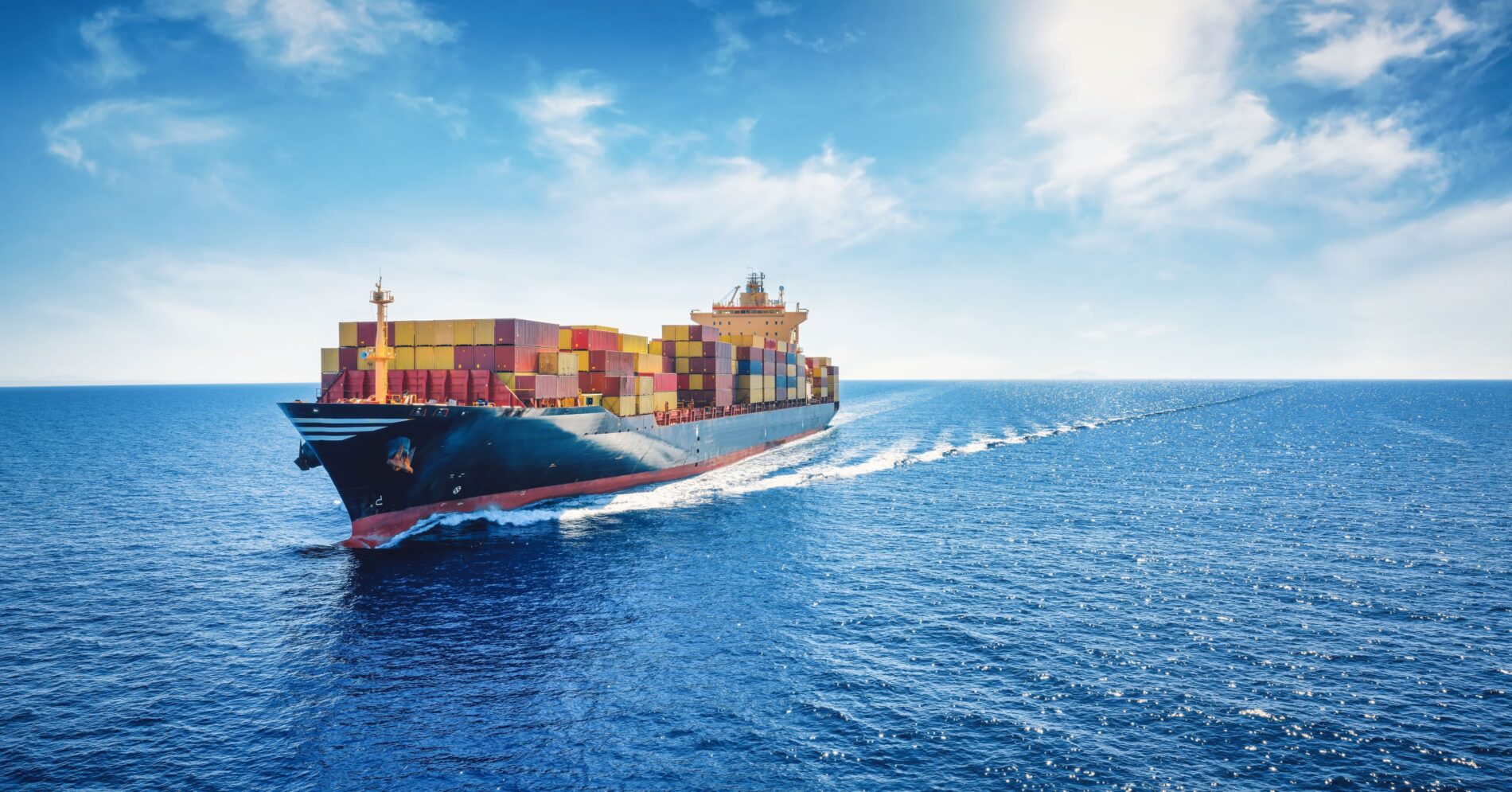
Small reactors are therefore suddenly becoming economically attractive to some operators. They provide a constant supply of electricity for propulsion, cooling, navigation, and onboard systems for years. The principle is not new, as nuclear submarines and icebreakers have long demonstrated that nuclear propulsion at sea is technically feasible. Unlike earlier large reactors, modern SMR systems are designed to be more compact and easier to integrate. This is precisely where the industry’s appeal lies.
Thorium, long operating times, and new conversion plans
Ampera is relying on a concept using thorium. The element itself is not fissionable, but is gradually converted into uranium-233 in the reactor. The resulting heat drives a generator directly via carbon dioxide. The necessary neutrons come from an external source. This is intended to prevent an uncontrolled chain reaction. If this source is switched off, the reactor stops immediately.
Scorpio Tankers CEO Emanuele Lauro justifies the move with the growing demand for “reliable, CO₂-free energy solutions” for shipping, offshore installations, and port infrastructure. Scorpio is initially contributing ten million US dollars to the reactor conversion. Ampera, meanwhile, anticipates a large market. CEO Brian Matthews says more than 10,000 merchant ships could benefit from the conversion. The scale is enormous because global shipping consumes around 350 million tons of fossil fuels annually and accounts for approximately three percent of global CO₂ emissions.
Several projects are entering the market
The idea is by no means limited to a single project. As early as 2024, ULC-Energy BV from Amsterdam and C-Job Naval Architects presented a study. It concluded that nuclear propulsion could reduce greenhouse gas emissions by 98 percent compared to heavy fuel oil or diesel. Meanwhile, the Australian ship designer Seatransport has already received preliminary approval from Lloyd’s Register for a 73-meter-long landing craft. The plans include microreactors with a capacity of 1.2 to 2.6 megawatts.
Allseas and HD Hyundai are also advancing their own concepts. Allseas is investing $300 million in a reactor for ships. Land-based testing is scheduled to begin in 2030. The company plans to start the conversion process in 2032. The offshore construction vessel “Pioneering Spirit” is slated to be the first vessel to undergo the conversion. HD Hyundai is also working with the American Bureau of Shipping on nuclear-assisted electric propulsion for large container ships. This significantly increases the pace of competition, while the open security questions remain.