
On May 1, 2026, Germany experienced a massive surplus of solar power because millions of photovoltaic systems fed into the grid, while industry, offices, and many businesses consumed very little electricity on this public holiday. Experts therefore called on private PV operators to temporarily shut down their systems. The appeal addressed an acute grid problem that experts had been predicting for years. The rapid expansion of solar power plants coincided with a lack of storage capacity, limited grid capacity, and insufficient controllable demand. On the intraday market, the electricity price temporarily fell to minus 855 euros per megawatt-hour. (bild: 01.05.26)
Public Holiday Necessitated the Shutdown Call
The May Day holiday coincided with high solar power generation. At the same time, electricity demand dropped significantly. Many factories were not producing. Offices remained empty. Numerous businesses were closed. Therefore, large consumers were absent precisely during the hours when solar power plants were generating the most electricity.
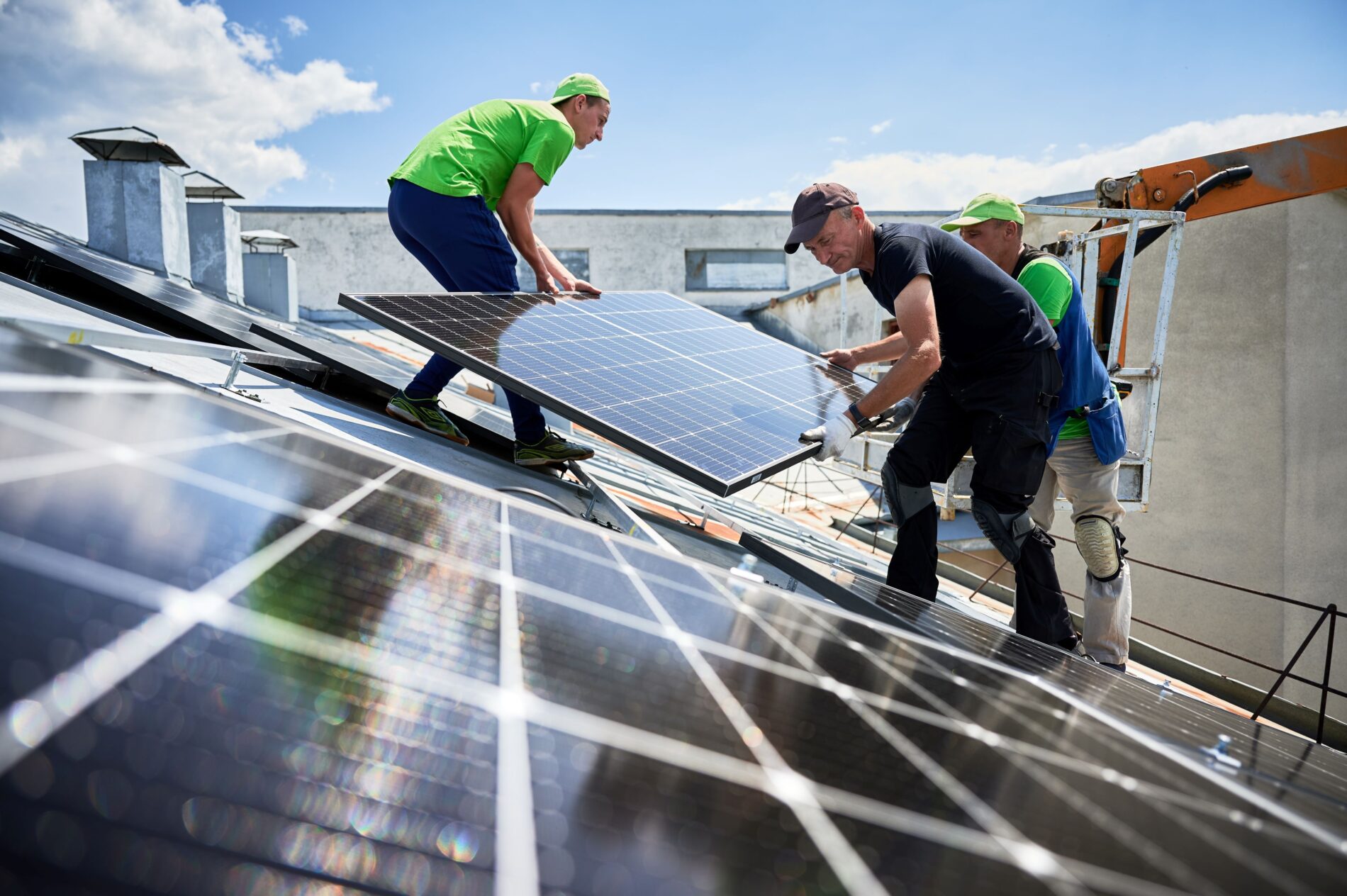
The appeal to private PV system operators was therefore not a symbolic warning. It aimed at concrete relief for the electricity grid. Many small systems continued to feed power into the grid even though the market was already signaling oversupply. This was precisely the problem: electricity generation followed the sun, but not actual demand.
Experts had foreseen this risk for years
Specialists had repeatedly warned of precisely this scenario. A massive expansion of photovoltaics only stabilizes the electricity system if storage, grids, and flexible consumers grow accordingly. Without these components, every additional system exacerbates the oversupply during critical hours. The public holiday made this gap particularly apparent.
Energy economist Professor Lion Hirth of the Hertie School therefore directly called on operators to take action. On LinkedIn, he wrote: “If you want to do something good for security of supply, the energy transition, and the federal budget, then switch off your PV system.” He was addressing private system operators who could directly influence their feed-in.
Shut Down Instead of Continue Feeding In
Hirth, however, did not recommend a short interruption of just a few hours. Because of the long weekend, the shutdown should last longer. He added: “Frankly, it would be best to leave it off until Monday.” This would reduce feed-in during a period when demand remained weak.
Philipp Schröder, former head of Tesla Germany and now CEO of 1Komma5°, also saw an urgent need for action. He pointed out that more electricity was being fed into the grid than consumers required. Therefore, he recommended smart meters and control boxes. This technology allows power plants to be automatically throttled.
Small PV Systems Remain Difficult to Control
The biggest problem lay with many small photovoltaic systems. Grid operators often couldn’t shut them down directly. Schröder therefore stated: “Many small PV systems can’t be shut down by the grid operator, so it’s best to take action yourself.” The appeal was thus directed particularly at operators of such systems.
This lack of controllability made the electricity surplus difficult to manage. Those who operate a small system often feed electricity into the grid automatically. At the same time, remote control technology is frequently lacking. Therefore, the only option was a direct appeal to stop the feed-in independently.
Unplanned Solar Expansion Exacerbated the Situation
The incident illustrated the consequences of expansion that outpaced system integration. Germany now has around five million PV systems. Furthermore, thousands of new systems are added every day. At the same time, storage, controllable loads, and digital switching technology are lacking to the necessary extent.
This confirmed a key warning of recent years: Anyone who massively expands solar installations must simultaneously expand storage, grids, and control systems. Otherwise, it’s not just the amount of renewable energy that will increase. The amount of electricity generated at inopportune moments is also increasing.
Costs hit consumers and taxpayers
Negative electricity prices initially sound like an advantage. However, in reality, costs arise when Germany can only offload surplus electricity with feed-in tariffs. These costs don’t simply disappear into the market. Ultimately, they burden the electricity system, consumers, and the federal budget.
The holiday therefore revealed not a minor issue, but a structural weakness in the energy transition. Experts had good reason to call on private PV operators to shut down their systems. The expansion of renewable energies needs speed, but also control. Without storage, controllable systems, and flexible demand, such surpluses on sunny days will become increasingly frequent.