
A year after taking office, the leaders of the governing coalition have clearly rejected any premature end to their alliance. Chancellor Friedrich Merz (CDU) categorically ruled out both a minority government and new elections, a sentiment echoed on Wednesday by his Interior Minister Alexander Dobrindt (CSU). Meanwhile, a poll on the mood of the German public revealed that only 18 percent currently view the situation in the country with confidence.
A government spokesperson reported on Wednesday about a “special” cabinet meeting – it took place exactly one year after the federal government took office. The Chancellor thanked his cabinet for their cooperation thus far and said that “there is no alternative to this coalition.” He further quoted Merz as saying: “We share a responsibility to the state to strive for success.”
In a speech to the CDU’s Economic Council on Tuesday evening, Merz had already ruled out both new elections and a minority government. “I am saying this very clearly and unequivocally: A minority government is not an option for me, and I will not enter into one, nor will I initiate one.” Germany does not need weeks of political uncertainty, but rather a functioning government that makes decisions and assumes responsibility. Recently, doubts had been raised within the CDU/CSU alliance as to whether the coalition would last the full legislative term.
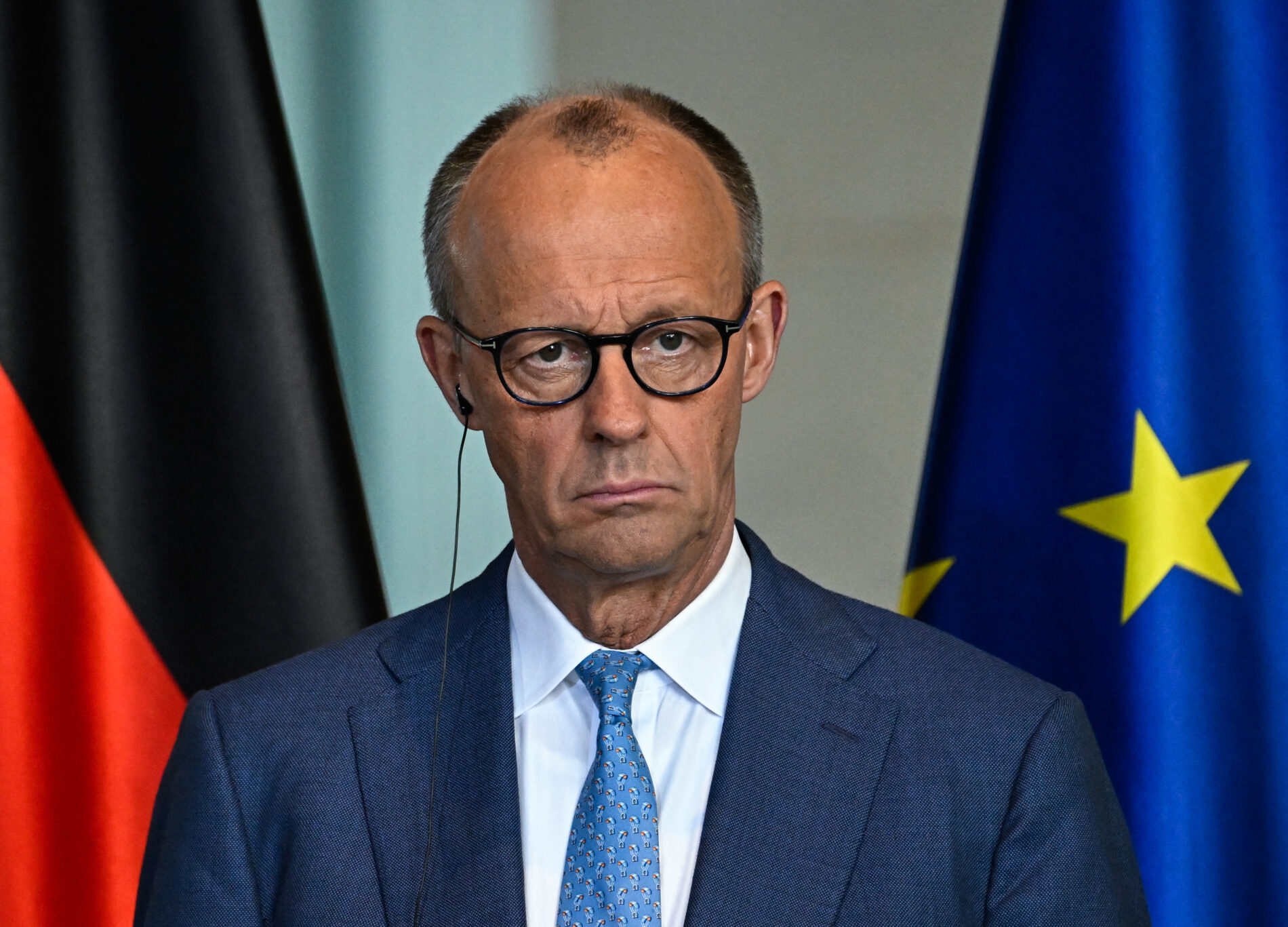
The mood in the country is “very critical,” Merz admitted, and he wished “we had already achieved more in this coalition.” However, Germany has the capacity for reform. And precisely because there are differing approaches between the coalition partners, a standstill must be avoided.
Dobrindt also spoke out clearly. “I consider all the discussions about whether a minority government would be possible to be absolutely absurd,” he told the broadcasters RTL and ntv. A minority government has one major problem: it lacks a majority in parliament. “How are laws supposed to be passed without majorities in parliament?”
Instead, on the anniversary of the federal government’s inauguration, Dobrindt expressed his conviction that the CDU/CSU-SPD coalition will last until the end of the legislative term. “There simply isn’t any other option,” he told the broadcasters. “And no other attempt should even be made.”
SPD parliamentary manager Dirk Wiese emphasized the importance of “getting the coalition back on track.” He stated that the CDU was not a political opponent, but a coalition partner. “The political opponent sits on the right in parliament,” he said in Berlin.
At the same time, Wiese reported on a contribution made by former Chancellor Olaf Scholz (SPD) at the SPD parliamentary group meeting on Tuesday, where speculation about a minority government was also discussed. This was an “important contribution,” he said, because Scholz doesn’t speak out regularly and carefully considers his actions.
SPD leader and Labor Minister Bärbel Bas told “Der Spiegel” that she would do everything in her power to prevent the coalition from collapsing. “The collapse of this coalition would only play into the hands of the AfD. But I don’t want to hand this country over to the enemies of democracy,” she told the magazine. “We have a damned responsibility to make this work together.” She would fight for the government because it is “better than its reputation.”
Meanwhile, a study that surveys 24,000 people in 30 countries monthly about their biggest concerns revealed that 82 percent of Germans believe the country is on the wrong track. This was three percentage points higher than the previous month, according to the Ipsos survey. Only after the collapse of the traffic light coalition in February 2025 was the mood even worse, according to the study.
Furthermore, the study found that only 22 percent of Germans recently rated the economic situation as good, seven points lower than a month earlier. The survey, which took place between March 20 and April 3, polled approximately 1,000 people in Germany.
AFP