
In Apfelstetten near Münsingen, a voltage surge caused extensive damage to private households. A technical fault at a Netze BW substation caused the voltage to rise to as much as 360 volts; household outlets normally supply 230 volts. Consequently, at least 50 of the 209 households reported damage to electrical appliances and systems. The total damage recorded so far amounts to at least 600,000 euros. However, no one was injured.
Overvoltage Affects Heating Systems, Wallboxes, and Solar Installations
Heating controls, wallboxes, and photovoltaic systems were particularly frequently affected by the malfunction. Refrigerators and freezers also broke down. In some homes, this resulted in the loss of hot water and the failure of parts of the building’s technical systems. According to local representative Stefanie Looser, one homeowner alone estimates damages at around 40,000 euros. Consequently, tradespeople had to step in to carry out numerous repairs on short notice.
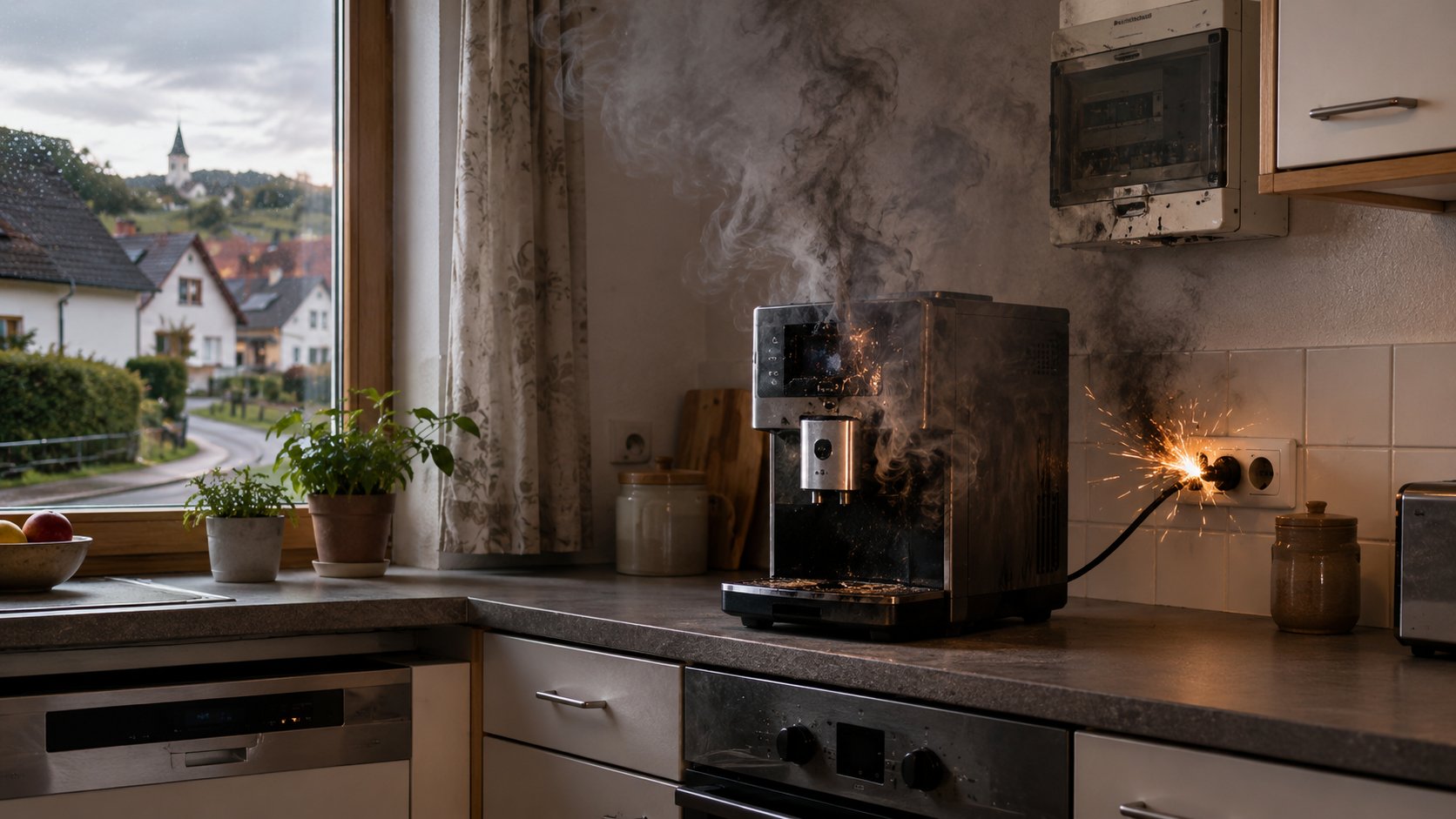
Representative image: AI-generated
Even before the actual incident occurred, residents had repeatedly noticed lights flickering. However, the situation escalated significantly on August 21. Lights flashed, garage doors opened on their own, and some coffee machines began to smoke. Smoke was also seen coming from the affected substation. These unusual events initially caused considerable uncertainty in the local community.
360 volts is far outside the normal grid voltage range
In the German low-voltage grid, the nominal voltage for households is 230 volts. The permissible range is generally plus or minus ten percent. Consequently, the voltage delivered to the end consumer normally stays within a narrow band. The measured 360 volts was well above this level. Electronic control systems and power electronics, in particular, can be highly sensitive to such fluctuations.
Netze BW attributes the overvoltage to a faulty piece of equipment within the substation. According to the company, a technician arrived at the site 17 minutes after the fault was reported and subsequently resolved the issue on-site. However, the substation did not return to full operation until about four and a half hours later. The company is continuing to investigate the precise technical cause of the defect.
Netze BW describes the incident as very rare
The grid operator characterizes events of this kind as “very rare.” While protective systems monitor the grid and are designed to isolate faulty sections, technical defects cannot be entirely ruled out, even with regular maintenance. Consequently, the current technical regulatory framework includes extensive requirements for the planning and operation of low-voltage grids. VDE FNN revised these rules again in 2026.
The claims process is now beginning for those affected. To facilitate this, Netze BW requires—among other things—descriptions of the damage, photographs, or assessments from specialist electrical contractors. Therefore, defective devices should not be disposed of until the review is complete. Furthermore, a subsequent overvoltage event could give rise to legal liability issues. As early as 2014, the Federal Court of Justice ruled that electricity can be classified as a defective product under certain conditions; the Product Liability Act explicitly lists electricity as a product. However, affected parties must prove both the damage and the causal link.
Author: Blackout News
Sources: Südwest Presse (31.08.26)