
In light of poor poll numbers for Federal Chancellor Friedrich Merz—as well as for the government as a whole—speculation has arisen that the incumbent could be replaced by another head of government, such as North Rhine-Westphalia Minister-President Hendrik Wüst (both CDU). Senior figures within the Union reacted to such rumors with annoyance. From a strictly legal standpoint, such a change of Chancellor would be possible, though only under specific conditions.
Scenario 1: Resignation
By resigning, Merz could pave the way for the election of a different Chancellor. However, there are absolutely no indications that he intends to do so. Formally, Merz would have to request his dismissal from Federal President Frank-Walter Steinmeier. The Head of State would then have to accept this request; however, the Chancellor would remain in office in a caretaker capacity until the position is filled anew. In that event, the standard rules for the election of a Chancellor, as stipulated in Article 63 of the Basic Law, would apply.
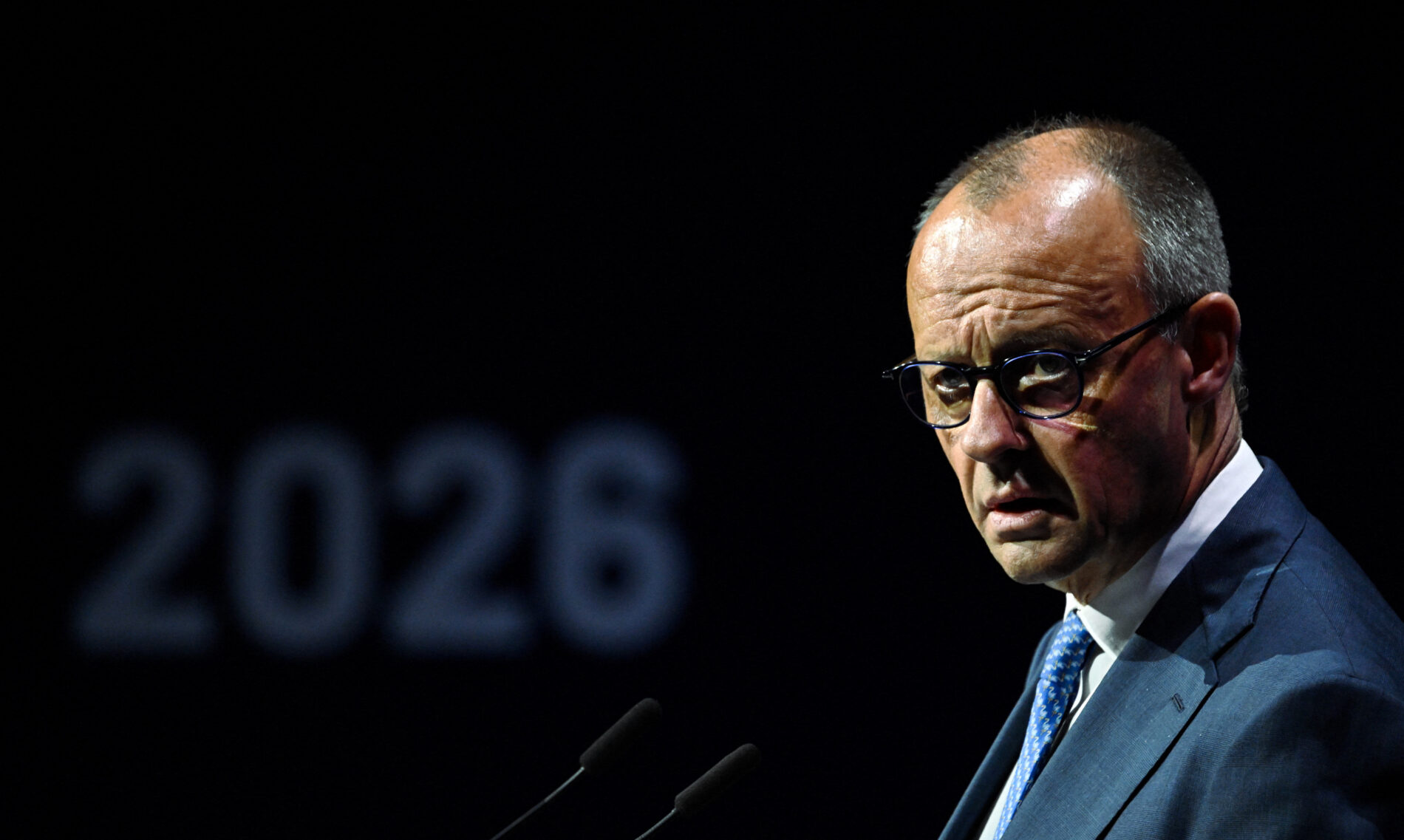
Image: Tobias SCHWARZ / AFP
Scenario 2: Vote of Confidence
Merz could also—either in conjunction with a specific policy issue or independently thereof—call for a vote of confidence. This move could also serve to demonstrate the extent of his support within the coalition. Should he fail to secure a majority in such a vote of confidence, the Federal President could—pursuant to Article 68 of the Basic Law—dissolve the Bundestag within 21 days; however, this is possible only if Merz formally proposes it. During this same 21-day period, the Bundestag could also elect a new Chancellor, thereby extinguishing the right to dissolve Parliament. Furthermore, even if he were to lose the vote of confidence, Merz could—from a legal standpoint—remain in office, although doing so would likely prove politically precarious.
Scenario 3: Constructive Vote of No Confidence
Pursuant to Article 67 of the Basic Law, the Bundestag retains the right at any time to elect a different Federal Chancellor through a “constructive vote of no confidence,” provided it does so with the majority support of its members. However, such a procedure would be ill-suited to bringing about a change in leadership within the same party or coalition: to achieve this, a challenger—such as Wüst—would have to run directly against Merz and secure a majority vote.
Option: New Elections
New elections for the Bundestag are also a conceivable possibility. However, the legal hurdles for this are high. This scenario could arise if a new election for Chancellor were to fail following a resignation by Merz, or following his defeat in a vote of confidence. The latter could, in fact, be deliberately engineered. In the event of new elections, the Union parties could field a new lead candidate—or they could choose to run with Merz once again. However, according to current polls, the risk of the incumbent “red-black” coalition losing its majority would be very high in the event of new elections.
Decision by the Chancellor’s Party
Unlike in some other countries, Germany has no legal mechanism allowing the Chancellor’s party—the CDU—or the Union parliamentary group to decide, during an ongoing legislative term, to nominate a different head of government and thereby bring about a change in the Chancellorship. Politically, however, they could of course call upon Merz to resign, should they wish to do so. Yet, there are currently no indications that this is likely either. Another conceivable scenario would be Merz’s replacement as CDU Chairman—either through resignation or by being voted out of office (though, under regular procedures, the latter would not be possible again until 2028). However, such a move would not be legally linked to the end of his Chancellorship—nor would it necessarily have to result in it politically.
AFP translated by Blackout News