
In the second half of 2026, Hamburg will introduce—for the first time—a new allocation procedure for large-scale electricity connections. This applies to new medium- and high-voltage connections with a capacity exceeding 1.5 megavolt-amperes. This measure is prompted by a sharp increase in requests for new connections. At the same time, key interconnection points are limiting the transfer of power from the 380-kilovolt grid into the municipal distribution network. Consequently, data centers, electrolyzers, power-to-heat facilities, charging hubs, and large-scale energy storage systems must anticipate allocations, waiting periods, or reduced connection capacities due to limited grid capacity. (hamburger-energienetze: 19.05.26)
New Allocation Procedure Replaces Previous First-Come, First-Served Principle
Until now, for many grid connections, the timing of the inquiry was the primary factor. Consequently, those who applied early stood a better chance of securing the desired capacity. However, this principle is no longer sufficient when multiple projects simultaneously demand large volumes of electricity.
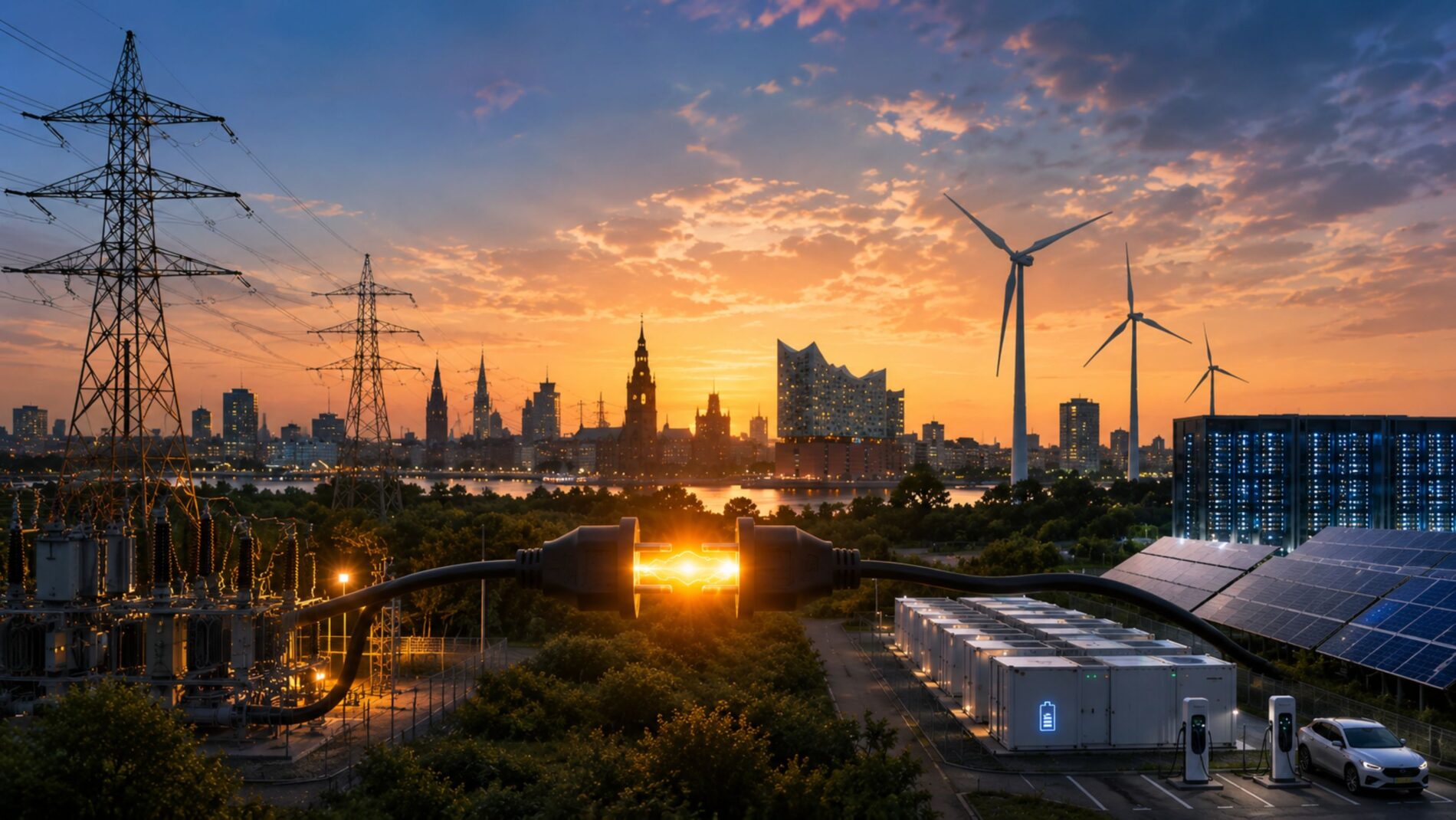
Consequently, Hamburger Energienetze is introducing an allocation procedure. Going forward, the grid operator will distribute available capacity among multiple applicants. However, this procedure applies only when the requested power exceeds the available grid capacity.
Large-Scale Storage Systems Intensify Competition for Connection Capacity
The role of large-scale battery storage systems is of particular importance. They are designed to absorb surplus electricity and enhance grid flexibility. However, during the charging process, they themselves draw significant power from the grid.
As a result, they compete with other large-scale projects for scarce connection capacity. Therefore, a storage system does not automatically relieve the burden on the power system. The decisive factors are when it charges and how much power it consumes in doing so. In Hamburg, every new large-scale storage system connected at a constrained grid interconnection point can tie up additional capacity.
Bottleneck Located at a Few Central Grid Nodes
Hamburg connects to the overarching extra-high-voltage grid via specific interconnection points. It is at these points that electricity flows from the 380-kilovolt grid into the regional 110-kilovolt system. However, it is precisely this connection that limits the feasibility of new large-scale grid connections.
Consequently, simply increasing electricity generation will not solve the problem on its own. New wind or solar power capacity also requires a robust grid infrastructure. Only by strengthening these grid nodes can additional headroom be created for large-scale consumers. For this reason, grid expansion is becoming a decisive factor.
Nationwide Storage Boom Increases Pressure
This trend extends far beyond Hamburg. Grid operators across the country are recording an increasing number of inquiries regarding large-scale battery storage systems. These projects are now reaching power capacities that were previously required primarily by industrial facilities. At the same time, this places growing pressure on regional distribution grids.
For Hamburg, this bottleneck comes at a critical juncture. The city aims to achieve climate neutrality at an accelerated pace. To do so, it requires more electricity, more charging infrastructure, and more flexible energy systems. However, without rapid grid expansion, the grid connection itself threatens to become the limiting factor.