
It marks the lowest level in over ten years: only 206,600 apartments were built in Germany last year, as reported by the Federal Statistical Office on Friday. The Housing Construction Alliance described this figure as “dramatic,” stating that 400,000 apartments per year are “socially necessary.” Construction Minister Verena Hubertz (SPD) stated that she is looking “not backward, but forward,” noting that the figures for building permits are “pointing clearly upward.”
In 2025, the number of completed apartments fell significantly for the second consecutive year, according to the statistical office in Wiesbaden. In 2024, the decline amounted to 14.4 percent compared to the previous year; in 2025, it was 18 percent. The last time the number of completions was lower than in the past year was in 2012, when 200,500 apartments were completed.
Residential construction in Germany hit a low point in 2009—at that time, only 159,000 apartments were completed. The figure climbed to 306,400 by 2020, before dropping back below the 300,000-apartment threshold between 2021 and 2023. Last year, the decline was particularly sharp in the East, where completions shrank by around 34 percent.
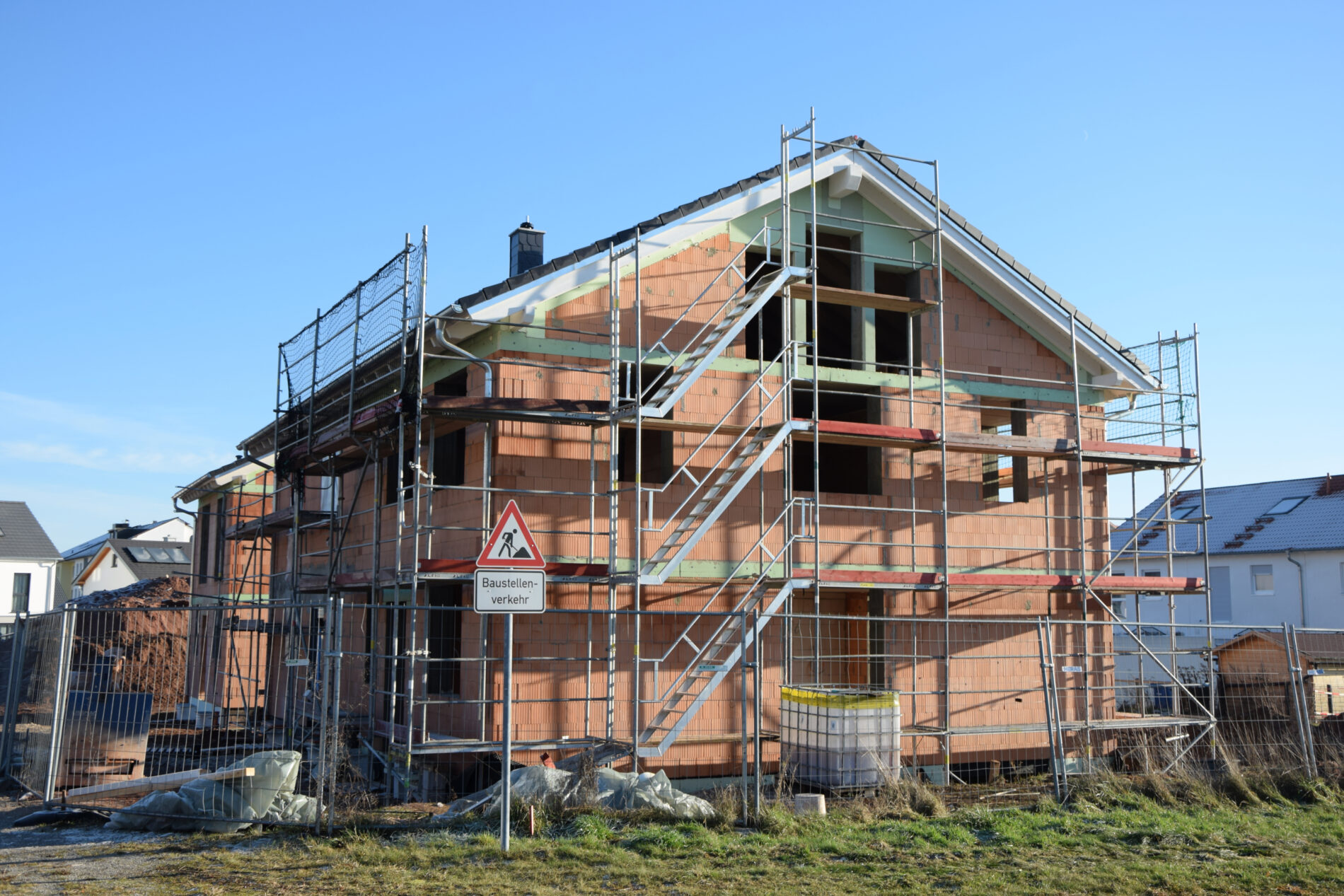
Private individuals, in particular, are shying away from construction projects: in 2025, the decline in this sector was particularly pronounced, standing at nearly 24 percent, according to the statistics office. The time elapsed between the granting of a building permit and project completion lengthened to 27 months in 2025. In 2020, by contrast, the construction of a single housing unit had taken an average of just 20 months.
In recent months, however, the residential construction sector has regained momentum: in 2025, the number of building permits issued rose by 10.6 percent year-on-year to reach 238,100; specifically, from January to March, this figure increased by 14.6 percent.
“Our construction policy—which prioritizes investment, process acceleration, and the reduction of building costs—is already yielding results,” Minister Hubertz told the Rheinische Post (Saturday edition). She added that further measures—such as expedited planning and approval procedures, as well as funding programs—would help to “drive completion rates back up, even amidst a situation that remains challenging.”
In contrast, the Housing Construction Alliance—comprising construction associations, the construction trade union, and the tenants’ association—expressed a pessimistic outlook. Germany is mired in a “deep structural housing crisis,” the alliance declared. It anticipates a plunge to fewer than 200,000 newly built homes this year. Among other measures, the alliance called for the accelerated implementation of the “Simplified Construction” program, as well as more attractive government incentives.
The GdW—the Federal Association of German Housing and Real Estate Companies—stated that hundreds of thousands of approved housing units are failing to be realized “due to high costs, complex regulations, and a lack of planning certainty.” According to statistics, as of the end of 2025, there were approximately 760,700 approved but as yet uncompleted housing units; of these, some 307,000 were, at least, already under construction.
People have “long since felt” the crisis in the construction sector “through ever-rising rents and a shortage of housing,” explained GdW President Axel Gedaschko. He called upon policymakers to provide a “decisive push for affordable housing.”
AFP translated by Blackout News