
In 2026, Germany and Europe are experiencing a new phase of weakness in the energy transition, as wind power, photovoltaics, hydrogen, and large-scale storage systems lose economic ground. The business models of many projects are buckling under the weight of higher interest rates, expensive grid infrastructure, falling electricity prices, and reduced subsidies. This impact is felt particularly acutely by projects requiring substantial upfront investment but no longer generating reliable revenue streams. Consequently, electricity consumers, industry, investors, and national budgets are increasingly being burdened by rising costs.
Offshore Wind: The Old Calculus No Longer Holds
Offshore wind was expected to supply vast quantities of electricity to industry and households. However, financing for many projects is becoming increasingly difficult. EnBW withdrew from the British offshore projects Mona and Morgan after the ventures failed to secure government subsidies. Consequently, the company recorded a write-down of 1.2 billion euros. Furthermore, EnBW cited higher supply costs, weaker electricity prices, and rising interest rates as contributing factors.
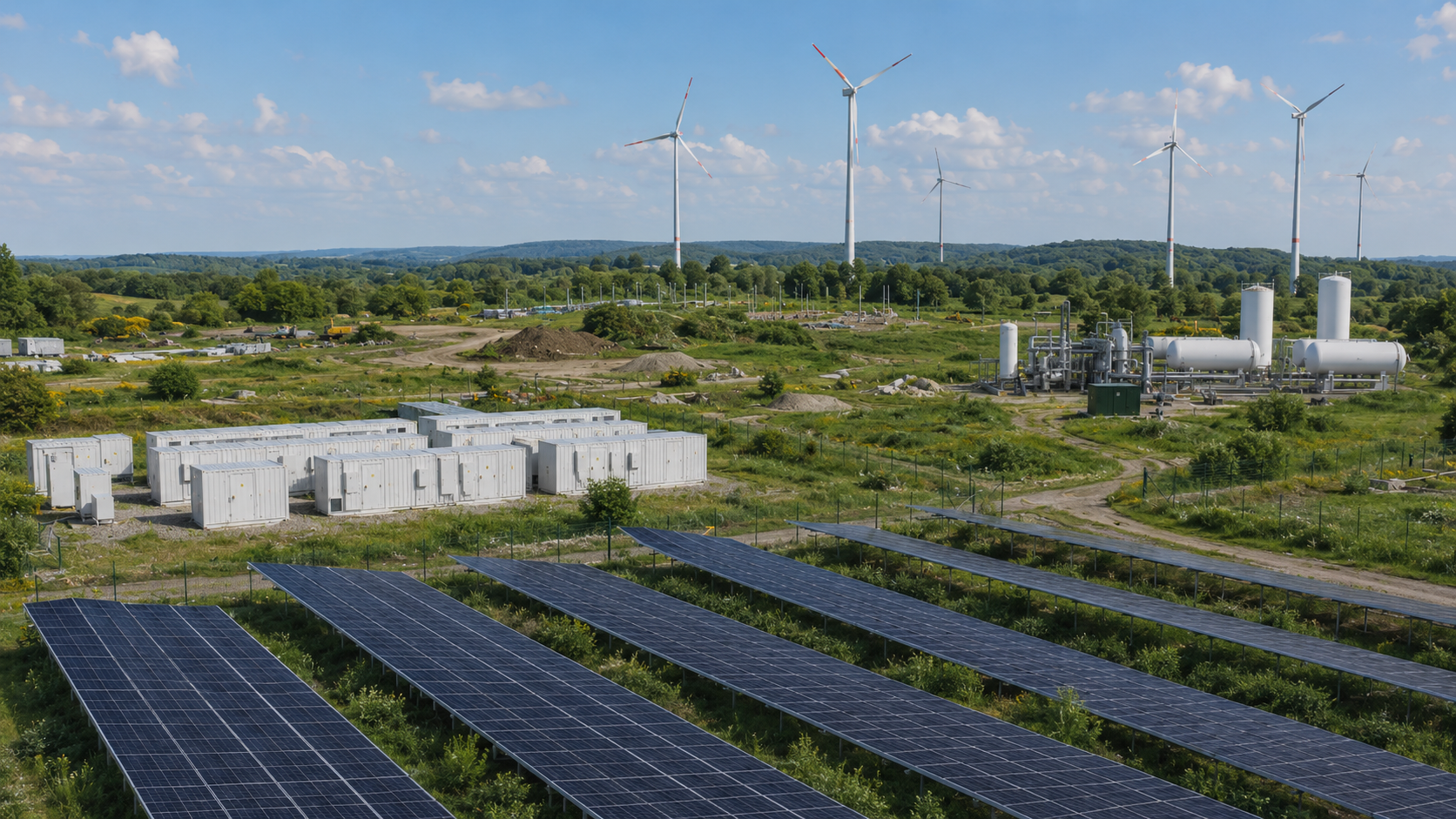
German tenders, too, are revealing new weaknesses. In 2025, two offshore sites with a combined capacity of 2.5 gigawatts failed to attract a single bidder. While policymakers are setting ambitious expansion targets, investors are demanding greater planning certainty. Without stable revenues, technological advancements alone are no longer sufficient. Consequently, the question of financial support is once again moving to the center of the debate.
The Energy Transition’s Business Model Is Losing Its Pillars
For a long time, the energy transition rested on three pillars: technology costs were expected to fall, subsidies were intended to accelerate expansion, and growing demand was supposed to ensure stable revenues. However, this business model no longer functions automatically. Wind farms require grid connections, solar parks need storage solutions, hydrogen needs buyers, and storage facilities require affordable grid access.
Moreover, policymakers are scaling back certain forms of financial support. As of 2025, new photovoltaic systems are no longer eligible for remuneration during periods of negative electricity prices. As a result, operators lose revenue precisely at the times when many systems are generating power. Furthermore, new installations are being pushed more aggressively into the open market. While this improves overall system logic, it undermines the financial viability of many individual projects.
Hydrogen Cannot Advance Without Buyers
Hydrogen was intended to make the steel, chemical, transport, and power generation sectors more climate-friendly. However, demand remains weak, while production costs remain high. Several projects across Europe have been postponed or cancelled. A particularly problematic issue is the disconnect between political targets and the industrial sector’s willingness to pay.
Momentum is also slowing down within Germany. Companies are willing to purchase green hydrogen only if the pricing, supply reliability, and regulatory framework are favorable. At the same time, reduced subsidies are acting as a brake on new initiatives. Consequently, some operators are postponing their investments. Others are exploring import options, as domestic production can prove prohibitively expensive.
Storage and Solar Fall into the Same Cost Trap
Large-scale storage systems are designed to absorb solar power peaks and release electricity later. However, they, too, are grappling with rising grid connection costs and uncertain revenues. Grid operators are permitted to demand capital contributions toward construction costs. As a result, the upfront costs for many storage projects are on the rise. Furthermore, it remains unclear what level of sustainable revenue can be generated through arbitrage, ancillary services, and grid support functions.
The photovoltaic sector has already demonstrated just how quickly success can morph into a pricing problem. On sunny days, an abundance of solar power drives wholesale electricity prices downward. During periods of negative pricing, new installations forfeit their eligibility for subsidies. Consequently, the business model is shifting away from a sole focus on grid injection toward a combination of self-consumption, energy storage, and direct marketing. Those unable to finance these components are either shelving their projects or postponing construction.
The energy transition, therefore, requires more than just expansion targets; it demands viable revenue streams, affordable grid infrastructure, and clear regulatory frameworks for incentives. While a reduction in subsidies can serve to discipline the market, it also exposes the inherent weaknesses of marginal projects. If capital begins to withdraw from the wind, hydrogen, solar, and energy storage sectors, overall system costs will inevitably rise elsewhere. Ultimately, it is the consumers, industry, or the state that will be left to foot the bill. (KOB)