
On July 7, 2026, Hallbergmoos approved the purchase of a diesel-powered winter service truck for approximately €440,000. It replaces a 25-year-old Fendt Xylon 524 that is suffering from corrosion and increasingly frequent breakdowns. However, a proposal to conduct an additional cost-effectiveness analysis for an electric truck failed to secure a majority. The municipal council cited the long duration of snow-clearing operations, the lack of fast-charging infrastructure, and potential charging issues during cold weather or power outages. Consequently, an EU-wide tender will now be issued for a Euro VI truck equipped with a snowplow, spreader, and loading crane.
Aging Fendt becoming unreliable for winter service
The current tractor dates back to 2001 and has logged approximately 6,200 operating hours; road salt, moisture, and years of winter operations have taken a heavy toll on both the vehicle and its attachments. According to the administration, breakdowns are becoming more frequent and are compromising operational readiness. However, the public works department rarely uses the Fendt outside of the winter season. A similar vehicle is already part of the municipal fleet.
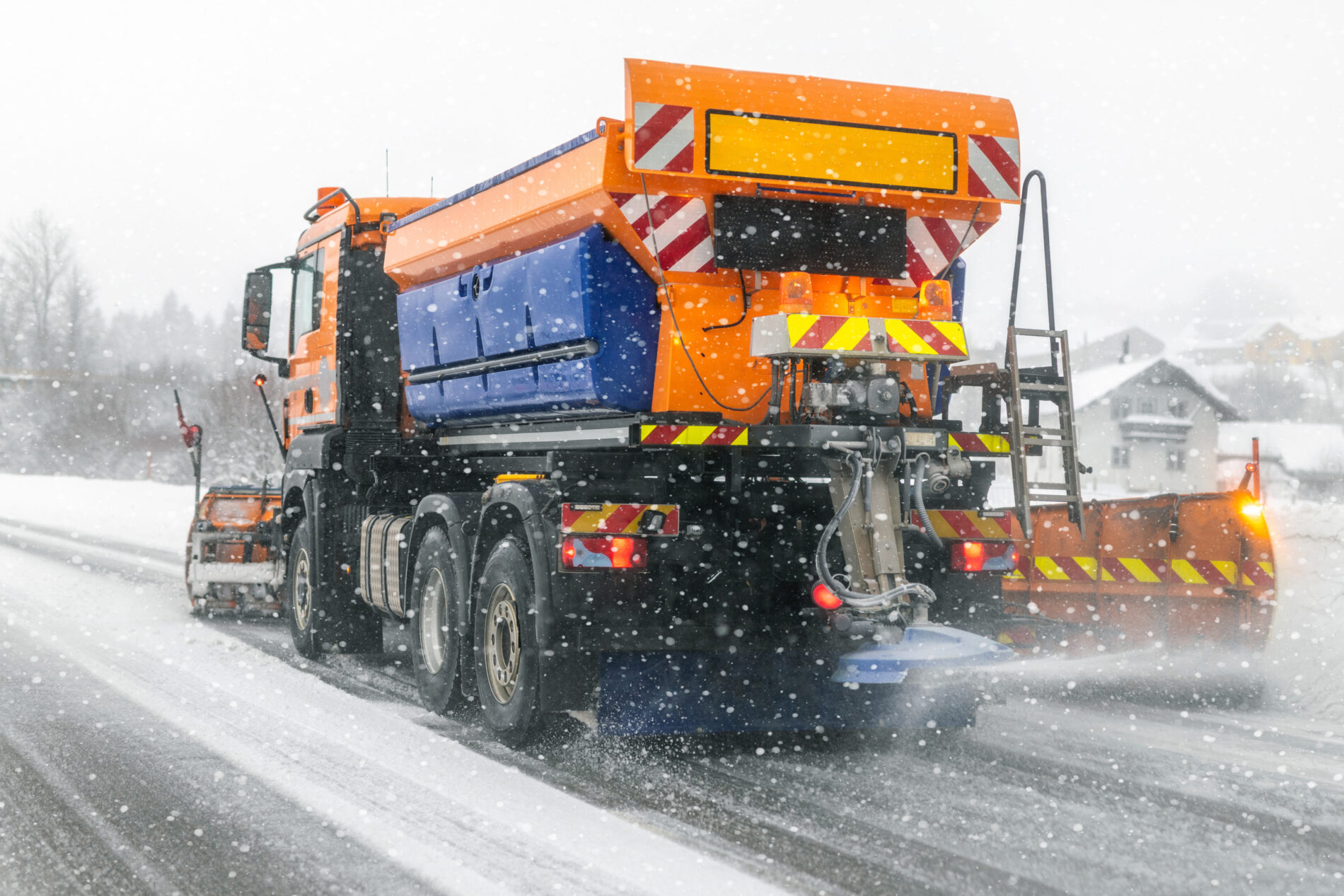
Image: Shutterstock
Consequently, the new winter service truck is being equipped with a mounted spreader, a snowplow blade, and a loading crane. The crane is intended to facilitate additional transport and lifting tasks outside the snow season, a move by which the municipality aims to increase the utilization rate of the expensive vehicle. A budget of €450,000 has been allocated, with approximately €10,000 of that amount earmarked for external support regarding the EU-wide procurement process.
Why the winter service truck is getting a diesel engine
Prior to procurement, the administration evaluated various drive systems available on the market. It concluded that a battery-electric truck was not currently suitable for the specific operational profile, as the plow, spreader, and cabin heating require additional energy. Furthermore, the vehicle must remain operational for many hours during sustained snowfall. The proposal estimates a 30 to 40 percent loss in capacity for lithium-ion batteries at low temperatures.
However, Florian Rothmeyer of the Green Party called for reliable comparative data rather than an immediate purchase of an electric vehicle. He therefore proposed a technology-neutral tender and an external cost-effectiveness analysis for the winter service truck. He estimated that such a study would have cost between €5,000 and €10,000. Rothmeyer pointed to the lower maintenance costs, high mileage capabilities, and short charging times of modern electric trucks. He withdrew the motion after it became clear there was no majority support for it. Additionally, the municipal depot currently lacks a fast-charging station.
Winter tests reveal higher energy consumption and charging issues
Robert Wäger of the Green Party pointed to electric snow-clearing vehicles operated by Autobahn GmbH. Since late November 2024, the company has been testing a fully electric three-axle vehicle equipped with a plow and spreader in Münchberg, where it is also used for regular winter maintenance operations. Daimler Truck also reported results from a 6,500-kilometer winter tour involving two eActros 600 trucks. On a test route at temperatures of minus two degrees Celsius, energy consumption rose by approximately 25 percent; however, on snow and ice, the increase reached nearly 50 percent. The manufacturer maintains that suitable public charging stations for trucks remain the exception. Nevertheless, these figures cannot be directly extrapolated to heavy-duty snow-clearing operations.
Consequently, Hallbergmoos has opted for range and rapid refueling capabilities to ensure the vehicle can handle continuous operation. CSU municipal councilor Robert Lackermeier stated, “The public works department needs a work vehicle, not one for the sake of the environmental balance sheet.” Even so, the municipality already employs electric vehicles at its public works depot and wastewater treatment plant, as well as for official staff use. The council did not commission an independent total-cost analysis comparing the two drive systems; as a result, there is no reliable comparison regarding acquisition costs, energy, maintenance, and charging infrastructure.
Author: Blackout News
Sources: Merkur (18.07.26) – Hallbergmoos (07.07.26)