
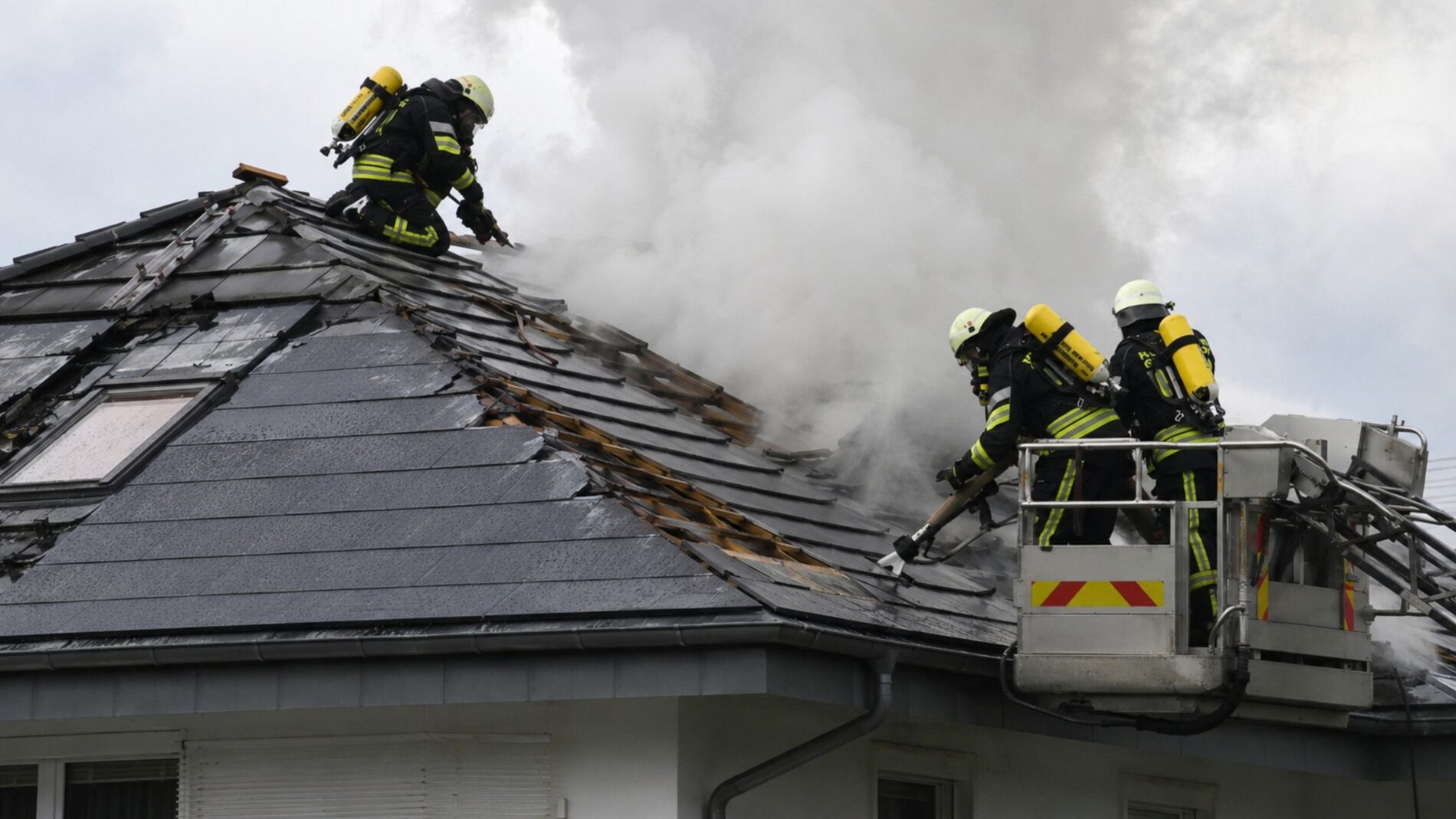
On May 9, a roof fire broke out at a detached single-family home in Gütersloh-Avenwedde. The fire spread throughout the roof structure, and the presence of integrated photovoltaic solar roof tiles turned the incident into a particularly hazardous operation. The critical risk factors lay in the electrical voltage of the system and the difficulty of accessing smoldering pockets concealed beneath the roof cladding. During firefighting operations, one firefighter suffered an electric shock and was taken to the hospital for examination; according to initial reports, there was no immediate threat to his life. The operation continued into the evening. During the night, smoldering pockets flared up again. Subsequently, the roof had to be dismantled. (wdr: 11.05.26)
Solar Roof Tiles Hinder Access to Fire Sources
The fire presented the fire department with an unusually difficult challenge. The affected house did not feature traditional photovoltaic modules mounted visibly atop the roofing; instead, solar roof tiles had been installed. These tiles themselves form an integral part of the roof structure.
Stock image
It was precisely this structural design that significantly complicated firefighting efforts. Emergency crews had to open up the roof surface to access the burning areas situated beneath the roofing material. In doing so, they simultaneously had to contend with the electrical hazards posed by the photovoltaic system. The risk of falling from heights was also a factor. Consequently, specialized equipment was deployed for the work carried out on the roof.
Electric Shock Highlights Underestimated Risk of Modern Solar Roofs
The injured firefighter received immediate on-site treatment from emergency medical services. Afterward, the medical team transported him to a hospital for further examination. This incident demonstrates just how dangerous photovoltaic systems can become during a fire—particularly when modules, wiring, or roofing components have sustained damage.
Photovoltaic systems can continue to generate voltage whenever they are exposed to light. This applies in particular to the DC cabling running between the solar modules and the inverter. During a fire, additional risks emerge; extinguishing water, damaged cables, and exposed roof structures can all exacerbate the situation. The electric shock incident in Gütersloh underscores the critical need for fire departments to obtain rapid, precise information regarding the structural layout of solar roofs and the available options for safely de-energizing the system.
Smoldering Embers Reignite
Even after the initial firefighting operation, the situation remained critical. During the night leading into Sunday, emergency crews were forced to deploy once again, as hidden pockets of smoldering embers had reignited. Such fire hotspots frequently develop in hard-to-reach areas within the roof structure; they cannot be safely extinguished until the entire roof structure has been thoroughly inspected or opened up.
On Sunday, the roof was finally dismantled. Only then could the remaining burning areas be fully exposed. The police have launched an investigation into the cause of the fire. The exact extent of the damage remained undetermined at the time.
Photovoltaics Require Clear Labeling for Emergencies
The incident in Gütersloh is likely to intensify the discussion regarding fire safety for integrated solar roofing systems. Photovoltaics remain a pivotal component of the energy transition; however, this technology alters the risk profile in the event of a fire. Solar roof tiles, in particular, can be more difficult for fire crews to identify and access than conventional solar modules.
For homeowners, this means that solar systems should be clearly documented, professionally installed, and marked in a way that is easily understood by emergency responders. In an emergency, every minute counts for fire crews. The incident in Gütersloh demonstrates just how quickly a roof fire can evolve into a complex hazard scenario due to modern building technologies.