
In Vienna, as of early May 2026, seven out of ten new hydrogen buses operated by Wiener Linien are out of service. The vehicles were acquired in late 2025 for the 39A route, running between Heiligenstadt and Sievering. This flagship project cost more than ten million euros. According to Wiener Linien, the issue stems from a shortage of spare parts for conventional components—rather than defects in the hydrogen propulsion system itself. The affected parts include, among others, door compressors and blind-spot monitors. The buses are currently parked at the Leopoldau depot in Floridsdorf. Nevertheless, passengers are expected to experience minimal disruption, as substitute vehicles—including diesel buses—are being deployed. (heute: 06.05.26)
Spare Parts Cripple Hydrogen Buses in Vienna
Wiener Linien emphasizes that the fuel cells, tanks, and hydrogen systems are not the cause of the outages. The problems stem from components that are indispensable for other types of buses as well. The vehicles cannot be put into regular service without functioning door mechanisms or blind-spot monitors.
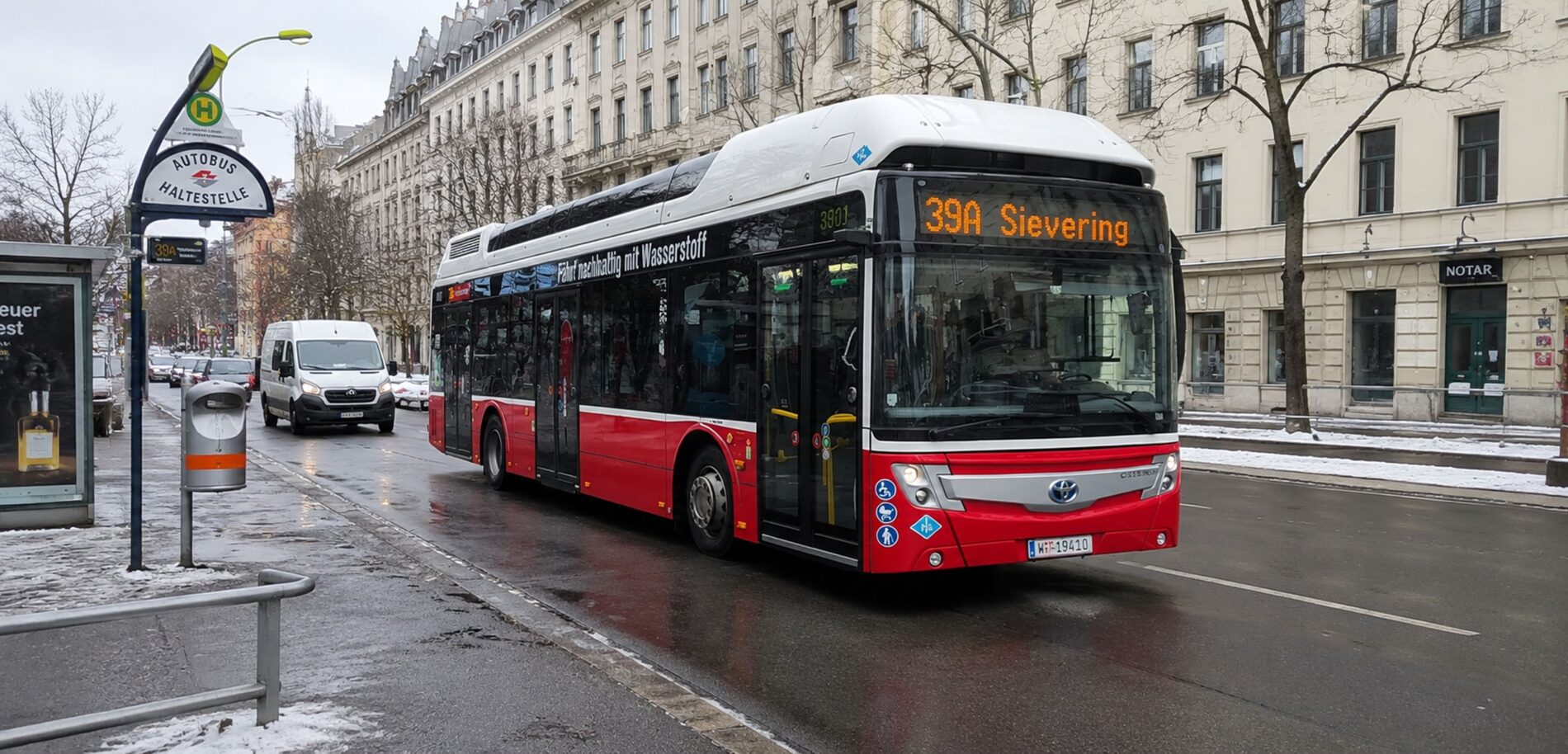
Thus, the central weak point does not lie with the hydrogen itself; rather, the critical issue is the supply of spare parts. According to Wiener Linien, the manufacturer, CaetanoBus, is already liable for contractual penalties.
Flagship Project Comes Under Early Pressure
Line 39A was fully converted to hydrogen operation in December 2025. It connects Heiligenstadt with Sievering and is considered a challenging route due to its steep gradients. It was precisely here that the new fleet was intended to demonstrate that emission-free public transport can function reliably, even under demanding urban operating conditions.
However, after around five months, seven vehicles are currently out of service. Only three buses remain operational. This presents Vienna with a delicate real-world test: while the technology promises clean public transport, actual operations remain dependent on supply chains and spare parts.
Schedule Maintained Solely Thanks to Replacement Buses
For passengers, disruptions have so far remained limited. Wiener Linien is deploying replacement vehicles to keep operations running. This prevents major gaps in the schedule.
At the same time, the use of diesel buses undermines the project’s environmental ambitions. The hydrogen buses were intended to replace conventional vehicles; now, however, those very vehicles are having to step in.
Real-World Suitability Determines Success
The buses are equipped with a 180 kW electric motor, a 70 kW Toyota fuel cell, and five hydrogen tanks mounted on the roof. Their range is reportedly over 400 kilometers. The vehicles offer seating and standing room for 78 passengers.
This case demonstrates that new propulsion technology alone is not enough. Crucial factors include maintenance, spare parts, supply chains, and operational reliability. For Vienna, it remains unclear when all the sidelined buses will return to regular service on Line 39A.