
In Reutlingen, an arson attack on the Reutlingen-West substation triggered a widespread power outage during the night leading into Monday, June 8, 2026. According to state authorities, multiple fires broke out on the premises at approximately 1:43 a.m. Investigators later discovered evidence of accelerants. Consequently, they are investigating the incident as a case of arson and disruption of public services, while also examining a possible terrorist motive. Links to left-wing extremism are a focus of the investigation, as a post contextualizing the attack politically appeared on the sabotage platform “Switch Off” following the incident. The outage affected around 40,000 households, 7,600 buildings, a hospital, care facilities, and numerous businesses.
Far-left scene targets power grids for political attacks
The incident in Reutlingen does not appear to be a case of ordinary vandalism. The perpetrators did not target just any utility box; instead, they attacked a substation, causing a significant impact on the regional power supply. For this very reason, investigators are examining whether the arson attack involved prior planning, local knowledge, and a basic understanding of technology.
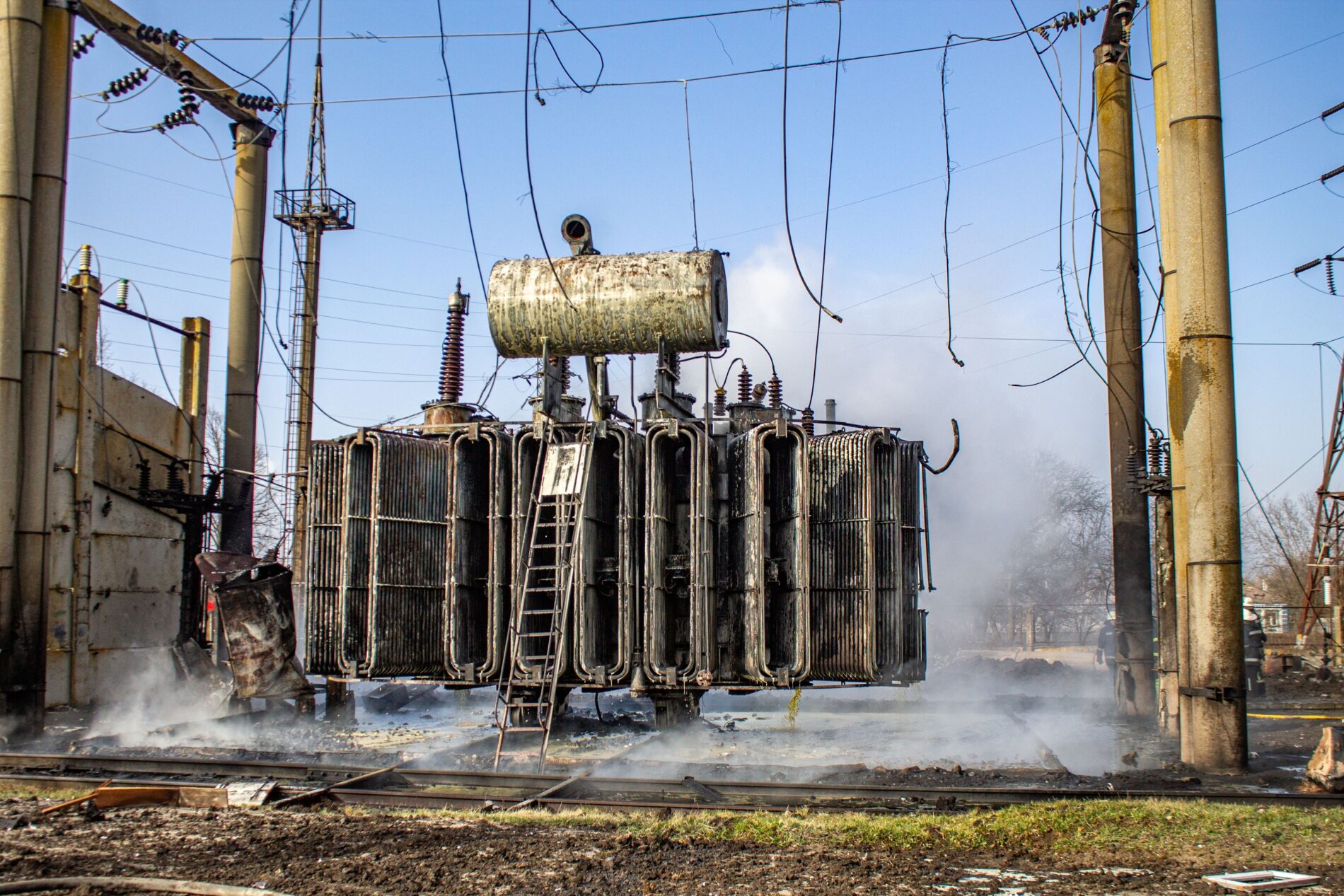
Stock Image: Shutterstock
Selecting such targets requires more than mere chance. Anyone targeting a substation must understand that this is where electricity flows are consolidated, distributed, and protected. Furthermore, a perpetrator must realize that a localized fire can simultaneously affect numerous households, businesses, and critical facilities.
Arson attack in Berlin provides a crucial point of comparison
The most striking parallels appear in the Berlin attack of January 2026. In that instance, cables on a cable bridge near the Lichterfelde power plant were set ablaze. The resulting outage affected approximately 45,000 households and 2,200 commercial units in the southwest of the capital.
In the Berlin case, police deemed a claim of responsibility from the “Vulkangruppe” (Volcano Group) credible. It was not merely the political statement that proved decisive; according to reports, the letter contained detailed knowledge regarding the crime scene, including specifics on conduits, cables, areas affected by the fire, and other acts of sabotage.
Target selection suggests prior research rather than a spontaneous act
It is precisely this aspect that makes the comparison with the Reutlingen incident so significant. In both cases, the arson attack struck a location with a major impact on the power grid. The Berlin attack targeted a cable bridge carrying high- and medium-voltage lines, whereas the Reutlingen incident targeted a substation.
Perpetrators do not identify such locations through trial and error; they require maps, surveillance, digital research, or local knowledge. Moreover, they must be able to assess where a fire will not only cause damage but also disrupt supply chains.
“Switch Off” provides ideology and potential target research
The “Switch Off” platform therefore plays a pivotal role. Baden-Württemberg’s domestic intelligence agency describes the campaign as an anarchist-leaning, left-wing extremist network with a high potential for mobilizing activists. The platform reportedly hosts addresses of potential targets and instructions on how to commit arson.
This creates a dangerous nexus of ideology, target selection, and copycat behavior. Left-wing extremist perpetrators do not require a traditional organizational structure when platforms provide the narrative framework, research data, and a sense of recognition. Furthermore, published accounts of the acts increase the public impact of individual attacks.
Investigators Examine Motives; Security Circles See a Pattern
Officially, authorities in Reutlingen are continuing their investigation against unknown perpetrators. The State Criminal Police Office, state security units, and the counter-terrorism center are analyzing evidence. No confirmed claim of responsibility has been received so far.
However, security circles see clear parallels with the Berlin incident. These include the use of arson, multiple points of attack, sensitive power infrastructure, and significant downstream consequences. Furthermore, the reference to “Switch Off” aligns with a subculture that views energy supplies and industry as legitimate targets for sabotage.
Power Outages Affect More Than Just Private Households
The attack in Reutlingen demonstrated the practical impact of such sabotage. Hospitals, care facilities, businesses, cold chains, and communication systems can be affected within a short time. Consequently, the primary damage is not limited to transformers or cables alone.
The Berlin incident had already made this effect apparent. There, power outages impacted households, businesses, heating systems, transport, and utility services. Reutlingen now confirms that medium-sized cities also possess vulnerable grid nodes.
Critical Infrastructure Requires Better Protection
The key lesson lies in the nature of the targets selected. Perpetrators do not need to destroy massive facilities if they strike specific nodal points. This makes substations, cable bridges, pylons, and switchgear some of the most sensitive targets.
Grid operators therefore require improved access security, surveillance systems, and rapid backup switching capabilities. Police and domestic intelligence agencies must also recognize when isolated acts become part of a militant pattern. Left-wing extremist sabotage of power grids remains particularly dangerous because limited resources can trigger widespread outages.
Author: Blackout-News
Sources: Welt (11.06.26) – Tagesschau (10.06.26) – Staatsministerium Baden-Württemberg (08.06.26) – Verfassungsschutz Baden-Württemberg (09.01.26)