
In June 2026, the crisis facing German foundries is intensifying as high electricity prices, rising CO₂ costs, weak order volumes, and bureaucracy place an overwhelming economic burden on many companies. These 545 enterprises supply components for machinery, vehicles, ships, energy systems, and electrical engineering; consequently, this situation affects more than just individual plants—it impacts supply chains, jobs, and key industrial expertise. The situation is particularly critical because many of these businesses operate at the beginning of the value chain.
Foundries supply components for key industries
The industry manufactures components that are essential for production across many industrial sectors. These include engine blocks, pump housings, turbine parts, transmission components, marine parts, and castings for wind turbines. In addition, many companies supply custom-made products precisely tailored to specific machinery, systems, or vehicles. This close proximity to customers shortens development times while simultaneously strengthening industrial adaptability.
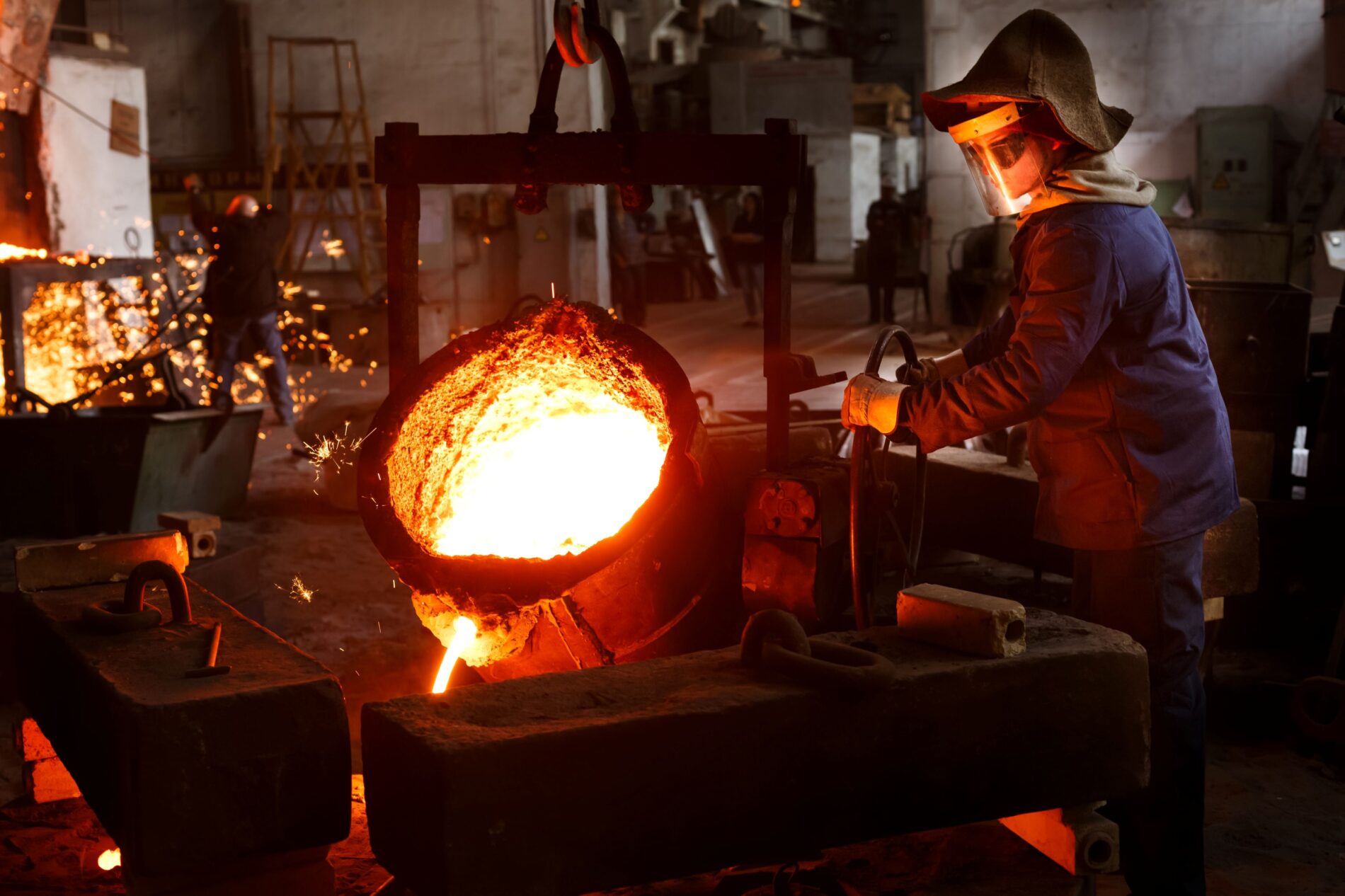
Image: Shutterstock
Many production sites possess process expertise built up over decades. Factors such as alloys, mold making, temperature control, and post-processing determine load-bearing capacity and service life. Consequently, production cannot simply be relocated at will. Relying solely on cheaper overseas suppliers results in a loss of technical exchange—precisely the kind of exchange that defines many German industrial clusters.
Technological Edge Loses Out to Location Costs
German companies often employ state-of-the-art manufacturing technology. Lasers, robots, 3D printing, simulations, and precision balancing techniques boost quality and efficiency. At the same time, engineers are developing new alloys and optimized casting processes. While this technical strength is an asset, it cannot permanently offset high energy costs.
International competition is exacerbating the situation. Asian suppliers often produce at lower energy and climate-related costs. Furthermore, weak order volumes from the mechanical engineering and automotive sectors are weighing on capacity utilization. If foundries disappear, foreign suppliers may pick up individual orders, but Germany loses out on development capabilities, customer proximity, and specialized expertise.
Production Decline Hits Entire Supply Chains
Industry data highlights the gravity of the situation. German casting production fell to around 3.3 million tonnes in 2025, while revenue dropped to less than twelve billion euros. Employment has also shrunk significantly since 2018, and many small and medium-sized enterprises have limited financial reserves.
An analysis by IW Consult describes the sector as a small yet pivotal link in the value chain, connecting metal production with the automotive, mechanical engineering, and electrical engineering industries. A further slump could therefore impact many downstream sectors. A scenario involving a halving of domestic production points to a potential loss of up to 65 billion euros in value added, with an estimated 588,000 jobs affected.
Many Companies Miss Out on Relief Measures
The federal government is reducing electricity costs through several programs. These include industrial electricity pricing, electricity price compensation, grid fee subsidies, and lower electricity taxes. Nevertheless, many companies hardly benefit from this assistance. According to the BDG, more than half of the industry benefits from neither the industrial electricity price nor the electricity price compensation.
Energy demand remains high because metals must be melted and processed with precision. Many companies require large quantities of electricity, gas, or coke. At the same time, relief measures often apply only to specific companies or specific volumes of electricity. Consequently, actual costs frequently remain significantly higher than those of key competitors, making it harder to finance investments in new technology.
High Electricity Prices Drive Up the Cost of Climate Goals
Many companies would need to electrify their furnaces to achieve more climate-neutral production. However, high electricity prices make this very step risky. Meanwhile, CO2 costs are driving up the price of using gas, coke, and other fossil fuels. This creates a dilemma for investment decisions: modernizing entails new electricity costs, while waiting results in rising CO2 costs.
Relocating production does little for climate protection. Castings are then produced in countries with lower costs and often less stringent environmental regulations. Furthermore, transport distances increase. In the process, Germany loses not only production facilities but also skilled workers and industrial responsiveness. The crisis thus demonstrates the close interlinkage between energy policy, climate protection, and industrial resilience.
Author: Blackout-News
Sources: Handelsblatt (11.06.26) – bdguss (09.06.26) – marketsteel (03.06.36) – Niedersächsisches Ministerium für Wirtschaft (13.04.26)