
In Germany, the debate is intensifying regarding an energy policy that responds to the consequences of weather-dependent power generation through a continuous series of interventions involving state subsidies. The catalyst for this lies in the massive expansion of wind and solar power capacity, while firm capacity, grid infrastructure, and storage solutions are not available to the same extent. Because the state attempts to paper over every systemic weakness with fresh subsidies, costs are spiraling for grid expansion, hydrogen production, battery storage, reserve power plants, and relief measures for commercial electricity customers. Ultimately, this subsidy spiral places the burden on private households, businesses, and consumers. They pay the price—through taxes, grid charges, levies, and higher prices—without seeing any tangible results.
Policymakers Respond to Systemic Flaws with New Programs
From a policy perspective, wind and solar power are regarded as an inexpensive foundation for the electricity supply. However, this calculation falls short. Policymakers frequently compare only the generation costs of individual facilities while ignoring the system costs arising from weather dependency, grid bottlenecks, and a lack of guaranteed capacity.
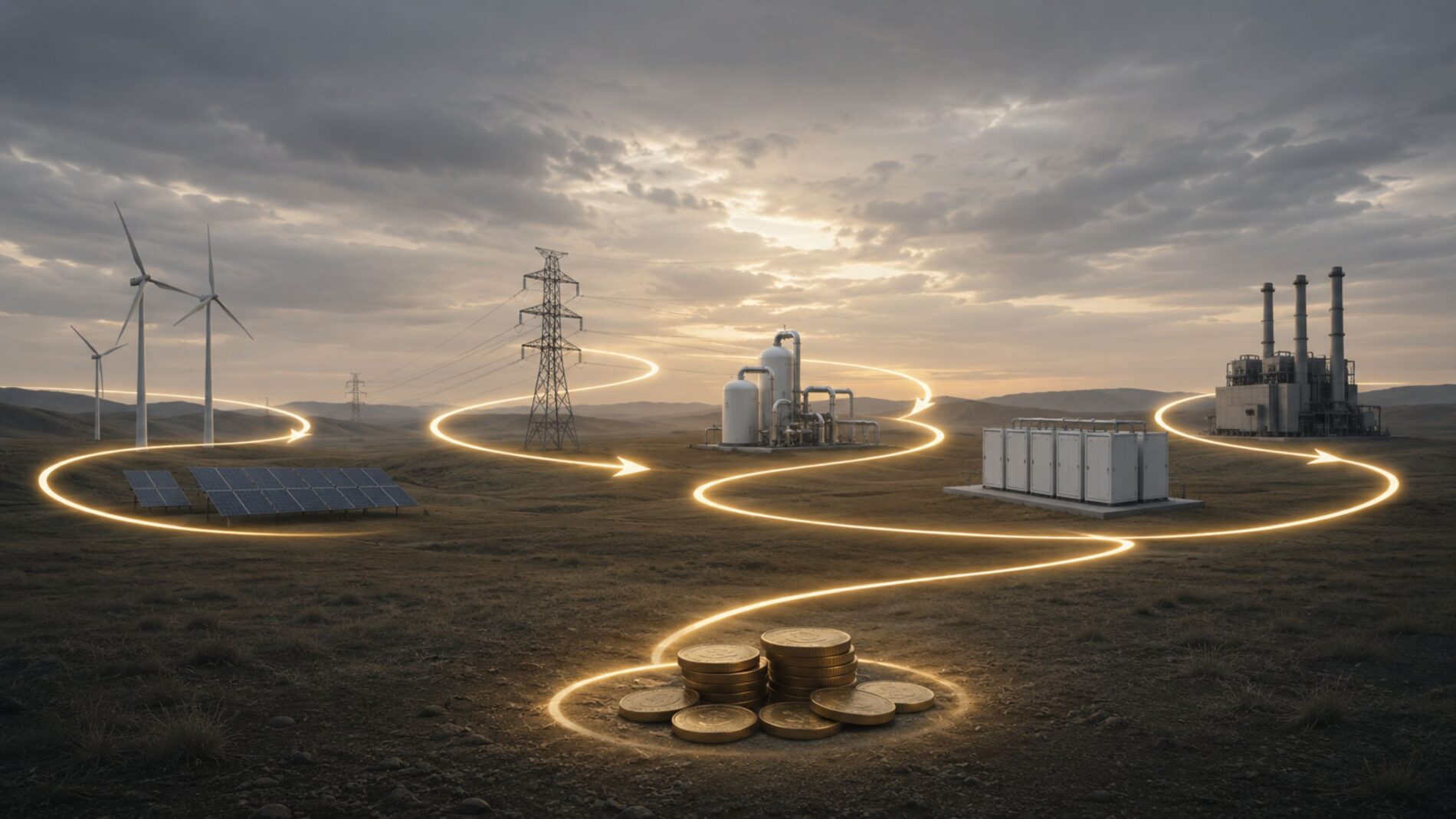
Policymakers are not fundamentally correcting this course. Instead, they are constantly adding new measures. Consequently, what is emerging is not a robust power system, but rather a tangled web of subsidies, exemptions, and retroactive support mechanisms.
Grid Expansion Does Not Solve the Problem of Insufficient Capacity
Grid expansion is intended to transport electricity from windy regions to industrial consumption hubs. This is technically necessary because generation sites and consumption centers are often located far apart. However, new power lines do not generate electricity when wind and sun are absent.
Thus, the central weakness persists. The grid can distribute existing electricity, but it cannot substitute for guaranteed firm capacity. Consequently, financial requirements continue to rise, even though billions are already being poured into infrastructure.
The Subsidy Spiral Reaches Hydrogen and Storage
Hydrogen is intended to bridge the next gap. However, as a means of electricity storage, it is inefficient and far too expensive. Green hydrogen requires vast quantities of electricity. Furthermore, electrolysis, storage, transport, and reconversion back into electricity all incur additional energy losses.
Battery storage systems help to manage short-term fluctuations. However, they do not offer a robust solution for prolonged periods of low wind and solar output—so-called “dark lulls.” As a result, the subsidy spiral continues, as even this technology only partially mitigates the fundamental problem.
Reserve Power Plants Highlight the Limits of the Energy Transition
Reserve power plants are designed to step in when wind and solar facilities fail to generate sufficient power. However, their very existence exposes the supply gap within the system. Because they cannot be economically viable based solely on their infrequent operation, they, too, require permanent subsidization.
This creates a costly dual structure. Consumers first finance the expansion of volatile generation capacity. Subsequently, they pay additional costs for facilities that must remain on standby precisely because that volatile generation cannot provide a sufficiently predictable supply.
Industrial Electricity Pricing Shifts Costs to Other Payers
High electricity prices hit energy-intensive businesses particularly hard. Consequently, policymakers are discussing relief measures for commercial electricity consumers. However, such aid does not reduce grid costs, storage costs, or reserve capacity costs.
It merely shifts the bill to other channels. The cost partially disappears from the electricity bill, yet returns in the form of taxes, debt, or other charges. Consequently, relief appears politically attractive, even though the overall costs remain unchanged.
Consumers Pay for Every New Correction
Private households sit at the very end of the financing chain. They pay rising grid usage fees, higher taxes, and—indirectly—for more expensive products as well. Furthermore, they bear the costs of those very programs officially designed to provide relief to other groups.
The subsidy spiral thus follows a clear sequence. First, policymakers subsidize weather-dependent power generation. Subsequently, they subsidize everything intended to stabilize, transmit, or back up this generation.
The Electricity Market Is Losing Clear Price Signals
A functioning electricity market requires prices that clearly reflect scarcity and reliability. However, these signals are being obscured by subsidies, levies, and special regulations. Consequently, investment decisions are increasingly being driven by political incentive schemes.
Subsidies interfere directly with market mechanisms. This is particularly critical because prices no longer accurately reflect scarcity, costs, or security of supply. Economic efficiency takes a back seat, while regulation and the logic of subsidies set the pace. As a result, new interventions inevitably follow as soon as previous measures reveal their limitations.
Every New Measure Confirms the Unresolved Problem
Policymakers are not saving the system. Instead, they repeatedly attempt to fix it with new measures that fail to eliminate the underlying weaknesses. Consequently, the overall financial burden continues to grow, without electricity becoming either permanently cheaper or more secure.
The crucial question, therefore, is not: “Which subsidy comes next?” Rather, the critical question is: “Why does a supposedly cost-effective energy system require ever-increasing levels of state support?” As long as this question remains unasked, the consumer will continue to be the one footing the bill for an energy policy that constantly inflates its own follow-up costs. (KOB)