
In Glarus, new battery-powered electric buses deployed on the route to Schwändi revealed significant shortcomings during regular operation in early 2026. The vehicles struggle to proceed reliably on uphill sections, as the gradient, vehicle weight, passenger load, and technical performance limits converge. Due to these physical constraints, passengers are occasionally forced to disembark and continue their journey on foot. The affected route is a mountain line where public transport must function reliably. At the same time, this electrification entails higher costs for vehicles, charging infrastructure, and operations. (suedostschweiz: 31.05.26)
Glarus Reveals the Harsh Reality of Electric Buses
The new vehicles are among the first electric buses in the canton’s public transport network. They are intended to replace older minibuses and make local transport more climate-friendly. However, the route to Schwändi demonstrates that a modern powertrain offers no guarantee of everyday practicality.
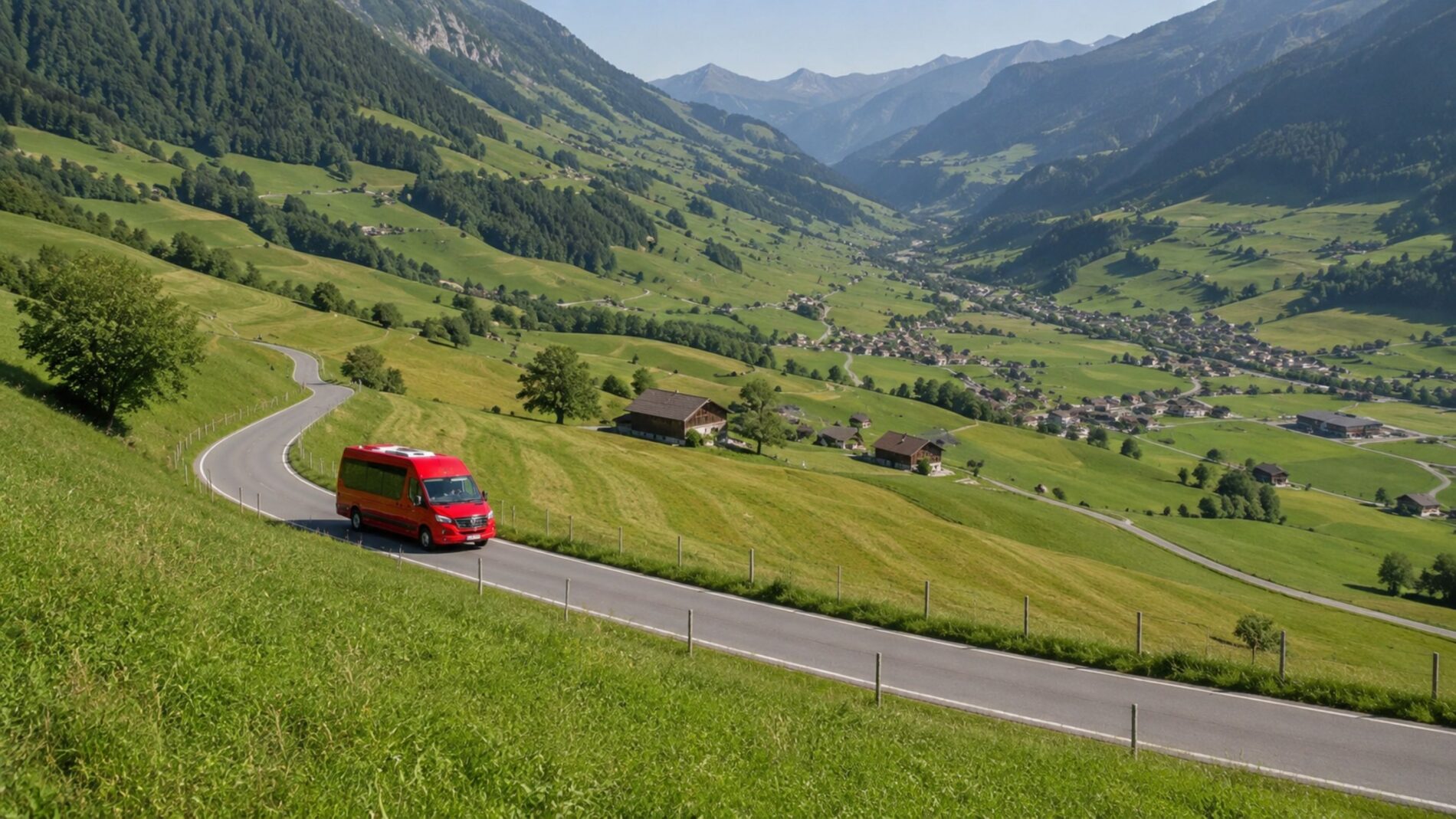
In mountainous regions, the priority is not political objectives, but rather the successful completion of the journey to the bus stop. A bus operating in such terrain must function reliably even when fully loaded. Furthermore, it requires sufficient reserves to account for cold weather, heating demands, battery levels, and steep gradients.
Consequently, this creates an uncomfortable paradox for the Canton of Glarus: public authorities are paying more, while passengers are experiencing diminished reliability. If passengers are forced to disembark, the practical value of the investment plummets instantly.
Higher Costs, Limited Benefits
The Canton had already characterized the transition to electric buses as a challenging undertaking. Increased vehicle weight, greater vehicle height, and the necessary charging infrastructure were identified as key considerations. Moreover, the prospect of higher subsidies—to be borne jointly by the federal government and the Canton—loomed large.
This is precisely why the situation in Schwändi appears so critical. A more expensive system must, at the very least, match the performance of the previous operations. If it fails to do so, what was intended as modernization merely becomes an additional financial burden.
Similar issues have also arisen in Innsbruck. There, too, passengers on a steep route were forced to disembark. However, the operator attributed the problem to a software limitation, noting that the technology failed to release full power during the uphill ascent.
Mountain Routes Do Not Forgive Scant Reserves
Electric buses can be a sensible choice for urban transport. Short routes, flat terrain, and predictable charging windows are well-suited to battery-electric vehicles. In mountainous regions, however, stricter standards apply.
There, every ounce of performance reserve is critical to operations. Cold temperatures, steep gradients, and passenger weight simultaneously place demands on both the battery and the drivetrain. Furthermore, energy consumption rises when the heating system and auxiliary units are running.
Glarus can draw a clear lesson from this case. Mountain routes require rigorous, full-load testing before entering regular service. Otherwise, taxpayers end up paying more, while passengers are ultimately left to walk.
Reliability Remains the Benchmark
For passengers, drivetrain statistics do not matter. They expect a service that gets them to their destination. Consequently, incidents like this erode public trust in public transportation.
The electrification of public transport therefore requires an honest cost-benefit analysis. Climate targets cannot serve as a substitute for robust technology. True progress is achieved only when electric buses can operate reliably—even in the mountains.