
On Thursday in Frankfurt, the European Central Bank raised its key interest rate by 0.25 percentage points, as energy prices and inflation are once again rising sharply following the war involving Iran. The deposit rate is rising to 2.25 percent, making loans more expensive for consumers, businesses, and governments. The decision comes at a time of weak growth for the eurozone, thereby intensifying the conflict between price stability, investment, public finances, and economic growth.
Higher interest rates are intended to curb inflation
Inflation in the eurozone stood at 3.2 percent in May, clearly moving away from the ECB’s target. In addition, high energy prices are driving up production costs, transport costs, and the cost of intermediate inputs.
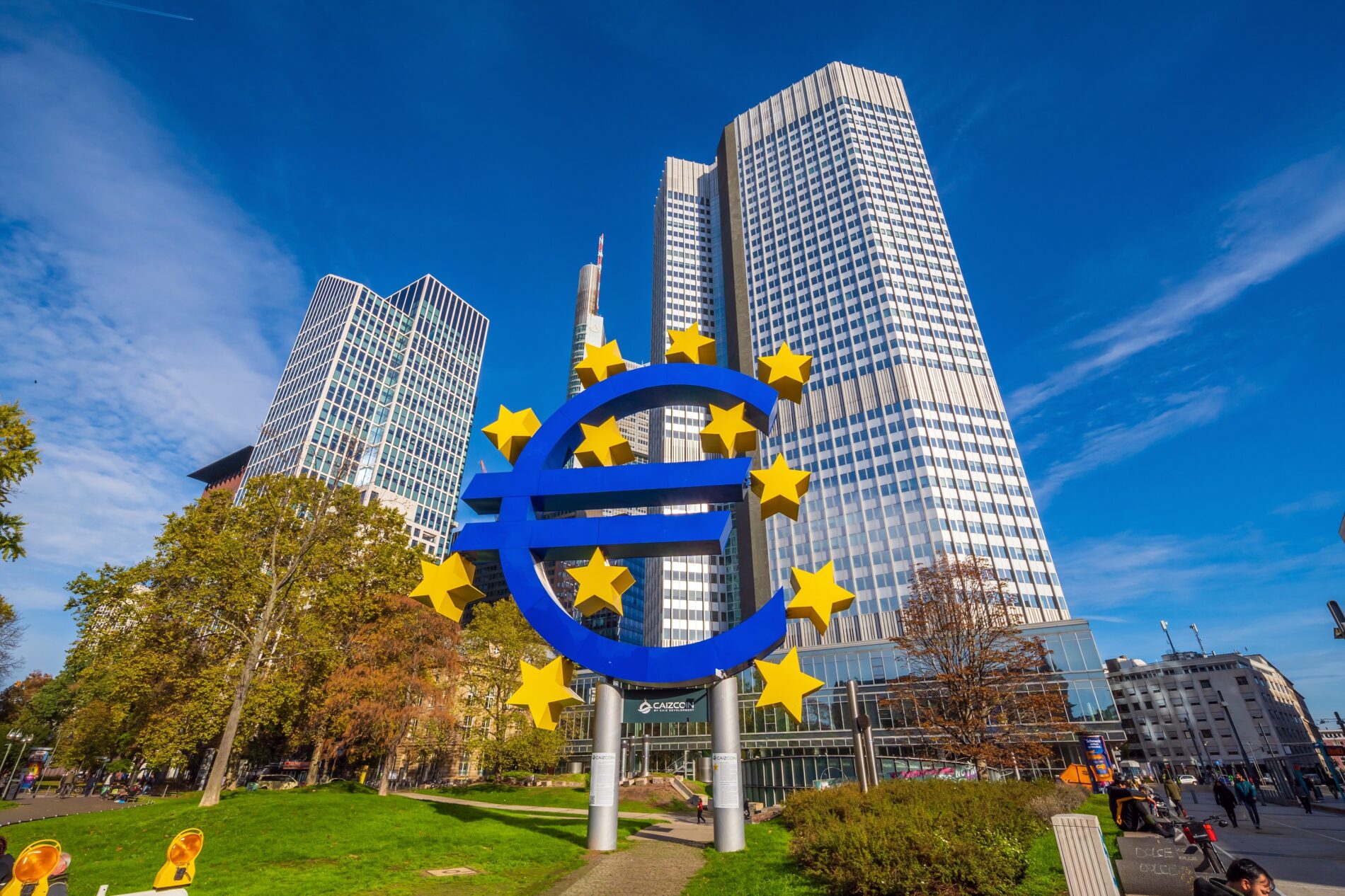
Image: Shutterstock
The European Central Bank aims to dampen demand by raising interest rates. This makes borrowing more expensive, while savings products may become more attractive. At the same time, this move can further slow economic activity, as households and companies postpone major expenditures.
Key interest rate burdens public debt and households
The higher key interest rate affects more than just private borrowers. Governments, too, must issue new bonds at higher yields. Consequently, public sector interest expenses rise with each refinancing operation.
Highly indebted countries feel this effect more acutely. Italy, France, and other eurozone nations are already carrying heavy debt loads. Moreover, rising interest costs crowd out funding for infrastructure, defense, social welfare, and energy policy.
Weak economic growth exacerbates the policy dilemma
The rate hike hits an economy that is already lacking momentum. Higher energy prices weigh on industry and small-to-medium-sized enterprises (SMEs), while costlier loans make new investments more difficult. This creates the risk of a period characterized by sluggish economic growth and persistently high prices.
Germany is also feeling this pressure. The federal government must regularly refinance existing debt, even as new spending programs remain politically contentious. Meanwhile, federal states and municipalities require funds for schools, utility grids, transport, and heating infrastructure planning.
Consumers and businesses pay more
Private households notice the decision primarily in the form of higher costs for mortgages, refinancing existing loans, and consumer credit. Banks generally pass on increased financing costs quickly. As a result, planning for real estate purchases and major acquisitions becomes more difficult for many families.
Companies, too, must sharpen their pencils. Machinery, warehouses, energy systems, and digitalization initiatives cost more when financed through debt. While large corporations often secure better terms, the rise in interest rates tends to hit smaller businesses harder.
Energy Prices Remain Crucial
The conflict involving Iran has heightened uncertainty in energy markets. The situation along key oil transport routes remains particularly sensitive. If crude oil and gas prices stay high for an extended period, costs across many sectors will continue to rise.
The ECB cannot lower energy prices. However, it can prevent the price surge from becoming permanently embedded in wages, services, and expectations. At the same time, it risks further dampening already weak growth.
Eurozone Faces a Dual Burden
This interest rate move illustrates how limited the scope for economic policy has become. Low interest rates would ease the burden on governments and companies but could prolong inflation. Higher interest rates combat rising prices but weigh on growth and households.
Consequently, the Eurozone faces a dual burden. Citizens pay more for loans and energy, while governments must shoulder higher interest expenses. Nevertheless, the ECB prioritizes price stability because persistently high inflation erodes purchasing power, planning certainty, and confidence.
Author: Blackout-News
Sources: ZDFheute (11.06.26) – The Guardian (11.06.26) – Morningstar (09.06.26) – Eusrostat (02.06.26)