
A dusty parking lot on the outskirts of Beijing bustles like a beehive. In a steady stream, electric vehicles roll onto the site to charge their batteries. It is not cars that are heading for this hub—located about an hour’s drive from the center of the Chinese capital—but trucks. And they serve as proof that the nationwide expansion of EV infrastructure in the People’s Republic is now increasingly making inroads into the logistics sector.
It has been well known for years that China has long since moved into the fast lane when it comes to electric cars. Now, the country is increasingly focusing on e-mobility for its massive truck fleet as well. 2025 marked “the breakthrough for heavy-duty electric vehicles in China,” Lauri Myllyvirta—co-founder of the think tank Centre for Research on Energy and Clean Air (CREA) and an expert on China’s energy consumption—told the news agency AFP. “Once the infrastructure is in place, the economic conditions are also met to accommodate a growing number of logistics routes and requirements.”
Most recently, this shift away from conventional diesel trucks has gained significant momentum: According to data from the Beijing-based market research firm Commercial Vehicle World, models featuring new powertrain technologies accounted for 29 percent of all truck sales in China last year. In 2024, at 14 percent, the figure had been less than half that amount—and just three years prior, in 2021, it stood at less than one percent.
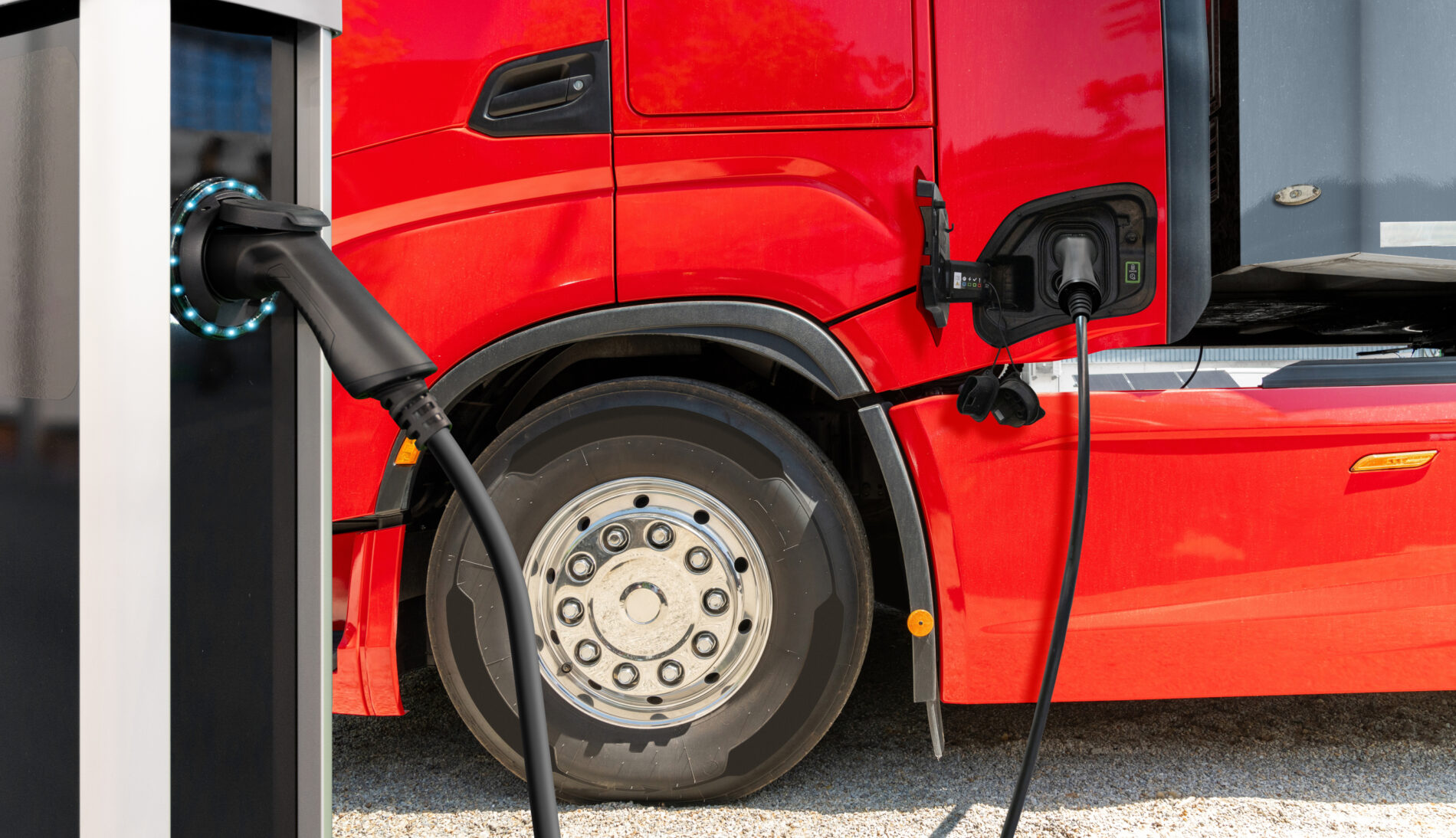
Meanwhile, at a dusty charging station in Beijing’s Miyun district, 43-year-old truck driver Wang raves about his new electric vehicle—which he switched to just last year. “It’s child’s play,” he says, shortly after plugging in the charging cable. “My old vehicle had over ten gears, and operating it was so cumbersome. But with this one, you don’t have to do anything at all—everything runs automatically.”
When asked why he believes logistics companies are increasingly switching to electric trucks, Wang cites a combination of government policy and simple market logic: “It’s simply survival of the fittest,” he says. Due to high freight costs, people are trying “to earn a little bit more—and this model has lower operating costs.”
Another truck driver, named Zhang, reports that he switched from a natural gas vehicle to an electric truck about two months ago. His work mainly involves transporting sand and stones over short distances in the Beijing area, he tells AFP. The truck—a sky-blue model from the Howo brand, manufactured by the state-owned truck maker Sinotruk—is not suitable for longer hauls. “The power is quite strong, and the acceleration is quick,” he says. “It’s all about speed, but the range leaves a little to be desired.” It stands at 240 to 250 kilometers.
While the adoption of electric trucks gains momentum domestically, truck manufacturers are already setting their sights on additional export markets. “Much like with passenger cars, China’s heavy-duty truck manufacturers are beginning to view export markets as an inevitable strategy, as competition intensifies and the Chinese market eventually reaches saturation,” explains analyst Christopher Doleman of the Institute for Energy Economics and Financial Analysis (IEEFA).
Doleman is convinced that recent disruptions in global energy markets—stemming from the conflict in the Gulf region—could serve as a “potential accelerator” for the shift toward electric trucks. Demand for heavy-duty electric vehicles is set to continue rising, he notes, “as fleet operators seek to minimize their exposure to fluctuating diesel prices.”
Han Wen, founder of the electric truck startup Windrose, reports that the conflict in the Gulf has already boosted demand. The company aims to build approximately 1,000 trucks this year; that figure is projected to rise to 10,000 next year, with an ambitious target of 100,000 units by 2030.
“From an economic standpoint, there is no longer any doubt: electric vehicles are superior,” says founder Han. “We are not far from the day when the diesel truck will have vanished entirely as a product category.”
AFP translated by Blackout News