
Nio’s sales figures in Germany and other European markets fell sharply in the first half of 2026. The Chinese automaker manufactures connected electric vehicles primarily for the upper premium segment. The Federal Motor Transport Authority recorded just 15 new registrations in Germany between January and June, compared to 121 vehicles during the same period the previous year. Furthermore, only 45 of the group’s cars were newly registered across eight European markets in February. Older models, additional EU tariffs, and high costs associated with battery-swapping stations are consequently hampering expansion. The company is scaling back its own sales operations and increasingly relying on regional partners.
Nio loses ground despite the growing electric car market
Only one new vehicle hit German roads in each of January and April. February saw five cars added, while two were registered in March. The KBA recorded three new registrations each in May and June. Consequently, even the strongest month fell far short of previous figures. The average monthly sales volume thus dropped to just 2.5 vehicles.
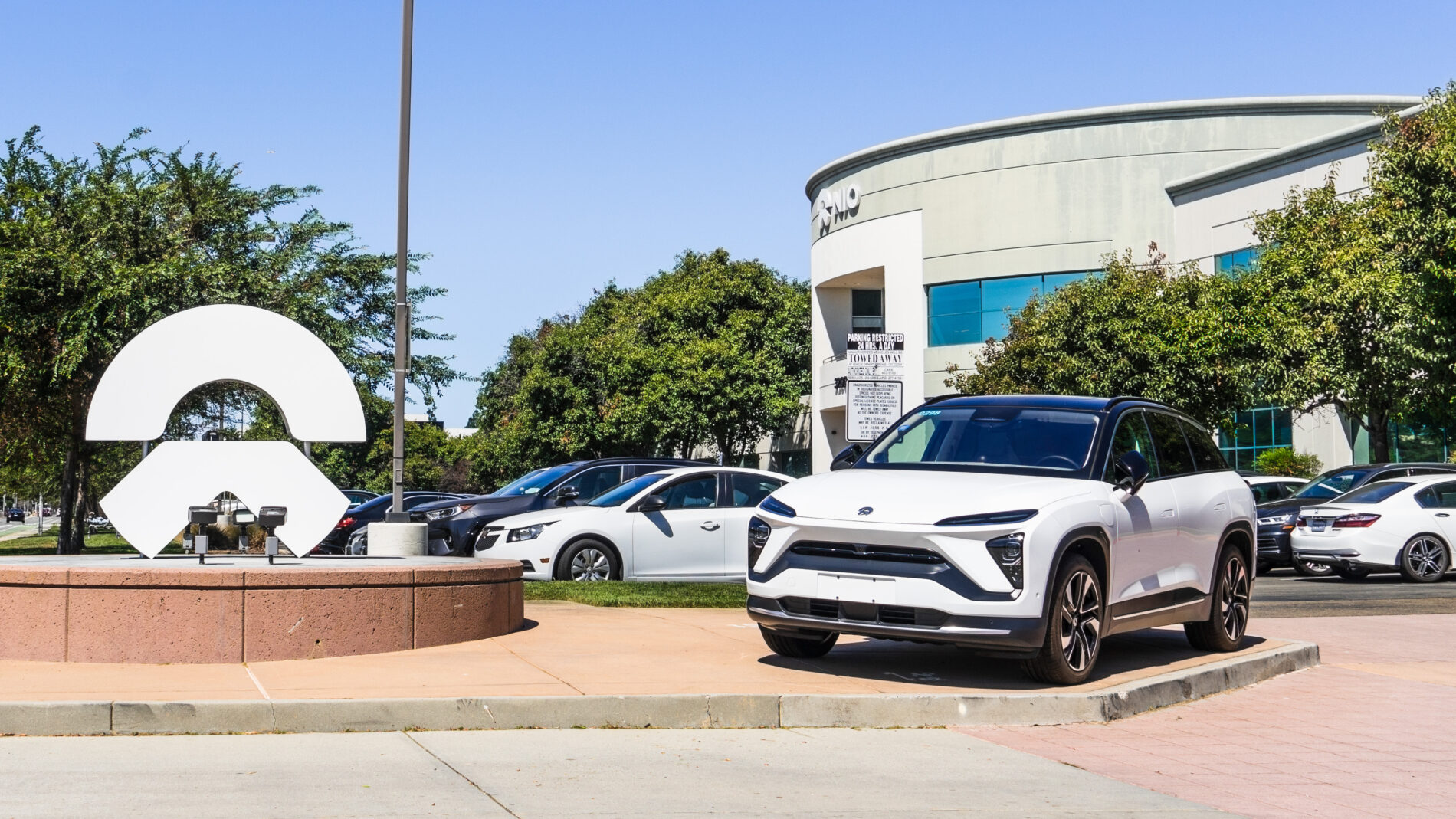
Image: Shutterstock
The slump is particularly striking given that the German market for electric cars was growing strongly at the same time. Just under 370,000 pure electric cars hit the roads in the first half of the year—an increase of around 48 percent compared to the same period last year. In June alone, the KBA (Federal Motor Transport Authority) registered 84,057 battery-electric passenger cars. General consumer reluctance regarding electric cars therefore does not explain the weak figures.
Outdated models hold back European business
The automaker’s business also remains limited in other European countries. In February, the group recorded only 45 registrations across eight markets. Even in June, figures in the countries analyzed remained in the double-digit range. A large share of these registrations came from Norway and the smaller brand, Firefly; Norway alone reported 44 of the group’s vehicles in June. However, the country is not part of the European Union and does not impose the EU’s additional tariffs on Chinese electric cars.
Furthermore, the company’s existing premium strategy is losing its impact due to the age of the vehicles on offer. Many European models are still based on the NT 2.0 platform generation and date back to 2023 or 2024. According to industry reports, new model generations are not expected to arrive in Europe until late 2027. Competitors, however, already offer more modern charging platforms, higher charging capacities, and lower entry-level prices. Consequently, the technological gap is narrowing while prices remain high.
Nio Pays a High Price for Battery Swapping
The automaker sought to differentiate itself from the competition with its own network for rapid battery swapping. Customers can lease the battery and swap it at dedicated stations within minutes. While this lowers the vehicle’s price (excluding the battery), each swap station entails high construction, operating, and maintenance costs. Meanwhile, other manufacturers are improving their fast-charging technology and do not require their own swapping infrastructure. Consequently, this original unique selling point is losing its economic value.
However, the low demand in Europe stands in stark contrast to the company’s global business. In June, the group delivered 40,597 vehicles across its Nio, Onvo, and Firefly brands—an increase of 62.9 percent year-on-year. The group achieved a total of 107,658 deliveries in the second quarter, with the core brand accounting for 21,908 of those vehicles in June. Thus, the sales challenge is primarily an issue in Europe rather than in the company’s home market of China.
Nevertheless, the group intends to remain in Europe. To this end, it is scaling back its own locations and shifting sales increasingly to dealers and importers. Additionally, the Firefly brand aims to reach new customers with smaller, more affordable vehicles. However, the brand is not yet available in all key markets; it is currently entirely absent from Germany. Without new models and more competitive pricing, its market significance is likely to remain limited. The 15 new registrations in Germany recorded through the end of June illustrate the extent of this slump.
Author: Blackout News
Sources: Electric Vehicles (13. 07.26) – NotebookCheck (11.07.26) – Kraftfahrbundesamt (03.07.26) – Nio (01.07.26)