
Stuttgart – Baden-Württemberg is putting the planned reactivation of eleven decommissioned railway lines on hold for the time being. Transport Minister Nicole Razavi (CDU) cited significant funding gaps in local passenger rail transport as the reason for the decision. According to the Ministry of Transport, the state faces an annual shortfall of several hundred million euros in the future unless the funding situation improves. The causes are insufficient federal funds and rising track access charges. Consequently, the state government is concentrating its resources on twelve projects that are already underway or at an advanced stage. In contrast, financial support from the state will be discontinued for eleven other connections for the time being. Affected regions will therefore have to wait at least until the next review for new regular rail connections.
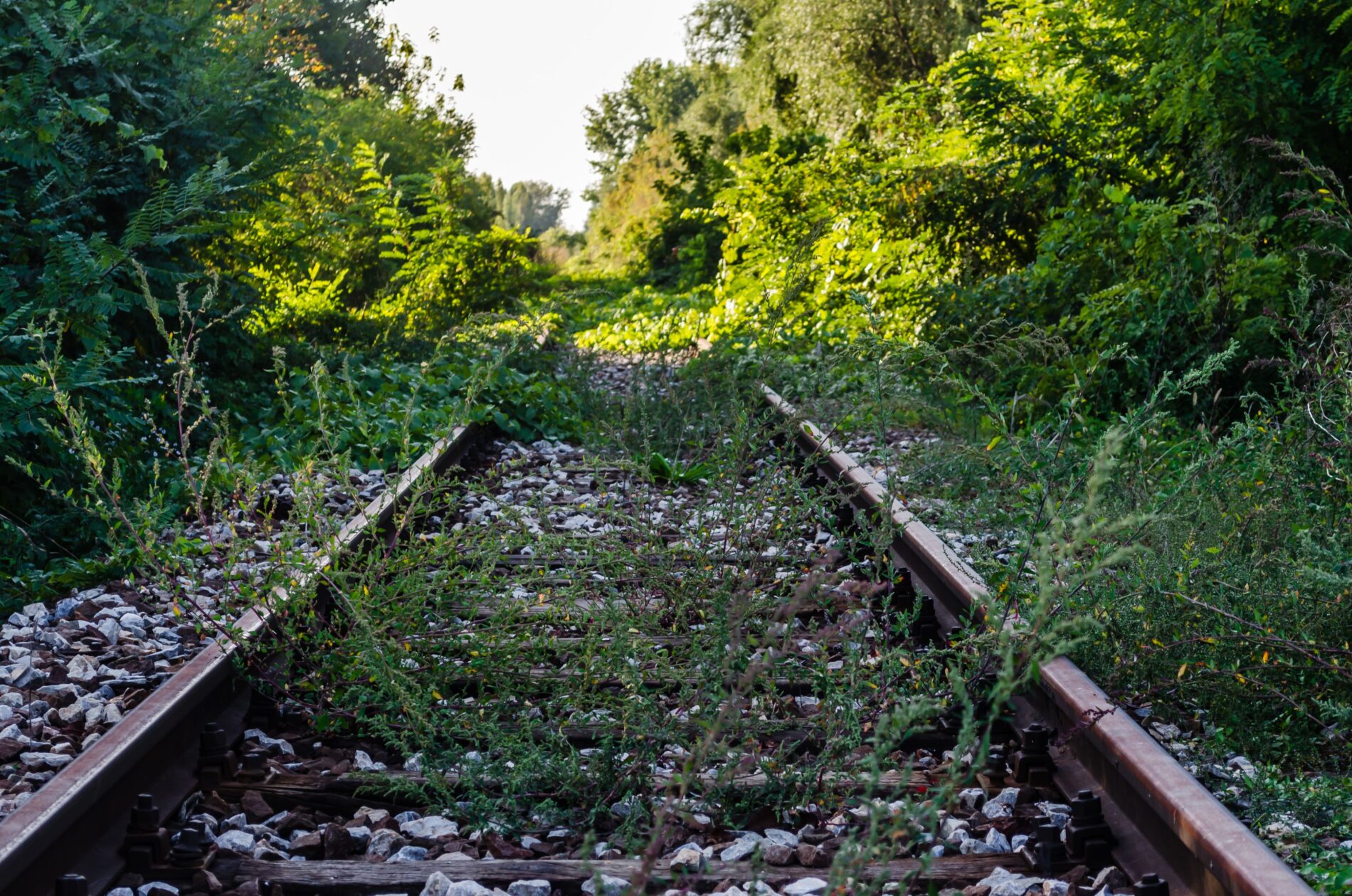
Image: Shutterstock
Funding gap threatens even existing rail lines
According to the Ministry of Transport, the financial situation regarding regional rail services has deteriorated significantly. The federal government provides the states with regionalization funds to finance local transport; however, according to Razavi, these are no longer sufficient to cover rising costs.
Added to this are higher track access charges—fees for using the rail infrastructure. This stems from a European Court of Justice ruling that has impacted pricing. The state believes these additional financial burdens now threaten even existing rail services. Consequently, the government is prioritizing the maintenance of current operations over new route projects.
Eleven connections will lose their financing prospects for the time being
Regions that have been waiting for years for regular passenger transport to resume are particularly affected. These include the Breisach–Colmar connection, the Bottwartalbahn between Heilbronn and Marbach and the Kleine Teckbahn between Kirchheim and Weilheim. The state is also putting back the Bollerbahn between Göppingen and Bad Boll and the Klosterstadt-Bahn near Maulbronn. The Etzwiler Railway between Singen and Ramsen is also not receiving any corresponding support for the time being.
Further provisions relate to the Balingen–Rottweil connection and the Leutkirch–Isny route. There is also the Eyachtalbahn between Eyach and Hechingen and the second stage of the Ablachtalbahn between Meßkirch and Menges. The Swabian Alb Railway between Gammertingen, Engstingen and Münsingen also belongs to the deferred group. This means that several rural regions are temporarily losing the prospect of an expansion of regular rail transport supported by state funds.
Twelve railway lines continue to receive support
The state evaluates twelve projects differently, the implementation of which is already underway or whose planning is sufficiently advanced. The Hermann Hesse Railway between Calw and Weil der Stadt has been running since January 2026. Construction work is also underway to extend the S2 between Bernhausen and Neuhausen and on the Lower Wutach Valley Railway between Lauchringen and Weizen.
Other projects remain a priority, although they are still being planned. These include the Zabergäubahn, Kochertalbahn, Talgangbahn and Echaztalbahn as well as the Gomaringer Spange. The Markgröninger Bahn, Kandertalbahn and Krebsbachtalbahn are also included. There is also the first stage of the Ablachtalbahn between Stockach and Meßkirch. The state continues to participate in the planning and, with appropriate federal funding, offers the prospect of co-financing.
A re-evaluation is scheduled for five years from now.
This decision does not mean the eleven deferred projects have been permanently abandoned. According to Razavi, the projects are to be reviewed again after five years. However, future funding remains contingent on the budgetary situation. Consequently, the affected municipalities face years of uncertainty regarding transport planning.
Yet Baden-Württemberg has already lost a significant portion of its former rail network. Between 1960 and the 1990s, more than 1,500 kilometers of railway lines were taken out of service. Today, the Ministry of Transport itself regards these closures as a mistake. Nevertheless, current funding gaps are preventing the resumption of services on numerous routes. The contradiction between long-term expansion goals and available budget funds is thus becoming increasingly apparent.
Author: Blackout News
Sources: SWR (10.10.26) – SWR (09.10.26) – Ministerium für Verkehr BW (08.10.26) – Ministerium für Verkehr BW (04.05.26)