
The ADAC (German Automobile Club) believes that the so-called fuel discount will not be fully passed on to customers. Compared to last Thursday, fuel prices were recently around eleven cents lower, but the reduced energy tax, which came into effect on Friday, should result in a reduction of 16.7 cents per liter, the automobile club announced on Monday. The development of crude oil prices cannot explain this either.
Because the price of crude oil is currently lower than it was on April 30, prices at the pump should actually fall more sharply than by the amount of the energy tax reduction, as the ADAC (German Automobile Club) explained. However, over the past few days, prices for diesel and gasoline at the pumps have tended to rise. Furthermore, fuel prices were drastically increased on Thursday, shortly before the fuel tax reduction came into effect.
“It is our clear expectation that the oil companies will pass on this tax reduction,” said a spokesperson for the Federal Ministry of Finance. “This now needs to be monitored.” The federal government has created resources to “take a close look” at the companies. The Federal Cartel Office is analyzing “from the very beginning” how prices are formed and their effects, added a spokesperson for the Federal Ministry for Economic Affairs and Energy. It will have to expand its investigations “if there are any indications that the tax reduction is not being passed on.”
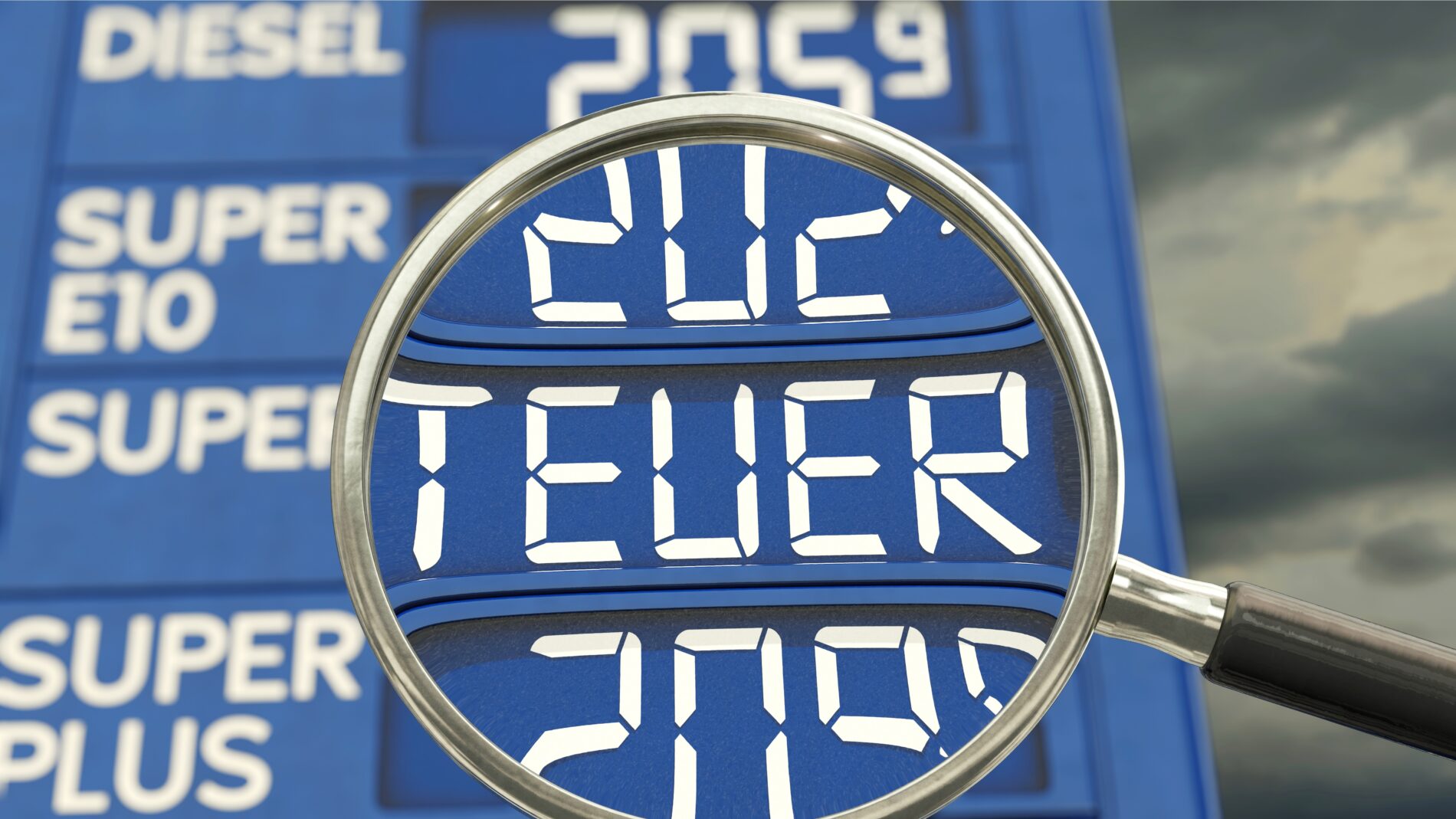
Since the fuel price reduction came into effect, the Federal Cartel Office has been reporting daily on fuel price developments. According to the office, prices fell by an average of almost 13 cents on May 1st. Since then, they have risen slightly again. On Sunday, the average daily price of diesel was €2.105 and gasoline (E10) €2.018 per liter, according to the Cartel Office.
Cartel Office President Andreas Mundt reiterated his call for the oil companies to pass on the tax cut. The fuel price reduction “is intended to provide relief to consumers and the economy during a difficult period,” he explained. “The oil companies are, at best, custodians of this relief; it is not intended for them.”
However, the authority suffered a legal defeat just last week. The Higher Regional Court of Düsseldorf halted an investigation into the wholesale fuel trade that had been initiated last spring. The Cartel Office had sought to investigate indications of systemic problems affecting fuel prices in Germany.
The case specifically concerns the two most important companies that provide price information on the German fuel market and thus significantly influence price levels: Argus Media and S&P Global. Antitrust authorities fear that companies are not reporting all prices to these two providers, thereby influencing pricing, and wanted to scrutinize them more closely. However, they successfully fought this.
The head of the Federal Cartel Office, Mundt, sharply criticized this. “We are very surprised by this court decision and have already filed an appeal with the Federal Court of Justice,” he declared last Thursday. “We need to clarify the role of price information services. Without information from precisely these companies, however, we cannot continue the proceedings. This delay is very regrettable.”
For Ramona Pop, chairwoman of the Federation of German Consumer Organizations (vzbv), the current situation shows “that the fuel discount is the wrong approach and should not be extended beyond June.” Direct payments would be more effective, “which reach those who need the support most urgently without any detours,” she explained. “Furthermore, the federal government must finally ensure that we become less dependent on fossil fuels – through increased e-mobility and an attractive and affordable public transport system.”
AFP translated by Blackout News