
Bonn – On August 6, 2026, the Federal Network Agency published its final draft ruling on new electricity grid charges. It proposes a grid fee for low-voltage consumers who are also producers, effective from 2029. This surcharge is set to amount to 70 to 90 percent of the base grid charge—not the total electricity tariff. Households with rooftop PV systems would be primarily affected, whereas balcony solar power systems are explicitly excluded. However, the presence of a home storage system does not exempt operators of such installations from this classification. The rule has not yet been finalized, as the consultation period runs until September 18; the agency intends to issue the formal ruling at the end of 2026.
PV grid fee to apply to conventional rooftop systems – balcony solar units remain exempt
According to the draft, the measure affects grid connection points that feature on-site electricity generation behind the same connection. It applies to connections within the low-voltage grid with an annual consumption of up to 100,000 kilowatt-hours; consequently, typical private rooftop systems fall under this definition. However, the Federal Network Agency explicitly excludes plug-in solar devices.
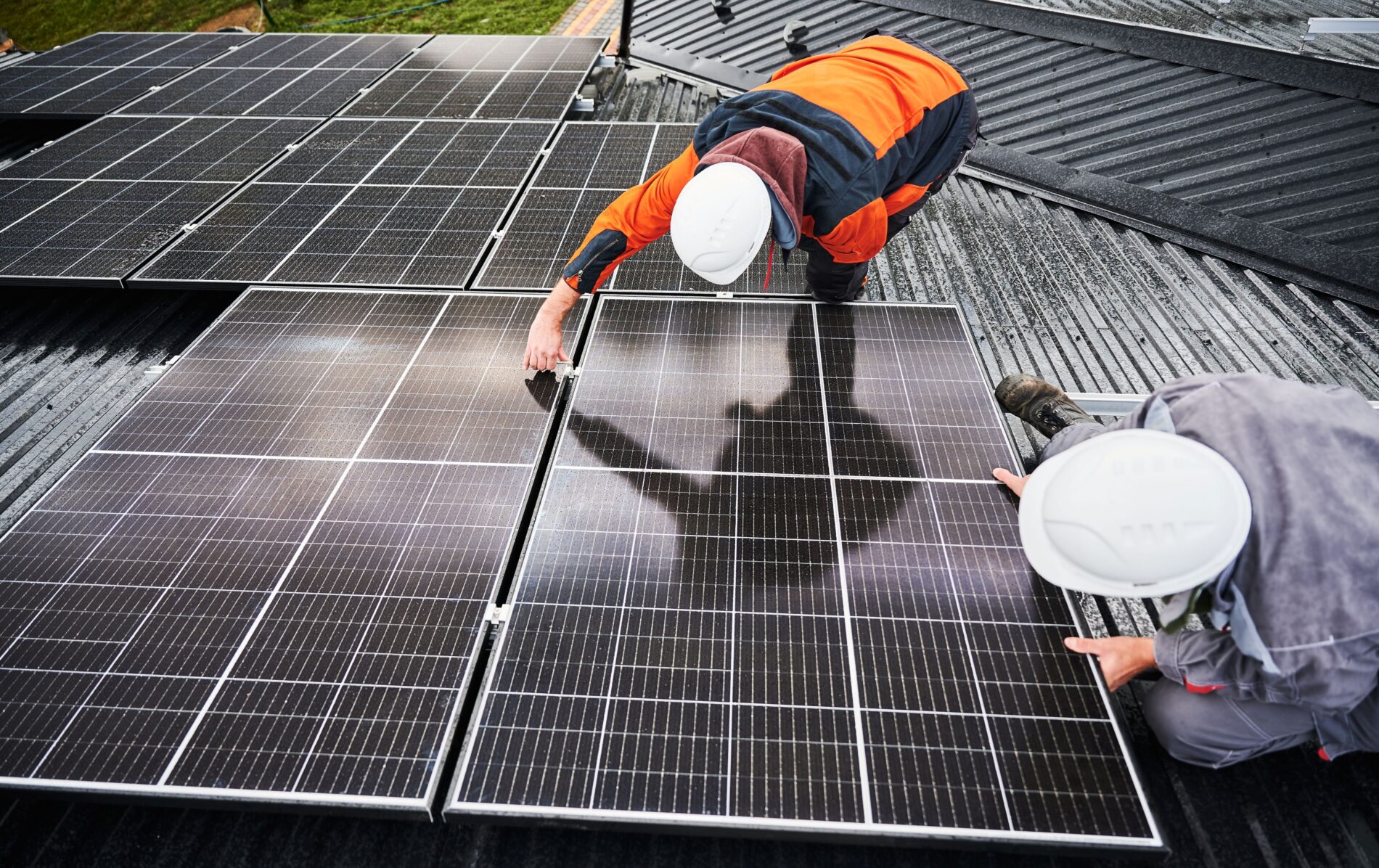
Image: Shutterstock
The reference value for the surcharge is also a crucial factor. The 70 to 90 percent figure applies exclusively to the base component of the grid fee; it does not apply to the total electricity bill or to the grid fees in their entirety. The specific base grid fee is determined by the respective distribution grid operator for its service area.
Amount depends on the specific grid operator
Consequently, it is impossible to specify a fixed euro amount for the actual cost of the PV grid fee on a nationwide basis. In May, the Federal Network Agency had projected additional annual costs of less than 100 euros; however, the current draft ruling no longer includes this specific estimate. The actual financial burden may therefore vary depending on the grid area.
The draft also offers no general grandfathering provision against this surcharge for existing rooftop systems. As a result, owners of older photovoltaic systems could also be required to pay starting in 2029. Battery storage systems do not fundamentally alter this situation, as self-generated electricity that has been stored does not lose the underlying characteristic triggering the fee. Furthermore, starting in April 2028, suppliers will be required to explicitly list this characteristic on energy bills.
Tenant electricity models could also face new costs
The new regulation extends beyond standard single-family homes. In the case of tenant electricity or communal building supply arrangements, multiple consumption points within a single building could be affected. The decisive factor is whether their grid consumption decreases due to a generation system located behind the same grid connection point. Consequently, the surcharge could undermine the economic viability of such supply models.
The Federal Network Agency justifies the PV grid fee by citing the need for a greater contribution to infrastructure costs. Although solar system operators draw fewer kilowatt-hours from the grid, they continue to rely on its capacity—particularly at night, during winter, or when storage systems are depleted. Industry associations, however, criticize the rigid nature of the charge and call for stronger incentives for grid-friendly behavior. The Federal Association of New Energy Economy (bne) has already warned that the measure could create perverse incentives for conventional rooftop systems.
However, the fee has not yet been definitively adopted. Affected parties and associations have until September 18 to comment on the draft. Following this, the Federal Network Agency aims to finalize the regulatory framework by the end of 2026, with practical implementation scheduled to begin on January 1, 2029. This leaves room for potential changes to the current draft.
Author: Blackout News
Sources: ZFK (07.08.26) – Cleanthinking (07.08.26) – Bundesnetzagentur (06.08.26)