
Economic expert Veronika Grimm warns Germany against a premature phase-out of natural gas. In her assessment, natural gas will continue to be needed for industry, heating, and reliable power generation for decades to come. At the same time, the development of a hydrogen economy is progressing more slowly than long assumed. Furthermore, German gas storage facilities are only 57 percent full ahead of the heating season. Grimm therefore sees significant risks if energy policy relies on the assumption of a much faster decline in gas demand. The consequences could include higher system costs, new import dependencies, and additional challenges in ensuring a secure electricity supply.
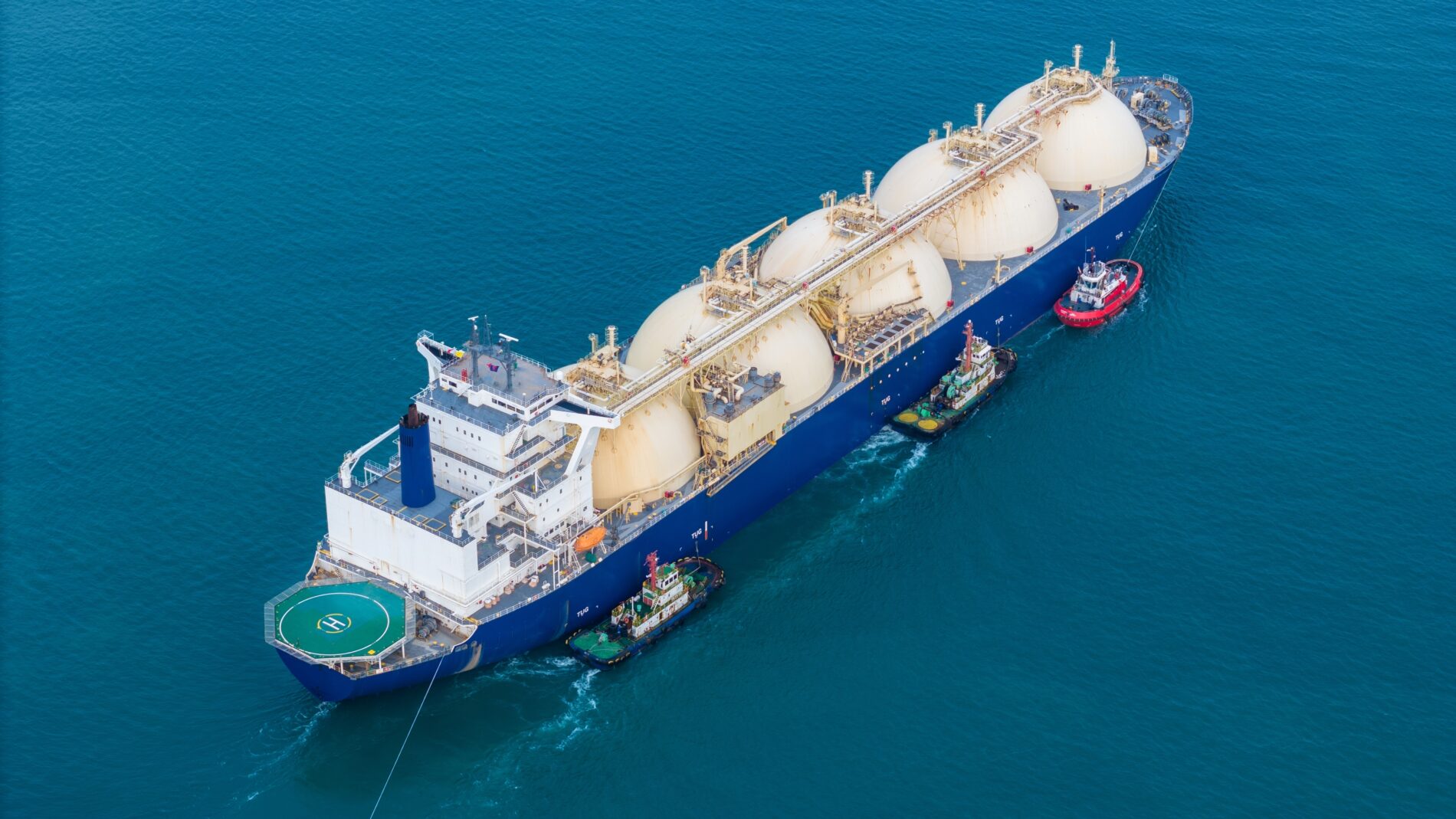
Image: Shutterstock
The phase-out of gas conflicts with the power plant strategy and the ramp-up of the hydrogen economy
The federal government itself continues to plan for significant amounts of dispatchable power plant capacity. Tenders for an initial twelve gigawatts of additional capacity are scheduled for 2026; however, ten gigawatts of this must be capable of generating electricity over extended periods. Modern gas-fired power plants are explicitly considered suitable for this purpose and are slated to be available by 2031 at the latest. Consequently, natural gas remains a key component of security of supply within official power plant planning.
In the long term, hydrogen and other climate-friendly energy sources are intended to take over part of this role. The core hydrogen network is therefore set to expand to around 9,000 kilometers. However, many of the pipelines will only be built in stages through 2037. Furthermore, the Ministry of Economic Affairs anticipates that Germany will need to import large quantities of hydrogen. Grimm therefore considers a faster transition more difficult to achieve than earlier plans had assumed.
New suppliers replace former reliance on Russia
Germany has fundamentally restructured its gas supply since 2022. Suppliers have replaced Russian pipeline deliveries primarily with Norwegian pipeline gas and additional LNG. However, this creates new dependencies on other supplying nations. More than 90 percent of German LNG imports now originate in the USA. A politically anticipated phase-out of gas will not change this in the short term, as long as the industrial sector and power plants require the fuel.
Grimm therefore calls for a broader approach to securing supplies. This includes diversified sources and long-term—yet as flexible as possible—supply contracts. She also considers it sensible to conduct an open-minded assessment of additional European gas production. Economics Minister Katherina Reiche is now pursuing a similar strategy regarding long-term, diversified gas contracts. Such contracts are intended primarily to limit price spikes and significant volatility.
Low gas storage levels highlight ongoing dependency
Current storage levels also demonstrate the continued importance of natural gas. On September 22, German storage facilities were 57 percent full—27 percentage points below the average for the years 2017 to 2021. Nevertheless, the Federal Network Agency currently assesses the supply situation as stable. Pipeline gas, LNG, storage facilities, and additional import options can complement one another.
Low storage levels do not, therefore, automatically signal a supply crisis. However, they do illustrate the significant role natural gas continues to play in the German energy system. Phasing out gas is only feasible to the extent that other technologies can genuinely replace it. This is precisely where Grimm’s criticism comes in: climate targets alone do not create hydrogen, storage facilities, grids, or dispatchable power plant capacity. If these components are not synchronized, costs and dependencies will rise rather than disappear.
Author: Blackout News
Sources: Fataler Gas-Irrtum – Wirtschaftsweise warnt vor dem Scheitern der Energiewende – Gasspeicher: Der aktuelle Füllstand in Deutschland – Nach Putin sitzt nun Trump am Gas-Erpressungshebel