
Beijing, July 2026: Grid bottlenecks are slowing down China’s massive expansion of solar and wind power—the largest in the world. However, long-distance transmission lines, rigid market rules, and incentives for coal prevent operators from feeding every possible kilowatt-hour into the grid. Consequently, they are frequently forced to curtail output from their facilities, even as new parks are being built at record speed. Wind and solar account for only about 20 percent of the electricity flowing through ultra-high-voltage lines, whereas coal power supplies 42 percent.
A wide gap exists between generation and consumption
China is establishing its largest energy hubs primarily in the arid regions of the north and northwest, where vast areas are available for solar parks and wind farms. However, the major industrial centers are located far away along the east and south coasts. Consequently, electricity must be transmitted over thousands of kilometers to reach factories, cities, and metropolitan areas.
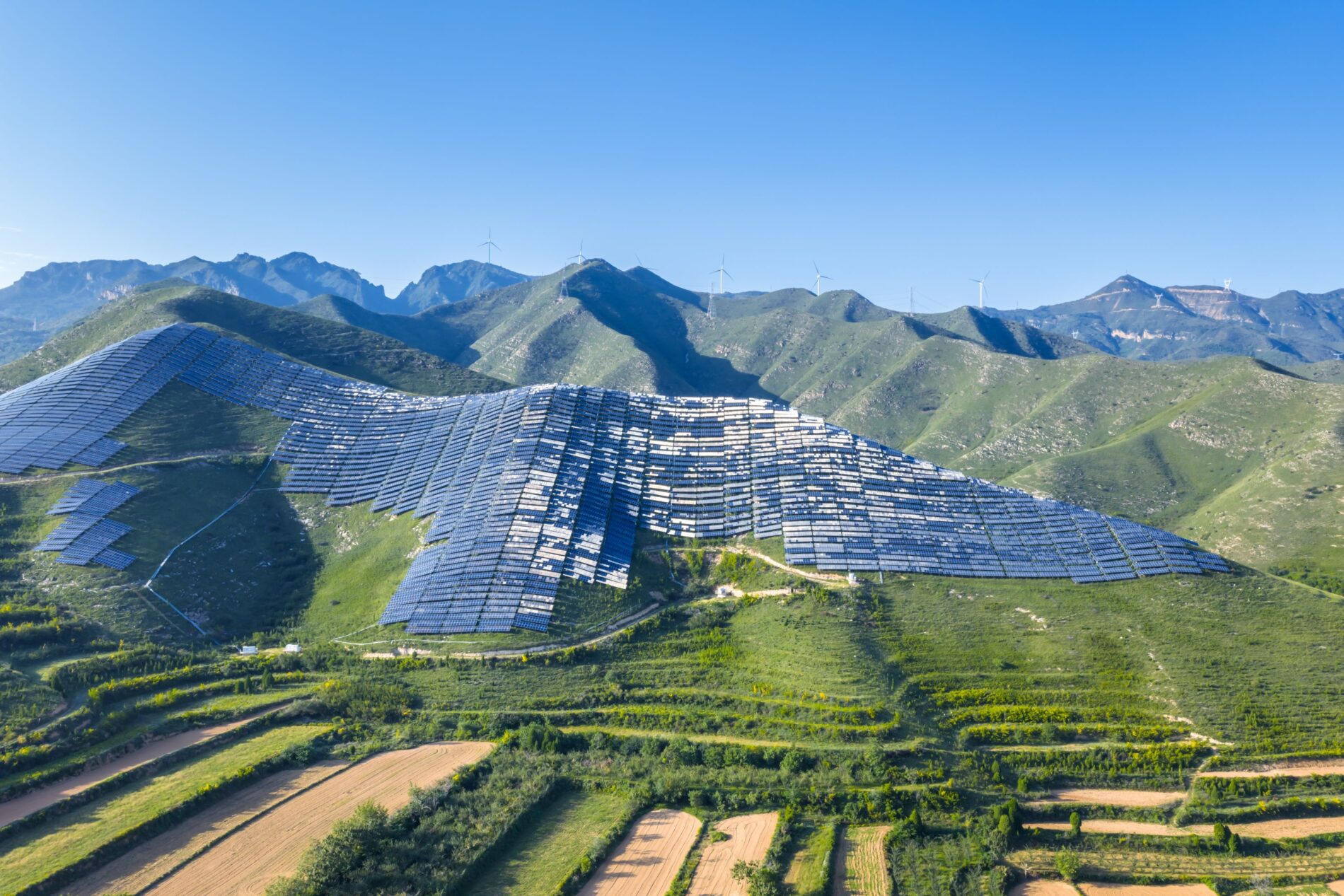
Image: Shutterstock
In 2025 alone, China commissioned approximately 317 gigawatts of new solar capacity and 120 gigawatts of wind power. Furthermore, as of June 2026, another 664 gigawatts of solar and 698 gigawatts of wind capacity were in the planning or construction phase. However, grid bottlenecks limit the benefits of this record-breaking expansion. By 2030, an additional 315 gigawatts of capacity from “mega-sites” will require new long-distance transmission lines. While 27 additional direct-current lines would be needed for this, only about ten are currently planned.
Grid bottlenecks keep coal in the transmission lines
Since 2021, the ultra-high-voltage lines have transported barely any increase in the share of wind and solar power. Long-term coal contracts and regional mandates further restrict flexible dispatch planning. This leaves little room for maneuver when wind or solar generation is particularly high; consequently, operators are forced to curtail potential output or withhold it entirely.
New transmission projects offer only a partial solution. Eleven planned lines link 129 gigawatts of wind and solar capacity with 40 gigawatts of coal-fired power. As a result, the projected electricity mix is split almost evenly between coal and renewable energy. Grid bottlenecks thus coincide with an infrastructure that remains firmly committed to fossil-fuel generation.
Beijing Raises Expansion Targets for 2030
On July 23, Beijing released a new plan covering the period up to 2030. The government aims to increase electricity generation from wind and solar power by 53 percent. Together, these technologies are expected to generate more than 4,000 terawatt-hours annually and account for approximately 30 percent of total electricity production.
At the same time, storage systems are intended to make these installations more reliable. Wind and solar facilities, combined with connected storage, are required to reliably provide eight percent of their installed capacity during peak demand periods. Furthermore, they are expected to cover at least 20 percent of electricity demand during critical consumption phases. To achieve this, China plans to add more than 300 gigawatts of dispatchable capacity from renewable sources. However, installed capacity cannot replace coal unless transmission lines, storage systems, and market regulations keep pace.
Author: Blackout News
Sources: National Development and Reform Commission (23.07.26) – Reuters (23.07.26) – Reuters (21.07.26) – Global Energy Monitor (21.07.26)