
Braunschweig/Wolfsburg – Two developments are currently converging at Volksbank BraWo (short for Volksbank Braunschweig-Wolfsburg). The bank is reporting a preliminary loss of €608.1 million for 2025 following significant write-downs. Real estate accounts for around 80 percent of these impairments, while the cooperative network is providing support totaling up to €720 million. At the same time, Volkswagen is intensifying its historic job-cutting measures, placing a strain on the entire economic region. This threatens to trigger a second chain reaction: companies come under pressure, employees lose income, and ultimately, real estate values and loan repayments may suffer.
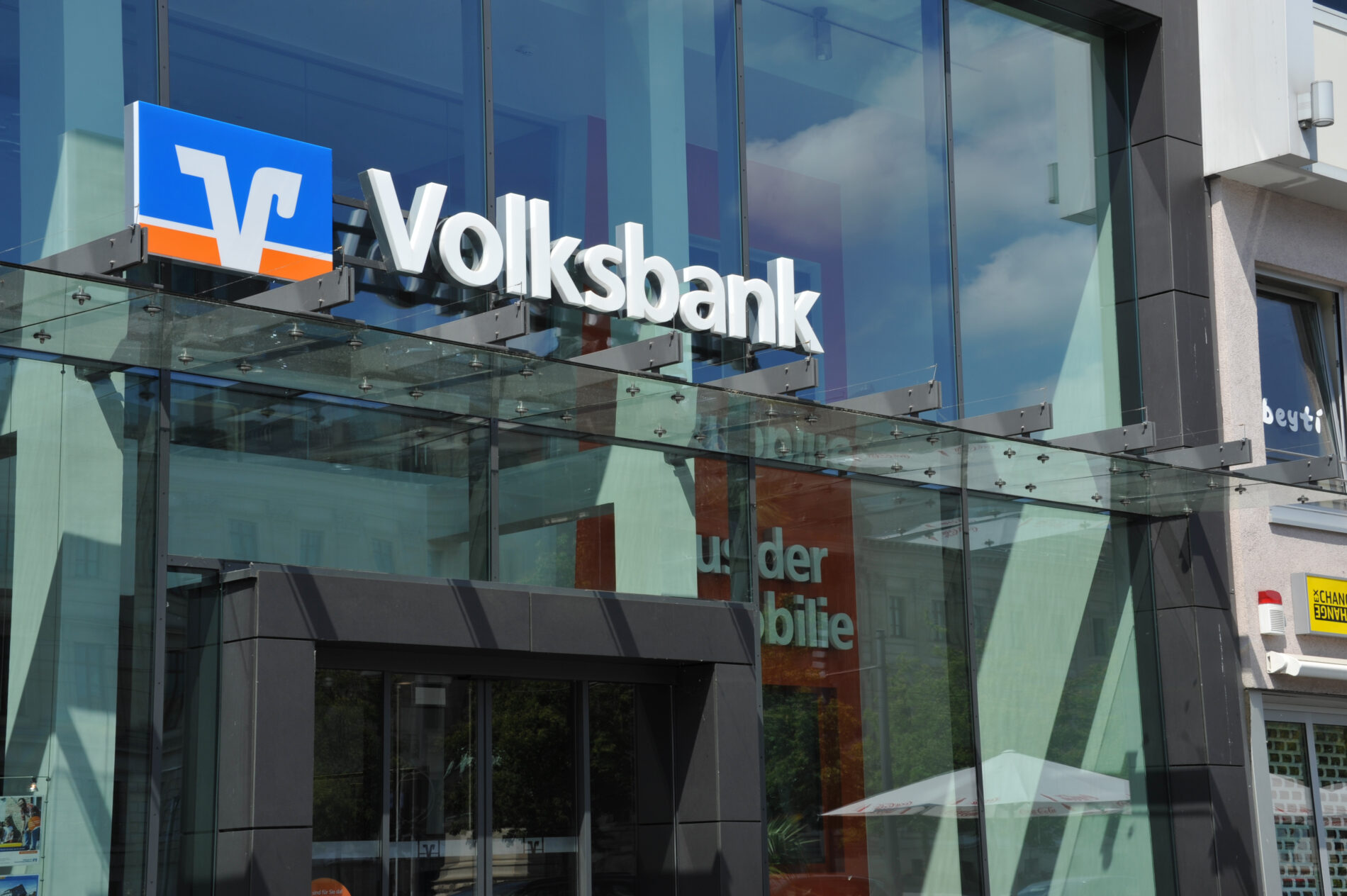
Image: Shutterstock
Volksbank BraWo Faces a Regional Economic Crisis
While the bank’s problems stem from its own business model—having significantly expanded its operations into real estate and equity investments over the years (with 96 percent of its write-downs originating outside traditional banking activities)—the crisis is hitting the bank at a time when its economic environment is also weakening considerably.
Volkswagen is currently undergoing the most extensive restructuring in its history. The group has decided to cut another 50,000 jobs, bringing the total planned reduction to around 100,000 positions. Furthermore, VW anticipates costs running into the billions for restructuring and potential plant closures. This is particularly impactful for Wolfsburg, as the company and its numerous suppliers shape the region’s income levels, demand, and real estate market.
When jobs vanish, loans come under pressure, too
This triggers a second domino effect. Anyone who loses their job or suffers a significant drop in income will initially cut back on spending. However, in cases of prolonged unemployment, the heavy monthly burden of real estate loans can also become problematic. The bank does not disclose how many of its BRAWO customers are employed by Volkswagen or its suppliers; consequently, it is currently impossible to quantify the true extent of this additional credit risk.
At the same time, large-scale job cuts can impact real estate prices. Less job security dampens demand for homes, while potential distress sales can increase supply. In a worst-case scenario, this lowers the value of properties that banks have accepted as collateral for construction loans. Current market data for homes in Wolfsburg already shows a 2.6 percent price decline over a six-month period, even though there is no talk of a widespread market crash just yet.
Now the dominoes are toppling from two directions
This creates a particularly difficult situation for Volksbank BraWo. On one hand, it must deal with the fallout from its own expansion into real estate and corporate equity investments. On the other, the economic crisis threatens to weaken the very region where the bank conducts its core lending business. When companies cut jobs, the risks associated with private construction loans and corporate credit rise in the medium term.
Early signs of strain in the regional labor market appeared even before the latest VW announcement. In the Helmstedt employment agency district—which includes Wolfsburg—unemployment in July 2026 was 8.4 percent higher than the previous year’s figure. Meanwhile, large enterprises in the district accounted for just under 60 percent of all employees subject to social security contributions. This unusually high concentration makes the region particularly vulnerable when a major corporation like Volkswagen cuts jobs.
From a Corporate Problem to a Banking Problem
This is precisely where the true danger of an economic crisis becomes apparent. Initially, companies come under pressure due to weak demand, high costs, or international competition. This is followed by job cuts and falling incomes, while consumers postpone major purchases. Eventually, loan defaults may rise and the value of collateral decline. Banks thus find themselves at the end of a chain reaction where the first dominoes fell in the real economy long before.
In the case of BRAWO, however, this potential chain reaction is unfolding alongside an existing crisis of its own. The bank is selling off equity stakes, scaling back real estate exposure, and having past decisions investigated by an independent law firm. At the same time, Volkswagen is once again downgrading its forecast and planning massive cutbacks. Consequently, the dominoes in Braunschweig and Wolfsburg are now toppling from two directions: driven by the bank’s earlier expansion strategy and by an economic crisis capable of impacting employment, real estate, and—ultimately—loan portfolios.
Author: Blackout News
Sources: RND (19.09.26) – Reuters (18.09.26) – NDR (18.09.26) – BRAWO Group (18.09.26)