
The financial plight of many hospitals in Germany is intensifying. The insolvency of the operator of Marienhospital Stuttgart starkly illustrates this issue, while facilities in the Ulm region, as well as municipal and university hospitals, are warning of mounting deficits. The situation is driven by rising costs for personnel, energy, medication, and supplies, even as revenues remain politically capped and new cost-cutting mandates threaten to create further shortfalls. However, the fundamental flaw lies in the financing model: hospitals maintain emergency departments, staff, equipment, and beds on a round-the-clock basis, yet rely heavily on revenue from billable treatment cases to fund operations. When this revenue fails to cover high fixed costs, deficits arise, often leading to restructuring, service cutbacks, or closures. Consequently, patients face the prospect of longer journeys and reduced access to services, while public budgets are burdened with higher costs.
Hospitals need to maintain standby capacity but are paid based on individual cases
Marienhospital Stuttgart is therefore not an isolated instance of a single operator’s misstep. A hospital can be medically necessary and yet fail financially. It is precisely this contradiction that now characterizes many regions across Germany.
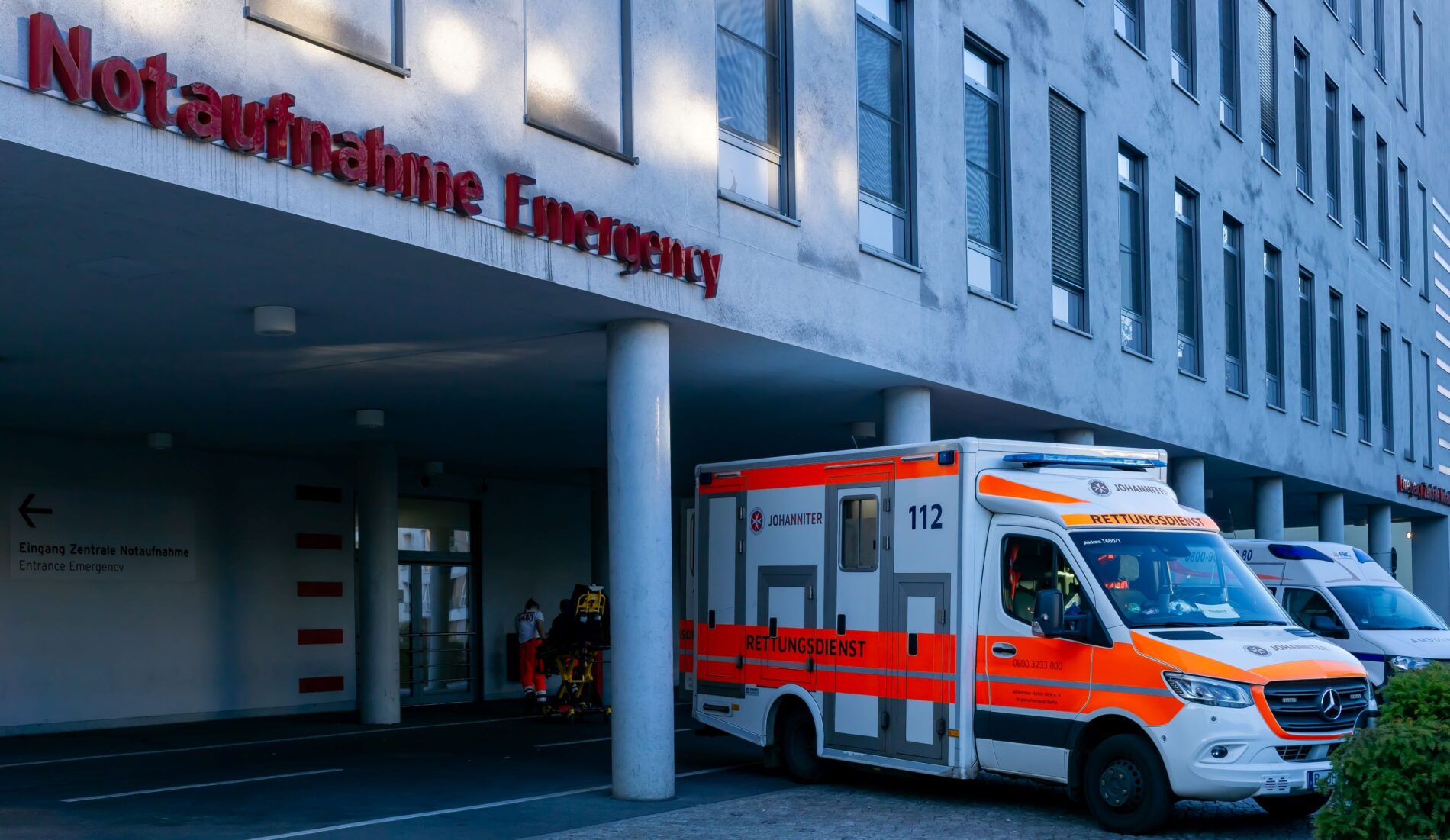
Image: Shutterstock
Hospitals must maintain emergency departments, intensive care units, operating rooms, diagnostic facilities, and specialized staff. These structures incur costs daily, even when specific areas are temporarily underutilized. However, the current funding model does not adequately cover the cost of maintaining this state of readiness.
Funding model rewards high utilization rather than safety
A different logic applies to the police and fire services, and for good reason. No one expects a police station to fund itself by handling the highest possible number of incidents. Similarly, no municipality demands more fires just so a fire station can break even.
This parallel highlights a fundamental flaw in the healthcare system. Hospitals are also part of the public infrastructure because they guarantee security in the event of illness. Therefore, their continued existence must not depend on whether there are enough cases of severe illness to balance the books.
Deficits lead to cutbacks and longer travel distances
Longer travel distances do not result directly from lower revenues. They arise when financial deficits force the implementation of restructuring programs, leading operators to close departments or merge locations. It is this chain of events that determines the actual impact on patients.
Areas with high standby costs and low profitability are particularly vulnerable. These include obstetrics, pediatrics, emergency departments, and smaller hospitals providing basic care. Yet, it is precisely these services that ensure regional accessibility in everyday life.
Municipalities Bear the Burden of a Flawed System
Municipal and non-profit providers are being hit particularly hard by the crisis. They cannot freely raise their prices, even as the costs of wages, technology, medication, and energy rise. Consequently, deficits frequently end up burdening the budgets of cities, counties, or church-affiliated organizations.
This shifting of the burden offers only the illusion of relief for federal policymakers. The federal government aims to keep contributions stable, while hospitals are forced to absorb actual cost increases. Ultimately, it is municipalities, employees, and patients who pay the price for a system that treats healthcare like a manufacturing process.
Healthcare Is Part of Public Infrastructure
Hospitals, however, are not ordinary businesses. They ensure the availability of care before emergencies even occur. Healthcare provision and acute care are therefore part of the public infrastructure—much like internal security, fire services, and disaster management.
A viable reform would need to provide reliable funding for maintaining capacity, ensuring regional accessibility, and meeting medical needs. It would also need to clearly identify which locations are essential for service provision. As long as the funding model treats hospitals merely as facilities for processing individual cases, deficits will trigger further restructuring measures, and those measures will create new gaps in care.
Author: Blackout News
Sources: Leibniz-Institut für Wirtschaftsforschung (25.06.26) – Tagesschau (17.06.26) – Landratsamt Alb-Donau-Kreis (10.06.26) – Deutsche Krankenhausgesellschaft (01.06.26) – Deutscher Städtetag (28.04.26)