
The German Energy Storage Systems Association (BVES) has criticized the federal government’s draft legislation on securing future electricity supplies and announced plans to file a complaint with the EU Commission. The association stated on Wednesday that there are significant concerns “regarding the compatibility of the legislation with the principles of non-discrimination, technology neutrality, and fair competition.” “It is not a question of storage versus gas-fired power plants for us,” explained BVES Executive Director Urban Windelen. “We are concerned with technological openness.”
The association criticized the fact that under the so-called Electricity Supply Security and Capacity Act (StromVKG)—which serves to implement the federal government’s power plant strategy—storage facilities are “formally eligible to participate in the planned auctions” but are effectively “excluded from significant parts of the capacity market.”
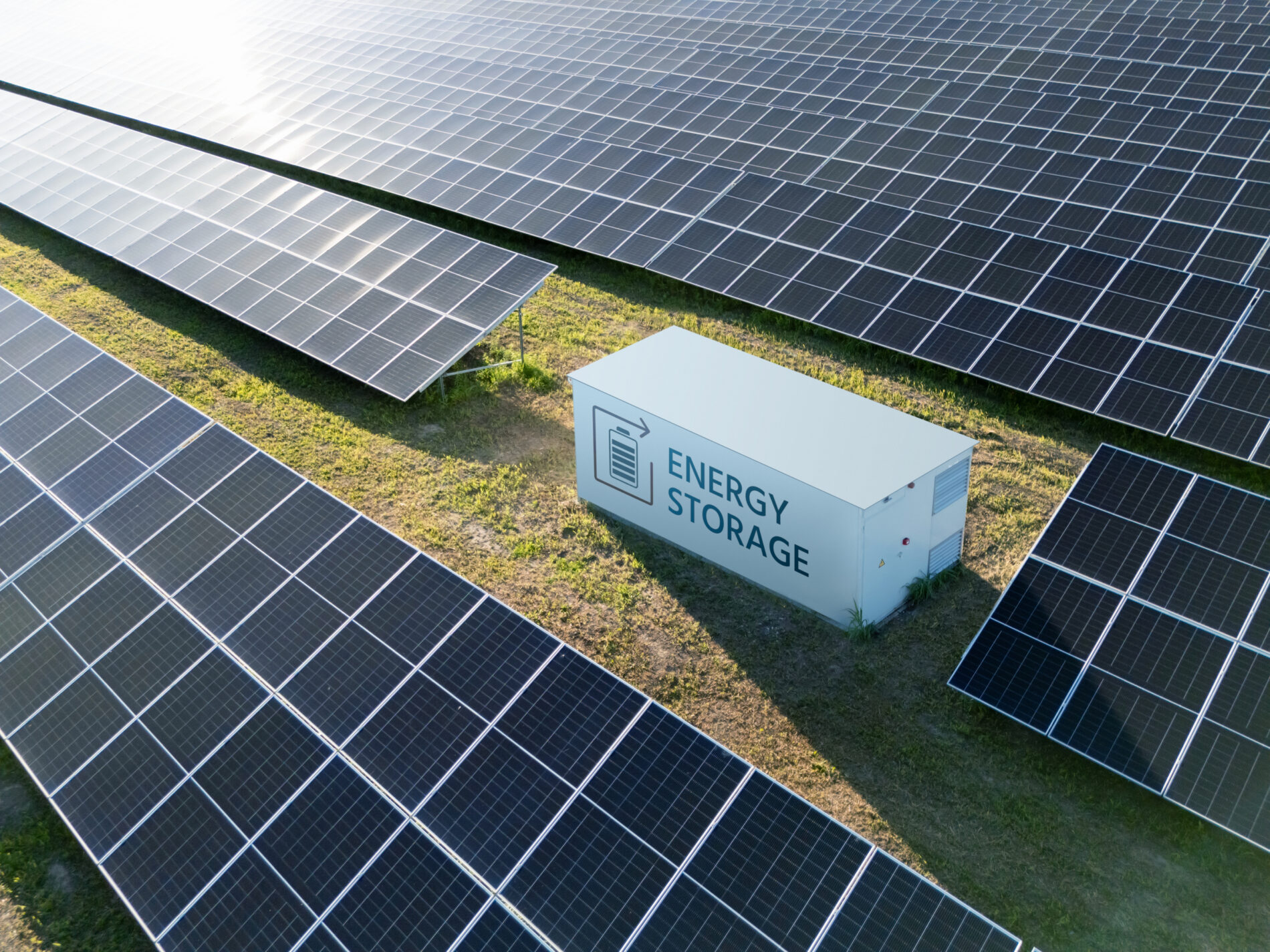
Image: Shutterstock
“The law places Germany in technological handcuffs for the next 15 years,” declared Windelen. The BVES is critical of, for instance, “the planned ban or severe restriction of pooling solutions”—arguing that multiple storage facilities could jointly provide the same level of supply security as a single large-scale plant. Such solutions, the association contended, would often be “more cost-effective, more system-efficient, and quicker to implement.”
The Federal Cabinet approved the draft legislation—which the Bundestag’s Committee on Economic Affairs addressed on Wednesday—back in May. Among other things, the bill provides for tenders to build new gas-fired power plants intended to step in as a reserve when wind and solar installations fail to generate sufficient electricity. The Bundestag is expected to pass the StromVKG (Electricity Reserve Act) before the summer recess.
Kerstin Andreae, Chairwoman of the German Association of Energy and Water Industries (BDEW), stated on Wednesday that “dispatchable, hydrogen-ready gas power plants” are necessary to ensure security of supply during periods of low wind and solar output (so-called “dark doldrums”) and to manage the coal phase-out—”just like battery storage, sector coupling, and demand-side flexibility.” She noted that the Bundestag could lay the groundwork for this through the Electricity Generation and Storage Act (StromVKG).
The German Renewable Energy Federation (BEE) stated that it shares the draft law’s objective of strengthening security of supply. However, Association President Ursula Heinen-Esser criticized the current design of the tender process, arguing that it “distorts competition in favor of expensive gas power plants and disadvantages cheaper, more flexible solutions.” “This does not represent genuine technology neutrality; instead, it merely bolsters fossil fuel sources,” she complained.
Author: AFP – jm/oer – Translated by Blackout News
Sources: AFP Press Portal