
The Walzengießerei Coswig (Roll Foundry Coswig) in Saxony will permanently cease production at the end of November 2026. This marks the end of the 134-year history of a long-established industrial company in the Meißen district. High energy costs, declining demand, and insufficient capacity utilization have steadily worsened the company’s economic situation over the years. Attempts at restructuring under self-administration and the search for an investor also failed. The approximately 170 remaining employees have already received their termination notices. Furthermore, Germany is losing a manufacturer of heavy industrial rolls and key components for mechanical engineering and the wind power industry.
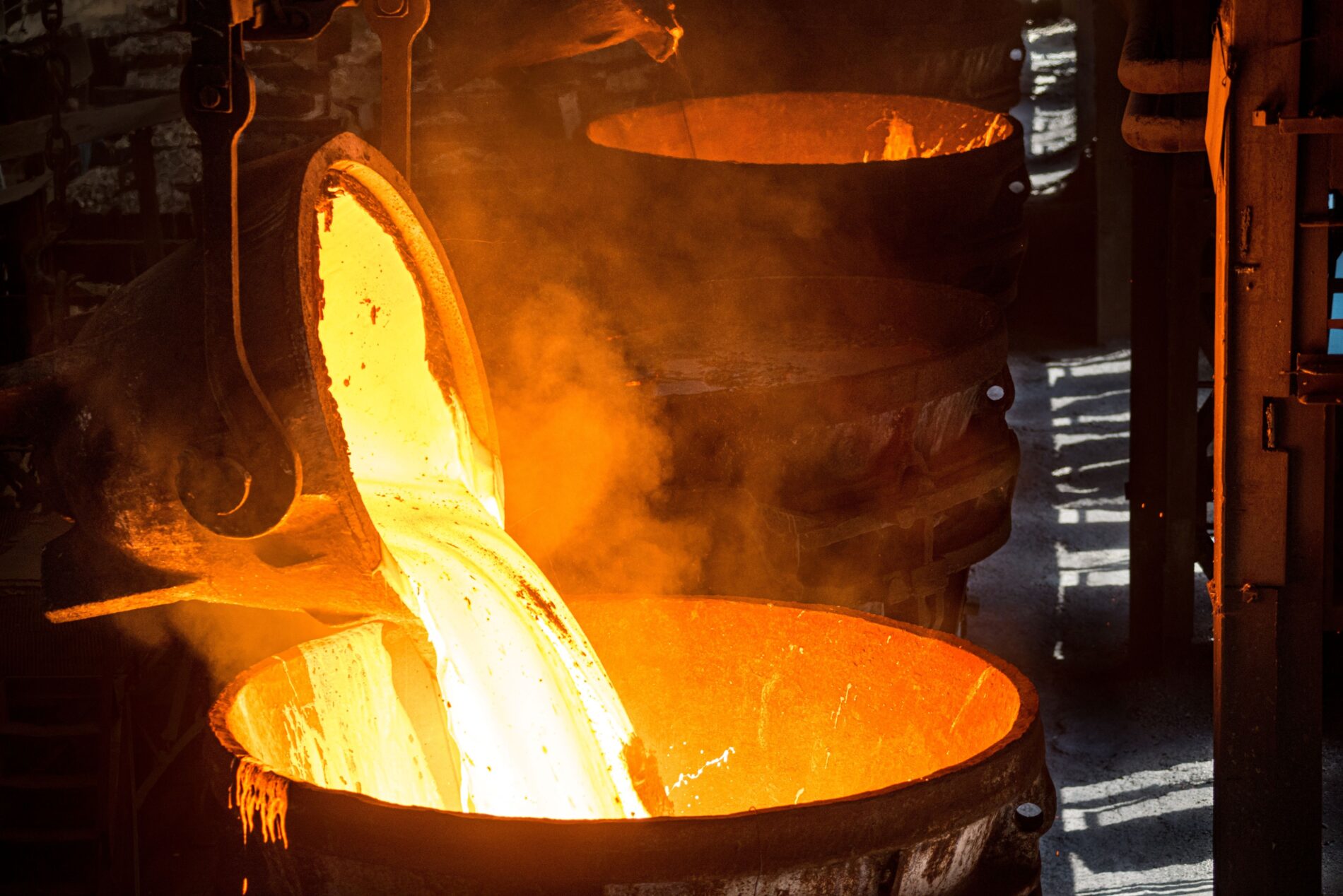
Image: Shutterstock
Walzengießerei Coswig’s annual energy costs totaled six million euros
Energy costs, in particular, placed a significant burden on the site. As early as January 2025, plant manager Dario Kratzsch warned of rising costs. At that time, he estimated the annual energy requirement at around 55 gigawatt-hours—an amount the company stated was equivalent to the consumption of approximately 13,000 single-family homes. The foundry had to spend around six million euros annually to cover this. At the same time, weak demand reduced the capacity utilization of the expensive production facilities.
Added to this was a heavy reliance on the international steel business. The company generated about two-thirds of its revenue abroad. Its customers included an Indian industrial group that produced railway tracks for Indian Railways; Coswig supplied the specialized shaping rolls used in this process. The plant also manufactured heavy castings for wind turbines. Hollow rotor shafts weighing up to 50 tons had been part of the production portfolio since 2003. Nevertheless, order volumes were no longer sufficient to operate the site profitably.
140 potential investors – not a single one saves the business
The roll foundry filed for insolvency as early as November 2025. Insolvency proceedings under self-administration began in early February 2026. Management initially focused on restructuring and finding a new owner. In total, the restructuring team contacted around 140 potential investors. Ten interested parties engaged in in-depth discussions, apparently including companies from the wind power sector. Ultimately, however, no takeover materialized.
The outcome is particularly bitter for the workforce. As recently as June, they had agreed to a restructuring collective agreement in order to save their jobs. They waived holiday pay and portions of their performance-based bonuses. Furthermore, they postponed a scheduled pay increase until January 2027. IG Metall has criticized the company’s management as a result. Union representative Steven Kempe specifically took issue with the late start of the search for investors in the summer of 2026, noting that the economic difficulties had been apparent for years.
Industrial Production Disappears – Machinery and Factory Site Up for Sale
With the closure of the Coswig roll foundry, industrial manufacturing capacity is disappearing from Saxony. The melting furnaces are scheduled to be taken out of operation in stages by the end of November. Subsequently, assets such as large-scale lathes, crane systems, and foundry equipment will be put up for sale. The factory site on Grenzstraße is also set to change hands; a decision regarding its potential use by smaller companies with lower energy requirements is not expected until 2027. Consequently, the IG Metall union is planning a job fair for late October to open up new prospects for the workforce.
The plant belongs to the DIHAG Group, which intends to focus on more economically viable business areas in the future. The Bösdorf steel and chilled-cast iron plant in Leipzig is also currently undergoing insolvency proceedings. In contrast, other group locations—including Meuselwitz Guss, the Schmiedeberg foundry, and Eisenwerk Arnstadt—are to be preserved. At the same time, the group is continuing to pursue plans for automation and more climate-friendly production. However, the Coswig case highlights a fundamental problem facing German industry: high energy demands, weak demand, and substantial upfront financing costs are jeopardizing the economic viability of traditional production sites. Moreover, every permanent plant closure results in the loss of manufacturing capacity, industrial expertise, and skilled jobs.
Author: Blackout News
Sources: Ostdeutsche Allgemeine (12.10.26) – marketsteel (12.10.26) – Berliner Kurier )11.10.26) – Die Sachsen News ( 10.10.26)