
On October 5, the solar specialist Next2Sun filed for insolvency proceedings under self-administration for two of its subsidiaries: Next2Sun Technology GmbH and Next2Sun Mounting Systems GmbH. The move was triggered by the failure to secure financing amounting to several million euros. Business operations are also being hampered by a delay in EU approval for agri-photovoltaic subsidies, which has been pending since 2024. The company employs over 140 people across international locations. Jobs are now at risk, although project development is continuing for the time being. The parent company and the operators of already completed installations remain unaffected by the insolvency filings for the moment.
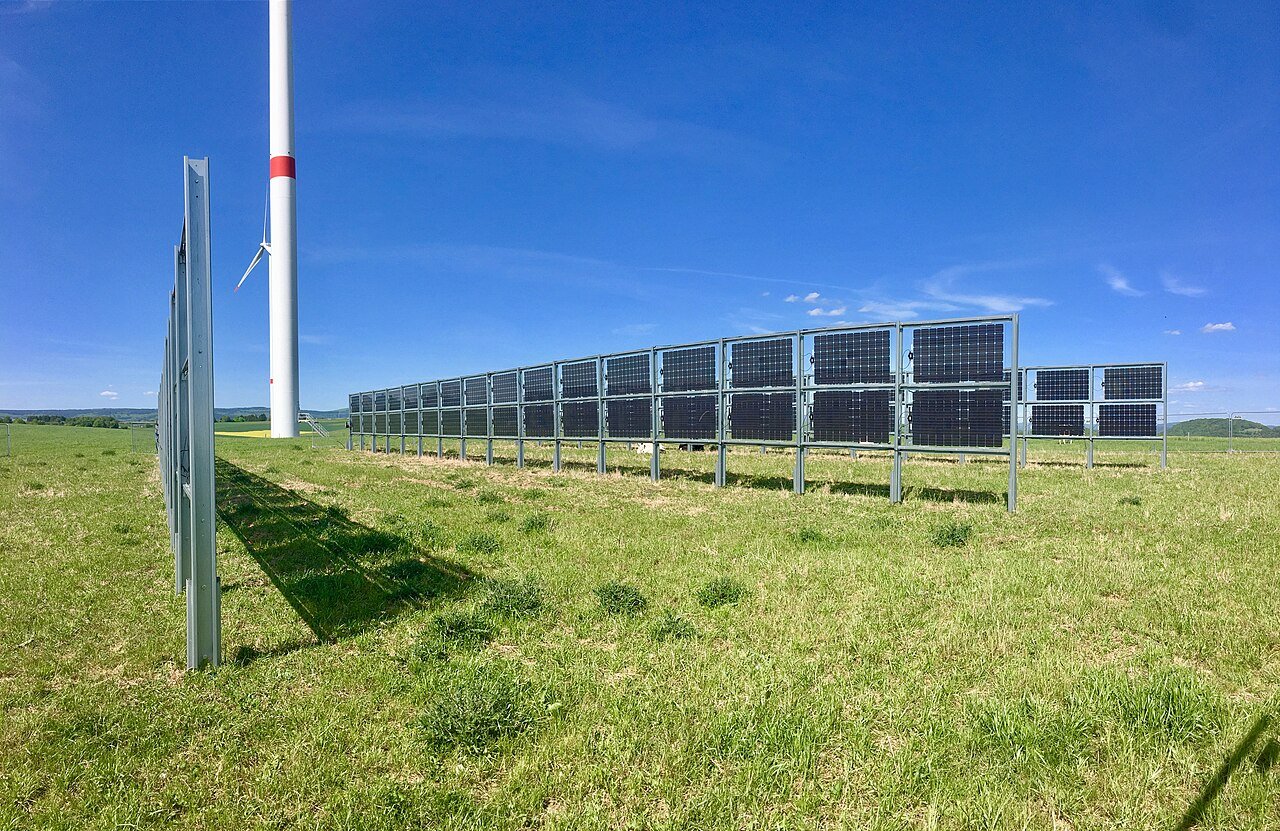
Image: Jana309, CC BY-SA 4.0, via Wikimedia Commons

Multi-million euro financing falls through – two companies insolvent
In recent weeks, Next2Sun had attempted to raise additional equity. By the end of September, share subscriptions and other financing offers totaling more than five million euros had been received. However, two major investment commitments proved to lack sufficient security. Consequently, the company declared the capital-raising measure a failure on October 2. Three days later, insolvency petitions were filed with the Saarbrücken District Court.
The affected companies intend to continue business operations for the time being. However, Next2Sun is reviewing ongoing orders to assess their economic viability. At the same time, management is seeking further investors and restructuring options. The planned share issue has been cancelled; therefore, the company will not collect the investor funds earmarked for it.
Next2Sun Insolvency – EU Funding Blocked for Over Two Years
A key factor behind the crisis is the unresolved status of funding for agri-photovoltaics. The Bundestag and Bundesrat passed new funding regulations back in 2024 as part of the “Solar Package I.” However, the necessary state aid approval from the EU Commission for the relevant tender category is still missing. Consequently, the Federal Network Agency has so far been unable to implement these regulations. For project developers, this creates significant uncertainty when calculating future revenues.
Next2Sun attributes substantial financial losses to the lack of approval. According to company management, orders dried up while revenues were cut in half within a single year. Furthermore, reluctance on the part of banks and investors exacerbated the funding gap. The new draft amendment to the Renewable Energy Sources Act (EEG) now proposes a different funding structure: instead of a dedicated tender category, certain agri-PV systems would receive a bonus payment.
Over 140 Employees – Restructuring Aimed at Saving Jobs
The Next2Sun insolvency also puts jobs at risk within a specialized sector of the solar industry. Founded in 2015, the group employs more than 140 people across Germany, Austria, Poland, and Japan. Next2Sun has also realized photovoltaic projects worldwide with a combined peak capacity of over 65 megawatts. Yet, existing projects and technical expertise have evidently proven insufficient to overcome ongoing financing difficulties.
The company develops vertically mounted solar modules that generate electricity on both sides. This allows farmers to continue cultivating their land while simultaneously producing power. Additionally, the systems generate relatively high levels of electricity during the morning and evening hours. However, the economic viability of such projects depends on more than just their technical performance. Investment costs, revenue from electricity sales, and reliable financing conditions are also crucial.
Promises of Subsidies Do Not Create Economic Certainty
The insolvency of Next2Sun highlights a fundamental problem with state-directed investments in renewable energy. Legislators enact new subsidy schemes, yet their implementation hinges on further approvals. Consequently, companies base their calculations on frameworks that may not apply for years. The situation becomes particularly critical when investors withhold commitments due to uncertain revenue prospects.
The Next2Sun case thus illustrates the economic consequences of poorly coordinated subsidy policies. While the insolvency cannot be attributed solely to the lack of EU approval, the company states that the years of uncertainty contributed significantly to the crisis. Whether a turnaround succeeds now depends on binding capital commitments and viable business models. Without new financing, further cutbacks in staff and business operations are likely.
Author: Blackout News
Sources: t-online (11.10.26) – IWR (09.10.26) – Next2Sun (05.10.26) – PV-Magazine (05.10.26)