
The restructuring plan for DB Cargo is largely finalized. During the week of June 15, the management board and employee representatives concluded an agreement on the reconciliation of interests. This enables Deutsche Bahn’s freight division to move ahead with concrete plans for workforce reductions. DB Cargo presented the plan on February 19, 2026; it envisages the elimination of 6,200 of the approximately 14,000 jobs in Germany by 2030. However, the pressure of time is coming from Brussels. On November 29, 2024, the EU Commission approved aid amounting to approximately €1.9 billion, making the approval conditional on a restructuring plan extending to the end of 2026. Since the beginning of 2025, Deutsche Bahn has been prohibited from covering DB Cargo’s losses through the previous loss-compensation mechanism. Consequently, the restructuring affects personnel, maintenance facilities, marshalling yards, and core rail freight operations.
Freight division must deliver turnaround by end of 2026
The job cuts affect almost all functional areas, including train operations, dispatching, planning, administration, sales, and IT. In addition, DB Cargo aims to increase the utilization of its rolling stock. The company plans to achieve savings of around one billion euros by 2030. Affected employees are to be offered positions in other areas of the railway company wherever possible.
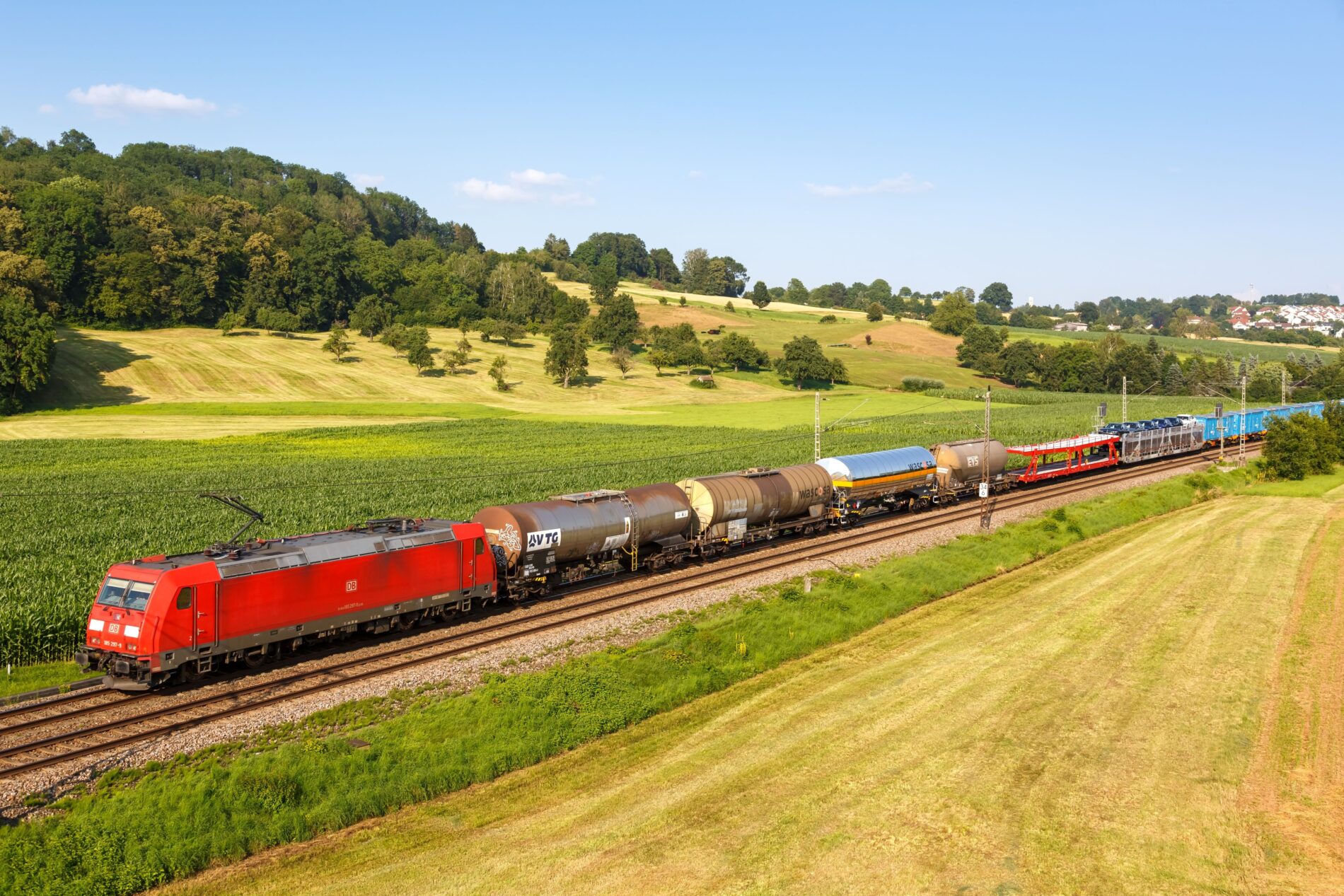
Image: Shutterstock
The freight division has been operating with high costs for years. The automotive, steel, and chemical industries, in particular, are booking fewer shipments. At the same time, competitors are gaining market share in the German rail freight sector. While DB Cargo remains a key provider, private railway companies now handle a significant portion of the market.
Single-wagon transport to be concentrated at a few hubs
The most significant operational change concerns single-wagon transport. In this segment, DB Cargo collects individual wagons from industrial customers and subsequently consolidates them at large marshalling yards. Going forward, however, train assembly will take place primarily at Cologne-Gremberg, Seelze, Mannheim, and Nuremberg. This consolidation is intended to streamline processes and reduce costs.
Five additional marshalling yards are slated to operate as secondary sites. DB Cargo plans to close or sell twelve of its 27 maintenance depots. A further 2,000 jobs are set to be cut in the single-wagon transport sector. However, according to the company, the business will remain loss-making even after the restructuring. For industrial customers, this could result in longer lead times and fewer alternative routing options.
EU Conditions Dictate Pace and Conflict
The EU decision of November 29, 2024, sets the strict parameters. Brussels authorized the absorption of losses for the years 2022 through 2024. At the same time, the Commission requires measures to achieve profitability by the end of 2026. This means the freight division loses a key financial buffer. Failure to meet commitments could result in further conditions, repayment demands, or more drastic interventions.
The Railway and Transport Union (EVG) acknowledges the need for greater efficiency but rejects the scale of the planned job cuts. Cosima Ingenschay announced tough negotiations regarding jobs and the proposed measures. For DB Cargo, the implementation phase is only just beginning; management and employee representatives must now resolve issues concerning locations, social plans, and specific staffing strategies over the coming years.
Author: Blackout News
Sources: Reuters (19.06.26) – Tagesschau (19.06.26) – Express (19.06.26) – MMLogistik (19.06.26)