
A winemaker from Sosberg in the Hunsrück region is caught up in an administrative fiasco that casts a particularly questionable light on German bureaucracy. In 2022, he invested around 10,000 euros in an automated wine-dispensing machine equipped with an electronic age-verification system. Yet, more than three years later, he is still not permitted to sell wine from it. Initially, the authorities kept him occupied for years with a building permit application—which, as it turned out, was not even required. Subsequently, they prohibited the sale of wine, citing the Protection of Minors Act. The situation is all the more absurd given that similar machines are apparently being operated without any issues elsewhere along the Moselle. Consequently, the winemaker is left with no choice but to sell cola, lemonade, and energy drinks instead.
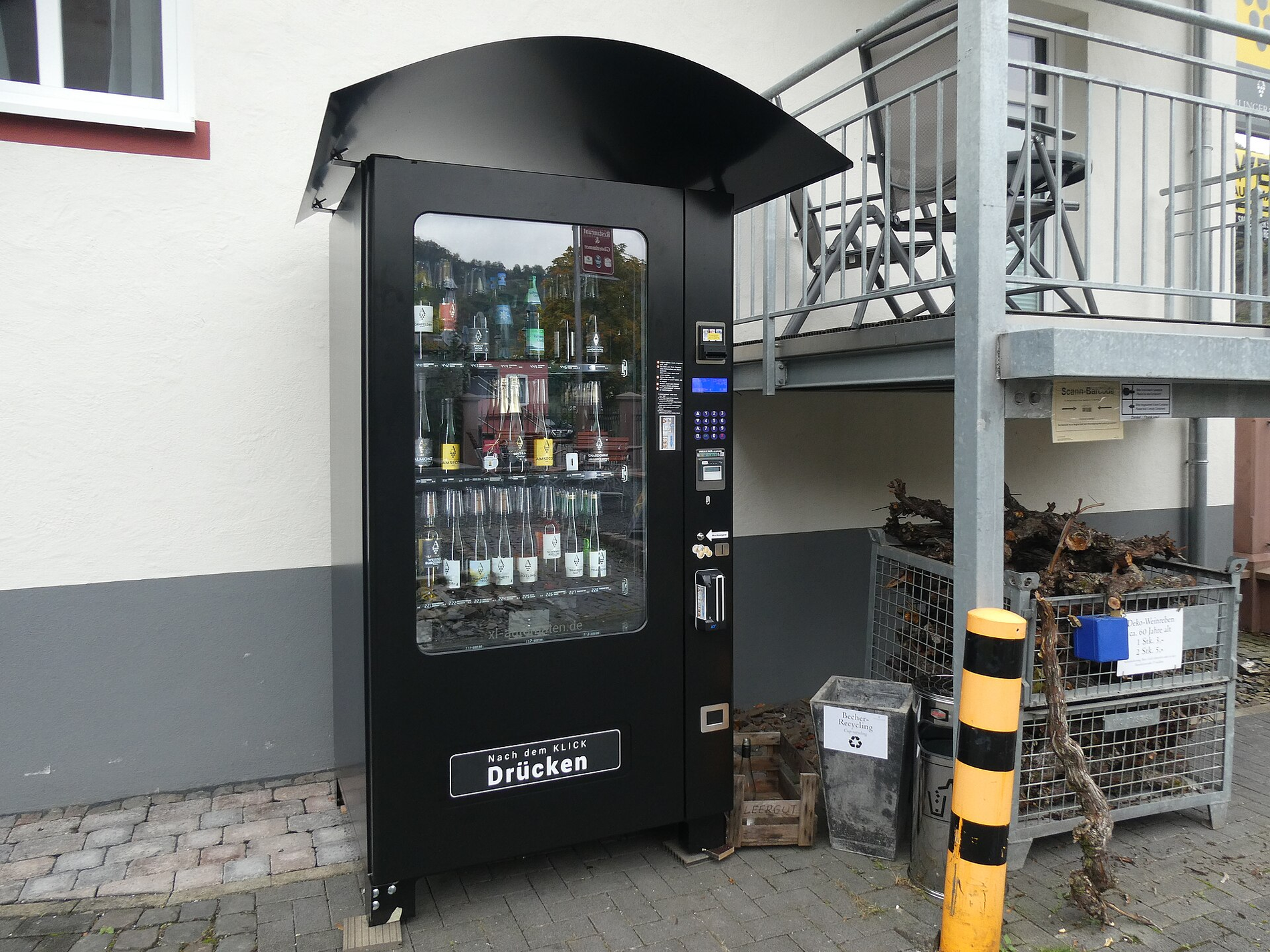
Image: Steffen 962, CC0, via Wikimedia Commons

Three years of bureaucracy for a permit no one needs
The winemaker simply wanted to create an additional sales channel for his wine. He planned to use a vending machine to provide customers with access to his products, regardless of standard store opening hours. This is an attractive option, especially for smaller-scale winemakers, as direct sales can yield higher profit margins. With this in mind, the entrepreneur—who was young at the time—invested around 10,000 euros in the machine.
Instead of selling his wine, however, he found himself entangled with government authorities for years. According to the winemaker, the Verbandsgemeinde (municipal association) of Zell kept demanding more and more documentation. At one point, they even requested an architectural expert report for the vending machine. After more than three years, he finally received a surprising notification: he could withdraw his building permit application—because such a permit was not required in the first place.
Age verification installed—yet wine sales remain prohibited
The bureaucratic absurdity did not end there. Immediately following a years-long approval process, another obstacle arose: authorities prohibited the sale of alcoholic beverages, even though the vending machine is equipped with an electronic age-verification system.
Customers are required to scan their national ID card before they can purchase wine. Nevertheless, under the Youth Protection Act, this safeguard is not considered sufficient. Because the machine is located under the roof of a barn on the winemaker’s private property—a site not classified as a properly secured commercial space—he is not permitted to sell wine there. Consequently, he now uses his expensive vending machine to sell non-alcoholic beverages instead.
Wine vending machines work elsewhere—without years of bureaucratic red tape
The situation becomes particularly absurd when looking at other municipalities along the Moselle River. Numerous wine vending machines can be found there—some situated directly along main roads and accessible to the public—yet local authorities report no such conflicts regarding permits.
The Verbandsgemeinde (municipal association) of Bernkastel-Kues, for instance, follows a much more straightforward administrative approach. Mayor Leo Wächter explained that his administration does not require formal building applications for such machines. Furthermore, he is aware of neither any rejected applications nor any issues concerning the Youth Protection Act. While the winemaker in Zell faced years of demands for documentation, other municipalities—operating under the same legal framework—managed without such burdens.
Seeking official approval can end up being a disadvantage
This is the crux of the matter. The winemaker intended to comply with legal requirements and therefore explicitly sought official authorization. Yet, this very attempt triggered a years-long process that ultimately yielded no benefit. Meanwhile, other winemakers appear to operate their vending machines without encountering similar problems. However, the fact that no conflicts are known to exist there does not automatically mean that every vending machine complies with all legal requirements. After all, the federal Youth Protection Act applies in Bernkastel-Kues as well. Nevertheless, the variation in administrative practice points to a significant problem. While some authorities forgo cumbersome procedures, entrepreneurs elsewhere are required to submit documentation for years on end. This is a poor reflection on the business environment, which should be consistent and predictable.
Cigarette Vending Machines Permitted – Wine Vending Machines Prohibited Despite Age Verification
Adding to the frustration is a legal peculiarity that further fuels discontent. Under certain conditions, cigarette vending machines are permitted in publicly accessible locations; an effective technical safeguard against sales to minors is sufficient. In contrast, vending machines for alcohol are subject to additional requirements regarding their location.
In February 2025, the Higher Administrative Court of Rhineland-Palatinate upheld this disparity in treatment. In a comparable case from Bad Kreuznach, the judges ruled that a ban on such sales was lawful, pointing to the different immediate effects of alcohol and nicotine. From a legal standpoint, this stricter approach is therefore justified. Whether these regulations remain appropriate in light of modern age-verification technology, however, remains a valid subject for political debate.
Bureaucratic Absurdity Instead of Red Tape Reduction – The Entrepreneur Pays the Price
German policymakers frequently promise less red tape and better conditions for small businesses. Yet, the case of this winemaker illustrates just how far such announcements can be from administrative reality. He invested his own capital, sought to open up an additional sales channel, and endeavored to ensure legal compliance. The result, after years of dealing with the authorities, was a ban on his sales.
What is particularly troubling is that the administrative burden does not appear to be consistent across all jurisdictions. The Verbandsgemeinde (municipal association) of Zell failed to provide a specific explanation as to why the process took more than three years. Meanwhile, other municipalities demonstrate that such construction permit applications are not necessarily required in comparable cases. The lack of an explanation for this loss of time makes the entire ordeal even harder to comprehend.
While the protection of minors is a legal obligation, it does not account for the marathon-like administrative process. After all, it cannot justify a three-year ordeal for a construction permit application that ultimately proved unnecessary. In the end, an entrepreneur is left with a wine-vending machine—costing around 10,000 euros—from which he is not permitted to sell any wine. While similar business models succeed elsewhere, this winemaker’s venture has failed, despite his diligent efforts to secure the proper permits. The case illustrates one thing above all: an entrepreneur who strives to do everything by the book can be brought to a grinding halt by the sheer absurdity of German bureaucracy.
Author: Blackout News
Sources: SWR (26.10.26) – Tagesschau (26.10.26)